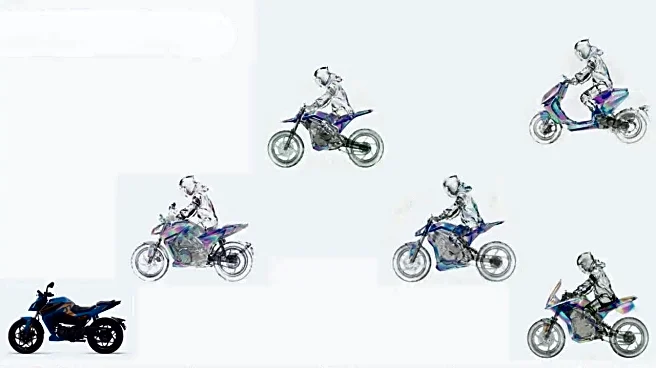

Indian electric mobility company 'Matter' has shared bold ventures for the future of two-wheelers by announcing that it will develop products across five different segments using its newly revealed AI-Defined
Vehicle (AIDV) platform, which means Matter is not planning just one or two electric models, instead, it aims to build an entire range of electric two-wheelers, motorcycles as well as scooters, on a single intelligent platform.
Five Two-Wheeler Segments Confirmed
Matter confirmed that the AIDV platform will support products across the following five two-wheeler segments, which are-
- Naked street motorcycles which will be designed for everyday riding with a sporty feel
- Street fighter motorcycles, which will focus on aggressive styling and strong performance
- Adventure (ADV) motorcycles, which will be built for long-distance touring and rough roads
- Youth-focused commuter motorcycles, which will be aimed at young riders and daily city use
- Electric scooters, which will cater to urban mobility and convenience
Also Read: Mahindra Bolero Camper Now Gets A/C, Bolero Pik-Up Also Updated For 2026 - Details
What Makes AI-Defined Vehicles Different?
According to Matter, AI-Defined Vehicles go beyond traditional mechanical, electronic or even software-defined vehicles as in this new approach, intelligence is deeply embedded into the vehicle’s control systems.
This intelligence continuously manages power delivery, battery usage, thermal control, diagnostics and system health during real-world riding. However, instead of relying only on fixed hardware settings, the vehicle can adapt and improve through software and data-driven learning.
Building On Existing Technology
Matter also explained that its current electric motorcycle, Aera, already runs on a software-defined architecture as its features such as over-the-air (OTA) updates, integrated motor control software and advanced battery management systems are already part of the Aera experience. The new AIDV platform builds on this foundation by adding intelligence-led decision layers and these layers influence how the vehicle performs, how efficiently it uses energy, and how well its components age over time.
Materials, Motors, and Smart Computing
Beyond this software, Matter is also working on rare-earth-free motor designs, cell-level battery monitoring and alternative materials. These technologies work alongside AI-based controls to better manage heat, energy flow, and component wear, which improves durability and efficiency.
To handle this complexity, Matter uses a domain and zone-based computing structure, where multiple vehicle systems share computing power instead of relying on many separate controllers.




/images/ppid_59c68470-image-177090253948689009.webp)




/images/ppid_59c68470-image-177090263892442922.webp)
/images/ppid_59c68470-image-177090260766158912.webp)
/images/ppid_59c68470-image-17709025718378487.webp)