

/images/ppid_a911dc6a-image-177694406182151434.webp)
/images/ppid_a911dc6a-image-177694402489242124.webp)
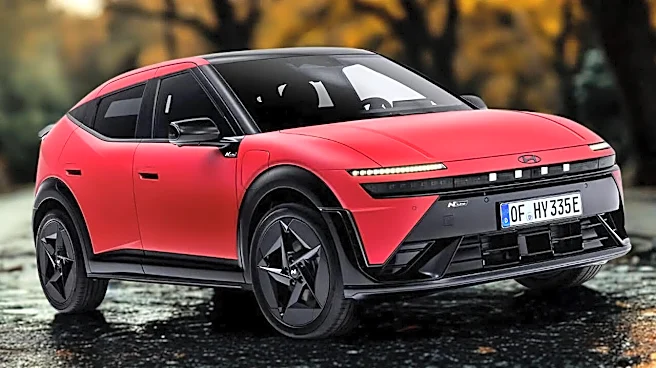
Hyundai has globally unveiled the Hyundai Ioniq 3, a compact electric hatchback with a claimed range of up to 496 km. This matters for Indian buyers because it signals Hyundai’s shift toward smaller, more efficient EVs that could eventually be priced more accessibly. Positioned below larger Ioniq models, the Ioniq 3 focuses on urban usability, fast charging, and practical dimensions. Built on Hyundai’s dedicated EV platform, it combines competitive range figures with a compact footprint, highlighting the direction future mass-market electric cars could take in India as affordability and efficiency become key buying factors.
Design And Dimensions: Compact But Optimised
The Ioniq 3 follows Hyundai’s “Aero Hatch” design philosophy which prioritises aerodynamic efficiency while maintaining
interior space. It measures about 4,155 mm in length (4,170 mm for the N Line), 1,800 mm in width and 1,505 mm in height with a 2,680 mm wheelbase.
This places it firmly in the compact hatchback category but its proportions are closer to compact SUVs in height which improves cabin room. The drag coefficient is rated at around 0.26-0.263, a key factor in improving efficiency and range.
The design includes a smooth roofline, short overhangs as well as pixel-style LED lighting that aligns it with other Ioniq models. The overall approach is functional rather than decorative with a clear focus on aerodynamics and usability.
Inside, Hyundai has focused on space efficiency and digital interfaces. The cabin gets a large touchscreen (up to 14.6 inches) with Android Automotive-based infotainment along with a flexible layout designed to maximise usable space.
Battery, Range And Performance
The Hyundai Ioniq 3 is offered with two battery options: a 42.2 kWh standard pack and a 61 kWh long-range version. The standard variant delivers around 344 km of WLTP range while the long-range version goes up to 496 km. Power output is rated at around 147 PS with 250 Nm of torque, driving the front wheels. Performance figures include a 0-100 kmph time of about 9 seconds and a top speed of 170 kmph.
Charging is a key highlight. The Ioniq 3 supports DC fast charging from 10% to 80% in around 29-30 minutes, along with AC charging options up to 11 kW standard and 22 kW optional.
This combination of battery sizes and charging speeds is for balancing cost and usability especially for urban buyers who may not always rely on fast chargers but still need flexibility for longer trips.
Also Read: Hyundai Launches IONIQ Brand In China With New Electric Concepts - Details
Features, Safety And India Relevance
The Ioniq 3 comes equipped with connected car tech, over-the-air updates as well as a fully digital cockpit. Higher variants include features like Vehicle-to-Load (V2L), allowing the car to power external devices, along with advanced infotainment systems. On safety, it includes advanced driver assistance systems such as adaptive cruise control, lane-keeping assist and collision avoidance along with standard safety equipment like multiple airbags and stability control.
For India, the significance lies in positioning. The Ioniq 3 is expected to start at around 25,000 Euros (roughly Rs 26-28 lakh equivalent), indicating Hyundai’s intent to bring EV costs down globally.
There is no confirmed India launch yet but the model signals a clear shift. Instead of focusing only on premium EVs, Hyundai is moving toward compact, efficient electric cars with real-world range. For Indian buyers, this could eventually translate into more practical EV options in the Rs 20-30 lakh segment with fewer compromises on range and features.