
/images/ppid_a911dc6a-image-177073006990549409.webp)
/images/ppid_59c68470-image-177073503438256591.webp)

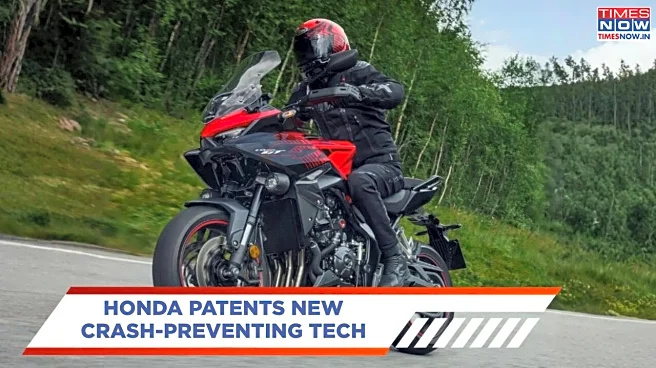
Honda has filed a new patent detailing a steering assist system aimed at reducing motorcycle crashes by actively intervening during critical riding situations. The technology is designed to detect potential loss of control and apply corrective steering input to help stabilise the motorcycle. According to patent documents, the system works alongside existing electronic aids rather than replacing rider input. This development reflects Honda’s continued focus on motorcycle safety through mechanical and electronic innovations. While the patent does not confirm production intent, it offers insight into how future motorcycles could use advanced steering control to mitigate accidents, especially during sudden manoeuvres or emergency situations.
Also
Read: Royal Enfield Flying Flea S6 Patented In India — Launch Soon?
How The Steering Assist System Works
As per the patent details, Honda’s steering assist technology uses sensors to monitor vehicle dynamics such as steering angle, lean angle, wheel speed and yaw rate. When the system detects a situation where the motorcycle may be heading towards instability or a collision, it can apply a controlled steering input. This intervention is intended to help the motorcycle follow a safer line or regain balance, particularly in scenarios involving sudden obstacles or sharp corrections.
Difference From Existing Rider Aids
Unlike traction control, ABS or electronic stability control, this system directly influences the steering mechanism. Honda’s approach focuses on assisting directional control rather than only managing braking or throttle inputs. The patent suggests the system is designed to work in the background, activating only when required and allowing the rider to remain in control during normal riding conditions. It is positioned as a supplementary safety layer rather than an autonomous riding feature.
Use Cases Highlighted In The Patent
The documents outline several real-world scenarios where steering assist could be beneficial. These include sudden obstacle avoidance, mid-corner instability as well as situations where the rider applies excessive steering input under panic conditions. By subtly correcting the steering angle, the system aims to reduce the risk of low-side or high-side crashes without abrupt intervention.
What It Means For Future Motorcycles
At this stage, Honda has not confirmed whether the steering assist system will reach production. Patents are often filed to protect technical concepts that may or may not be commercialised. However, if implemented, this technology could appear first on higher-capacity or premium motorcycles where electronic safety systems are already common. For riders, it signals a potential shift towards more proactive safety technologies that intervene earlier to prevent accidents rather than just reducing their severity.
Also Read: Hero Xpulse 210 Vs Kawasaki KLX230 — Price, Features And Mileage Compared
India Relevance And Industry Context
With motorcycle accidents remaining a major safety concern in markets like India, such technologies could have long-term relevance if adapted for local conditions. However, cost, complexity and rider acceptance will play a key role in determining real-world adoption. For now, Honda’s patent offers a glimpse into the future direction of motorcycle safety engineering rather than an immediate product roadmap.





/images/ppid_a911dc6a-image-177078730676935057.webp)