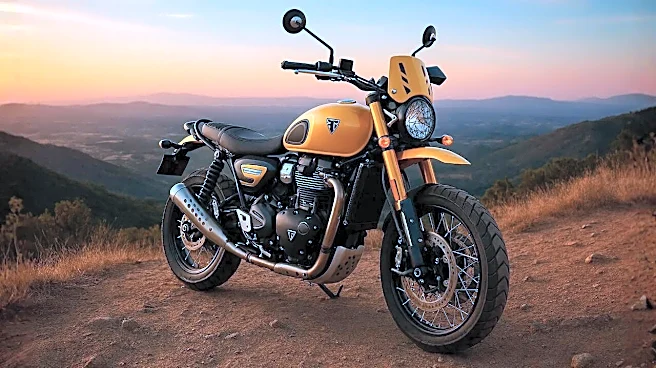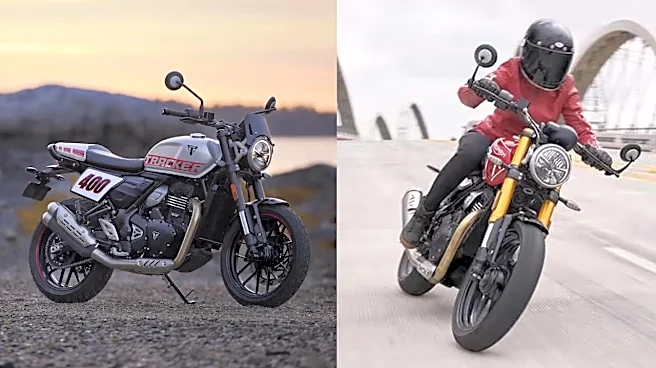

The Triumph Speed 400 and Triumph Tracker 400 now give buyers two distinct choices built on the same 400cc platform, with prices ranging from around Rs 2.32 lakh to Rs 2.46 lakh (ex-showroom). This matters because buyers are no longer just choosing a motorcycle, but deciding between two very different riding styles within a similar budget. Both bikes share their core, but they are positioned differently. The Speed 400 continues as a road-focused modern classic while the Tracker 400 shifts toward a more lifestyle-driven, flat-track-inspired design with a slightly different riding intent. The difference is subtle on paper but more noticeable once you look at how each is set up.
Engine And Performance Differences
Both motorcycles use the same 398cc, liquid-cooled, single-cylinder
engine, paired with a 6-speed gearbox, producing around 36.4 hp and 32 Nm in the Speed 400. The Tracker 400 is tuned slightly differently, with output going up to around 42 hp while torque remains similar, giving it a slightly sharper top-end feel.
In real-world use, the Speed 400 feels more linear and predictable especially in city riding and steady highway cruising. The Tracker, on the other hand, feels a bit more responsive when pushed although the difference is not dramatic. Fuel efficiency remains in a similar range of around 30 kmpl, and both bikes carry comparable hardware like ride-by-wire and traction control. So performance differences are more about feel than outright numbers.
Also Read: Triumph 350cc Speed 400, Scrambler 400 X Lineup Launched — Check Full Price List
Design, Hardware And Price Positioning
The bigger changes come in design and hardware. The Speed 400 sticks to a lower, compact roadster stance with a kerb weight of around 179 kg which makes it easier to manage in everyday conditions. The Tracker 400 alters this with a taller stance, wider handlebars, slightly higher seat height of around 805 mm along with a revised geometry which gives it a more upright and commanding riding position.
Suspension tuning and tyre choice also differ with the Tracker leaning toward a more versatile, mixed-use setup whereas the Speed remains clearly road-biased. Feature-wise, both continue with dual-channel ABS, traction control as well as modern electronics. This means that the core equipment remains unchanged.
Pricing reflects this positioning. The Speed 400 is priced at Rs 2.32 lakh while the Tracker 400 sits slightly higher at around Rs 2.46 lakh and creating a gap of about Rs 10,000-Rs 15,000.
For buyers, the choice comes down to usage. If the focus is daily commuting and highway riding, the Speed 400 is the more practical option. If the priority is a more distinctive design with a slightly different riding feel, the Tracker 400 offers that without changing the core performance package.
/images/ppid_59c68470-image-177579506605318990.webp)