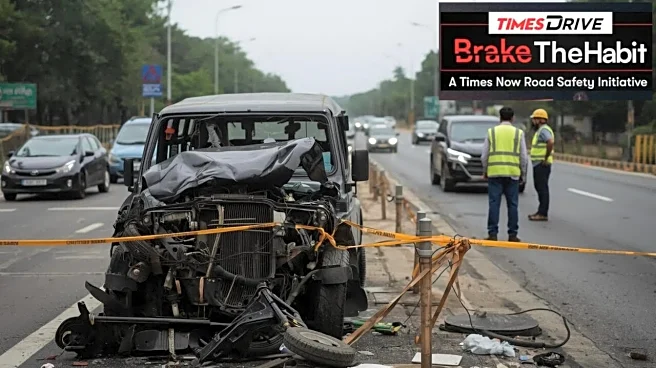

Road safety has become one of India’s most urgent public concerns, affecting people across all age groups, whether they drive, walk or travel as passengers. Realising the urgency of road safety is essential,
not just as information, but as something that affects everyday life.
India relies heavily on road transport because it is affordable and reaches even the most populated and remote areas and as the country grows economically, more people are buying vehicles on increasing rate, cities are expanding and roads are busier than ever. This rapid rise in motorisation has also increased the exposure to traffic risks. Unfortunately, this means accidents, injuries and fatalities continue to rise.
According to government data, in 2023 alone, India recorded 4,80,583 road accidents, which led to 1,72,890 deaths and left 4,62,825 people injured. That is an average of 1,317 accidents and 474 deaths every single day or 55 accidents and 20 deaths every hour. These numbers are not just statistics, but they represent families affected, futures disrupted and lives cut short.
Also Read: Classic Defender V8 Returns With New Colours And Features From Defender OCTA
Road accidents are one of the leading causes of death globally, particularly among people aged 15 to 49 years, making it not just a safety issue but a major public health concern.
While the year 2020 saw an unusual drop in road accidents and deaths, mainly due to COVID-19 lockdowns, the trend quickly reversed and by 2023, accident numbers increased by 4.2%, deaths by 2.6% and injuries by 4.4% compared to 2022. Which resulted to the country’s roads having once again become crowded and risky.
State-wise data also shows how deeply the issue runs, as Tamil Nadu reported the highest number of accidents at 67,213, while Uttar Pradesh recorded the highest deaths at 23,652, which shows that different regions face different challenges.
Road accidents do not occur due to a single reason, but they are the result of multiple factors working together, which include poor road design or maintenance, over-speeding and rash driving, distracted driving, often due to mobile phone use, lack of pedestrian-friendly infrastructure, insufficient traffic law enforcement and limited awareness about road safety rules. And with so many factors involved, solving the problem requires a multi-layered approach.
Recognizing the seriousness of the situation, the Ministry of Road Transport and Highways has adopted a proactive policy approach, in which instead of handling the issue alone, the government is involving all stakeholders like state bodies, police, vehicle manufacturers, road engineers, NGOs and citizens. The mission is to reduce fatalities and make roads safer for everyone.
Some of the measures include- Better road engineering and audit systems, safer vehicle designs, promoting awareness campaigns, stricter enforcement of traffic laws, encouraging helmet and seatbelt use and supporting first-aid and emergency response systems. This multi-pronged strategy is essential because road safety is not just the government’s responsibility, but it requires collective action.
Whether driving a car, riding a bike or even walking on the streets, being aware and responsible can save lives. India’s roads connect cities, families, opportunities and dreams, but only safer roads can protect them. Road safety is not just about rules; it is about valuing life.
For more two wheeler, three wheeler and auto industry updates, stay tuned to Times Now Auto.

/images/ppid_59c68470-image-177068503852327487.webp)

/images/ppid_59c68470-image-177068508630990142.webp)