



Petrol is above Rs 100 per litre in many Indian cities. That number is not going down meaningfully anytime soon. So the question most car buyers are actually asking before signing the papers is not what the car costs to buy — it is what it costs to run every month. The cheapest car on the showroom floor is not always the cheapest car to live with. CNG wins in the budget segment. Strong hybrids win in the middle. EVs change the maths entirely at the top. Here is the segment-by-segment breakdown of which car actually saves the most fuel in India right now.
Entry To Executive — CNG And Hybrid Is Where The Real Savings Are
Start at the bottom. The Maruti Suzuki Alto K10 CNG returns 33.40 km/kg under ARAI testing with the petrol AGS doing 24.90 kmpl. For a car that starts under Rs 4 lakh, that CNG figure makes it one
of the cheapest vehicles to run in India on a pure per-kilometre basis. If a CNG pump is on your daily route, the running cost case for the Alto K10 CNG is difficult to argue against at this price point.
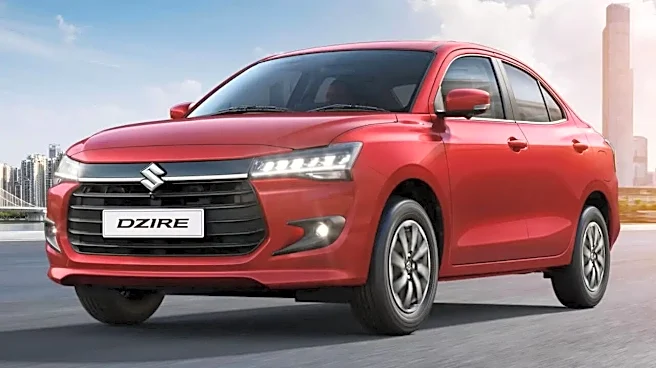
One step up, the Maruti Suzuki Dzire CNG leads the value sedan segment at 33.73 km/kg — the highest CNG mileage of any car in its category. The petrol Dzire does 24.79 kmpl on the manual and 25.71 kmpl on the AMT. For a family sedan that most Indian households use for school runs and weekend trips, these are numbers that no direct competitor gets close to on any fuel type.
In the executive compact SUV space — where most Indian families are spending Rs 12 to Rs 18 lakh — the Toyota Urban Cruiser Hyryder strong hybrid changes the calculation. It returns 27.97 kmpl under ARAI testing. The manual petrol version does 21.12 kmpl and the CNG variant 26.60 km/kg. In real city driving, the hybrid advantage over a comparable pure petrol compact SUV works out to roughly 5 to 6 kmpl. At 1,500 km a month, that is Rs 2,500 to Rs 3,000 back in your pocket every single month. Over three years, the hybrid premium in purchase price largely pays itself back in fuel savings alone.
Premium And Luxury — Where Hybrids And EVs Take Over Completely
Toyota Innova Hycross strong hybrid returns 23.23 to 23.24 kmpl. That is a mileage figure most 1.5-litre hatchbacks would be happy with — on a seven-seat MPV. The petrol-only Hycross variants return considerably less. For anyone using a large family car regularly for school runs, weekend trips and the odd highway stretch, the hybrid version recovers its price premium in fuel savings within two to three years at normal usage.
At the luxury end, the BMW iX1 LWB is electric and the running cost comparison shifts entirely. At home charging rates, the per-kilometre cost drops to under Rs 2. A petrol luxury SUV of comparable size costs Rs 6 to Rs 8 per kilometre to run. For a buyer covering 2,000 km monthly, that gap works out to over Rs 1.5 lakh in annual fuel savings. The upfront cost is higher but the ownership arithmetic over five years looks very different from the petrol alternative.
The pattern across every segment is the same. CNG is the answer for city-heavy usage under Rs 15 lakh where infrastructure is accessible. Strong hybrids are the answer between Rs 15 and Rs 30 lakh for buyers who do not have home charging. EVs make the strongest case above Rs 30 lakh for buyers with a home charger and a predictable daily routine. Picking a fuel type based on headline mileage without matching it to your actual usage is where most buyers leave money on the table.
(Source: autopunditz)


/images/ppid_a911dc6a-image-178062042466324328.webp)

/images/ppid_a911dc6a-image-178062045877339166.webp)

/images/ppid_59c68470-image-17806175310456754.webp)




/images/ppid_59c68470-image-178061756799986252.webp)