
India is taking another big step toward building a safer and more transparent electric vehicle (EV) ecosystem, as the Ministry of Road Transport and Highways (MoRTH) has proposed a new system called Battery
Pack Aadhaar, which aims to give every EV battery a unique, Aadhaar-like digital identity. This move is designed to improve battery safety, track their usage and make recycling more efficient in the future.
The proposal, which was released as draft guidelines in September 2025, is part of the government’s growing focus on e-mobility. As the number of electric vehicles increases, so does the importance of tracking batteries, which are known as the most expensive and sensitive part of an EV.
What is Battery Pack Aadhaar?
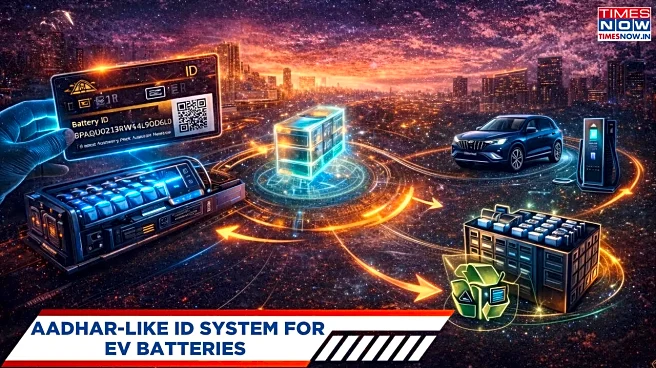
Battery Pack Aadhaar (BP-Aadhaar) is basically a digital identity for batteries. Under this system, every battery used in an electric vehicle will receive a 21-character Battery Pack Aadhaar Number (BPAN) and this number will be linked to an online system that stores all major information about the battery from the day it is produced to the day it is reused, repurposed or recycled.
This digital trail will help track the battery throughout its entire life cycle, including:
- Production
- Usage and charging
- Second-life applications (like using old EV batteries for backup power systems)
- Recycling and safe disposal
MoRTH’s draft guidelines put a clear responsibility on battery manufacturers and importers. Manufacturers and importers must do the following to ensure every battery introduced into India’s EV ecosystem is registered and traceable-
- Assign a BPAN to every battery they make or bring into India.
- Print or engrave this ID number clearly on the battery in a way that is not easily damaged.
- Upload all battery-related information to a central government portal.
The system will be implemented in stages to ensure smooth adoption-
Phase 1-
- Focus on basic identification details
- Safety and compliance information
- Battery health data
- Materials used
- Energy efficiency
- Carbon footprint
- Recycling and disposal data
Why are EV batteries the first priority?
EV batteries account for 80-90% of India’s lithium-ion battery consumption, which makes them the most critical segment to regulate. These batteries store large amounts of energy and require careful monitoring for safety, performance and environmental impact. Later, MoRTH may expand the BP-Aadhaar system to large industrial batteries above 2 kWh capacity.
How will the standards be created?
The framework will be developed through the Automotive Industry Standards (AIS) process which means battery makers, EV manufacturers, recyclers, testing agencies and regulators will all participate in shaping the final rules. The aim is to make sure the system works across the battery’s entire life cycle and aligns with national automotive regulations.



/images/ppid_a911dc6a-image-177073422588955268.webp)

/images/ppid_a911dc6a-image-177073406474645209.webp)
/images/ppid_a911dc6a-image-177073412509241364.webp)
/images/ppid_a911dc6a-image-177073402755726223.webp)
/images/ppid_a911dc6a-image-177073406528147283.webp)
/images/ppid_a911dc6a-image-177073402422810189.webp)