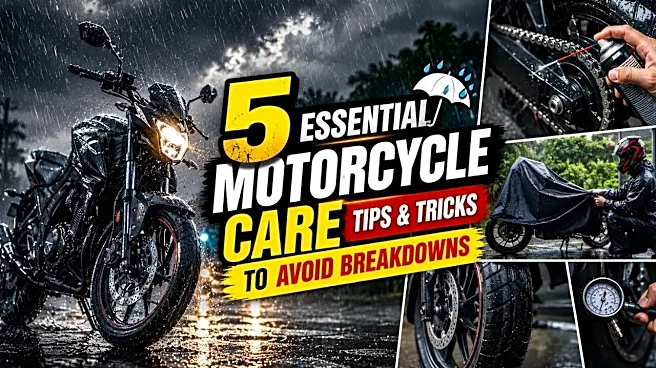



Want to keep your motorcycle breakdown-free during the rainy season? We have compiled a monsoon bike maintenance guide that focuses on chain care, brake checks, anti-rust protection, as well as electrical safety to keep unwanted breakdowns at bay. We understand that riding through waterlogged streets and sudden downpours can put unusual stress on critical parts of your two-wheeled companions. Hence, a short pre-monsoon checklist can head off the impact of these problems and keep your bikes running smoothly during the rainy season. Here are five essential motorcycle care tips and tricks every rider should follow this monsoon to avoid getting stranded on a rainy day.
Inspect Brakes and Brake Fluid
Brake pads glaze over faster when constantly wet, and brake fluid can absorb moisture
over time. This can reduce the braking efficiency of the bike, putting the rider's safety at risk. Hence, it is important to check brake pad thickness and replace worn pads before the season sets in. Moreover, you can examine brakes gently at low speed after riding through deep water, since wet pads and discs need a few seconds to regain full grip. Avoid sudden, hard braking on wet tarmac; use both brakes gradually and rely on engine braking when slowing down.
Lubricate and Protect the Chain Against Rust
The drive chain is one of the first components to suffer the wrath of the monsoon season. Water washes away regular lubricant almost instantly, and a chain can start rusting within days of repeated wet exposure if left untreated. To avoid this, you can clean the chain with a soft brush to remove mud and grit after every wet ride. Riders can also switch to a waterproof or wet-weather chain lubricant instead of regular lube, since it resists washout far better. Make sure you keep an eye on chain slack and sprocket wear regularly, as a stretched or rusted chain can snap or skip under load.
Waterproof the Electricals to Prevent Sudden Failures
Electrical faults are among the most frustrating monsoon breakdowns because they often strike without warning. Therefore, it is very important to keep a check on electricals of your motorcycle to prevent breakdowns. To take care, you can apply dielectric grease to battery terminals and exposed electrical connectors to repel moisture. Ensure that the wiring under the seat is dry and properly insulated. Examine the headlights, taillights, and the horn before the monsoon arrives. Also, keep battery terminals clean.
Check Tyre Tread and Pressure for Better Wet-Road Grip
Worn-out tyres are dangerous in any season. However, the risk multiplies on wet, slippery roads where grip is already low. To maintain the quality of tyres, it is imperative to check tread depth regularly, while the legal minimum is around 1.6mm, riders are advised to replace tyres well before they reach that point, ideally keeping at least 3mm of tread for monsoon safety. Both over- and under-inflated tyres reduce contact and grip on wet surfaces. Hence, it is necessary to maintain correct tyre pressure. Riders should avoid old, hardened, or cracked tyres even if the tread looks adequate because rubber that has aged loses grip regardless of depth.
Apply Anti-Rust Protection and Keep the Bike Dry
Constant exposure to rainwater, road grime, and humidity is the fastest way to trigger corrosion on exposed metal parts, particularly frames, exhaust pipes, fasteners, and undercarriage components, which are especially vulnerable. To avoid this, it is very important to use a professional anti-rust coating. Rinse off mud and salt residue from tyres, rims, and the underbelly after every ride through waterlogged stretches. Moreover, riders should never park or cover the bike while it's still wet. Dry it off first, since trapping moisture under a cover encourages rust and mould. It is also necessary to make use of a breathable, waterproof bike cover.






/images/ppid_a911dc6a-image-178167882647588359.webp)
