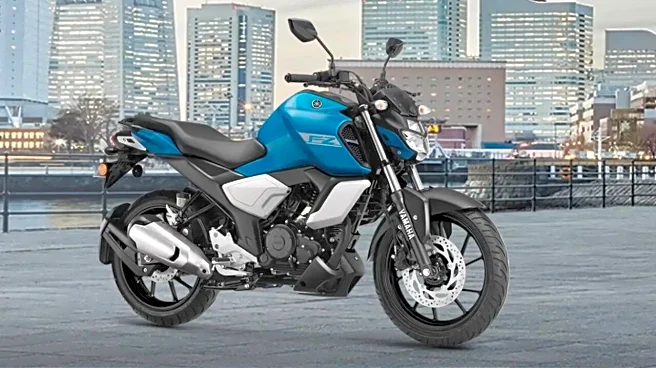

Yamaha Motor India has announced an internal reshuffle that could quietly shape the brand’s future in India as on January 28, the Japanese two-wheeler major confirmed that it will merge its sales and manufacturing
operations in India into a single organisation, while continuing to keep its research and development arm independent.
At present, Yamaha’s Indian business is spread across four different entities and these include India Yamaha Motor (IYM), Yamaha Motor India Sales (YMIS), Yamaha Motor India (YMI), and Yamaha Motor Research & Development India (YMRI). Each entity handles a specific role, which ranges from manufacturing and sales to research and engineering. While this structure has helped Yamaha establish a strong foundation in India, it has also meant multiple layers of coordination and overlap.Under the new restructuring plan, Yamaha Motor India Sales (YMIS) and Yamaha Motor India (YMI) will be merged into India Yamaha Motor (IYM). This means that manufacturing, sales, marketing, finance and administrative functions will now function under one unified organisation.
Yamaha Motor Research & Development India (YMRI) will continue as a standalone entity. This ensures that Yamaha’s focus on engineering, new technologies and future products remains sharp and independent. YMRI will work closely with the merged organisation, but without being weighed down by day-to-day commercial operations.
Also Read: Nissan Unveils Solar-Powered Ariya EV Concept With Integrated Roof Panels - Details
From a leadership perspective, Inagaki Junpei, who currently heads YMRI, will continue in a key role as Managing Director, overseeing engineering and technology-related activities after the restructuring. Meanwhile, Hajime Aota, Chairman of the Yamaha Motor India Group, will also take on the role of Managing Director of IYM. This dual leadership structure underscores Yamaha's seriousness for the Indian market.
Yamaha has also clarified that the restructuring is subject to approvals from Indian regulatory authorities and other stakeholders. Crucially, the company stated that customers, dealers, suppliers and employees are not expected to be impacted during the transition.
For Indian riders, the benefits may not be immediate or visible on the showroom floor. However, a simpler and more integrated organisation often leads to better product planning, quicker updates and improved alignment between what engineers develop and what customers actually want. In a market as competitive and fast-moving as India, Yamaha’s move suggests it is gearing up to play a more agile, focused and long-term game.
/images/ppid_59c68470-image-176977002705968953.webp)



/images/ppid_59c68470-image-176979759905365993.webp)

/images/ppid_59c68470-image-176966003211783951.webp)
/images/ppid_59c68470-image-176957262222910089.webp)