

/images/ppid_59c68470-image-177887003289840458.webp)

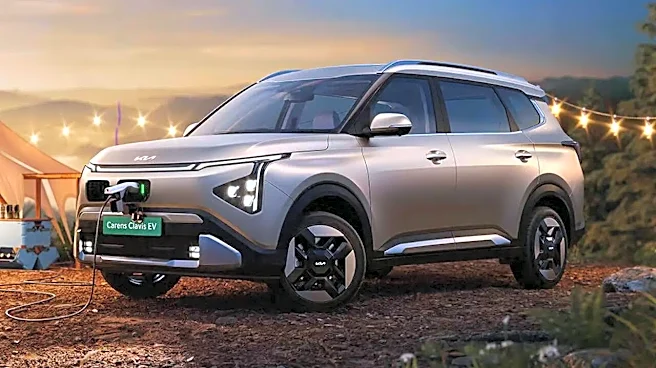
Kia India has introduced a Battery-as-a-Service (BaaS) finance model for the Carens Clavis EV, making the electric MPV significantly cheaper to purchase upfront. Under this new structure, buyers pay separately for the vehicle and battery pack instead of purchasing both together. As a result, the Carens Clavis EV now starts at Rs 12.84 lakh (ex-showroom) for the chassis under the BaaS plan, while battery usage is charged separately at Rs 3.3 per kilometre. The move comes at a time when EV interest is rising in India but many buyers still hesitate because of high acquisition costs compared to petrol and diesel alternatives.
How Kia’s Battery Subscription Model Actually Works
The biggest change here is that Kia is separating battery ownership from the vehicle itself. Normally, EV buyers pay for the car
and battery together, which pushes the final price up sharply because the battery remains the most expensive component inside an electric vehicle. With this new BaaS setup, Kia is trying to reduce that initial burden.
For example, the standard Carens Clavis EV has an ex-showroom price of Rs 17.99 lakh. Under the BaaS structure, though, the chassis price drops to Rs 12.84 lakh because the battery cost is removed from the upfront purchase amount. Buyers instead pay battery usage charges calculated at Rs 3.3 per kilometre.
Kia says ownership costs under this setup start from Rs 51,520 depending on financing structure and usage. The company has also introduced separate loan structures for the vehicle body and battery pack. Buyers can choose repayment periods of up to 60 months for the chassis and up to 96 months for the battery component.
And honestly, this directly targets one of the biggest concerns Indian EV buyers still have: “Why does the electric version cost so much more upfront?” Instead of forcing customers to absorb the full battery cost immediately, Kia is spreading part of that expense over usage and financing periods.
Also Read: Kia Seltos Hybrid India Launch Soon - Over 25 Kmpl Mileage, Expected Price And Details
Why Carmakers Are Starting To Experiment With EV Ownership
Battery subscription models are becoming more important globally because EV pricing still remains heavily influenced by battery costs. In India especially, buyers are extremely price-sensitive. Even people interested in switching to EVs often compare them directly against similarly sized petrol or diesel vehicles and struggle to justify the initial premium.
That’s why this model could attract urban buyers with predictable usage patterns. Someone driving fixed daily routes for office commutes or city travel may find usage-linked battery payments easier to calculate compared to paying the full EV cost upfront.
Kia is also clearly trying to strengthen the ownership ecosystem alongside the pricing strategy. According to the company, the MyKia app currently gives access to over 15,000 charging points across India along with route planning and charger availability information. Kia additionally says more than 100 dealerships now have DC fast chargers while 267 workshops are EV-ready.
And realistically, this shows how the EV market in India is changing now.
It’s no longer just about launching electric cars. Carmakers are increasingly trying to solve the practical ownership concerns buyers keep raising: charging access, financing, running costs and long-term affordability.


/images/ppid_a911dc6a-image-177887502741699548.webp)



/images/ppid_a911dc6a-image-177887323263416135.webp)


/images/ppid_a911dc6a-image-177887152832346950.webp)
/images/ppid_a911dc6a-image-177887159797444473.webp)
/images/ppid_a911dc6a-image-177887164220027215.webp)
/images/ppid_a911dc6a-image-177887155831516337.webp)