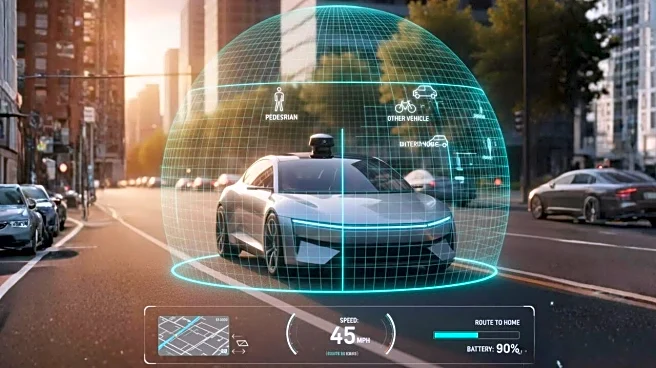




If I ask you to name some of the technologies used in self-driving cars today, what exactly comes to your mind? Even if you are not a car enthusiast, chances are you will come up with terms like “radars”, “sensors”, and so on. And yes, you got this right here. In fact, these technologies are used to enhance the safety of your driving experience.
However, there's something that adds a ‘human touch’ to self-driven cars. These self-driving systems react instantly to situations like traffic instead of actually trying to understand their surroundings before taking any action. This system is basically like a driver who is only fixated on the car ahead and overlooks the broader scenario.
However, NVIDIA's Alpamayo is a different story. What makes it
an interesting concept worth discussing, you ask? Rather than adding yet more sensors to the car, it asks a different question altogether. What if your vehicle, like a human, pauses for a moment, observes its surroundings, reacts after judging the situation, and also gives you the explanation for the same?
What this kind of approach does is move past rigid and mechanical “if-this-then-that” rules toward more dynamic decisions that are based on logical reasoning. How will a car beyond ‘sensors’ look? Let’s explore.
Why Self-Driving Cars Still Struggle
Many autonomous vehicles commonly struggle when dealing with unexpected situations. Let's take this idea through a few examples. Suppose the traffic light goes out suddenly, or the road becomes narrow without any warning, or a pedestrian is crossing the street at an unmarked crosswalk. Humans usually stay calm and think over the situation in such cases. But machines don't always behave the way we expect them to. They look for clear instructions, and if they don't receive any, mistakes/mishaps are likely to happen. This is where a car needs a message to stop, wait and start thinking.
How Does This Technology Solve The Problem?
Alpamayo is kind of a brain with layers for cars.
It doesn't just ask, 'what am I looking at?'
It also considers, 'what does this mean?' and 'what should I do now?'
It does not impose a strict set of rules. In fact, it encourages reasoning and allows the system to decide through the situation step-by-step. You can think of it as an internal monologue:
- Something is different…
- People are looking confused…
- Cars are slowing down…
- So, I have to slow down too…
And we all know that this is actually how human beings think and act when driving. So, yes, that’s not programming, that’s judgement.
Why This Changes Everything
Once a vehicle is able to justify its actions, people's trust in it increases. Technicians get the chance to solve issues more quickly. In case of mishaps, a clearer picture appears for clear and accurate judgments. In such cases, drivers are also at ease when they realise that the system is not just nailing a ‘guess’ or ‘could have been’ scenario. Rather than accusing the system of failure, engineers can find out and work on how the system misinterpreted a particular aspect of the situation. Isn’t this a real progress?
What Such Self-Driving Tech Could Mean For India
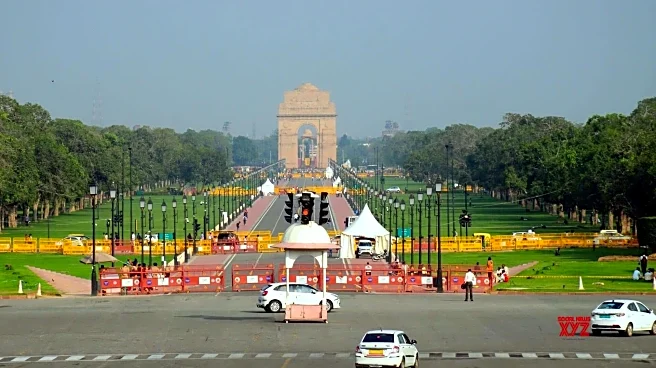
India could be a stress test for self-driving cars, and carmakers. The chaotic roads, wild traffic, a bit less alignment with traffic rules, different types of vehicles, and no lane discipline pose challenges that are hard to deal with, at least for a machine.
What kind of driver assistance can Alpamayo systems offer even before full self-driving is achieved? Enhanced emergency braking. Better prediction. Increased awareness of disorder – at least they claim to do all of it with this one-stop solution. The reality check is pending!
If autonomous driving is ever successful in India, it will not be due to better cameras. We would need more than just cameras and sensors – a ‘human-like thinking mode’.
/images/ppid_a911dc6a-image-177044133305295404.webp)



/images/ppid_a911dc6a-image-17704400555374587.webp)
/images/ppid_59c68470-image-177044003399948153.webp)


/images/ppid_a911dc6a-image-177043890097897507.webp)
/images/ppid_a911dc6a-image-177043885979790635.webp)