

/images/ppid_59c68470-image-17787525303676216.webp)
/images/ppid_59c68470-image-177875253597591549.webp)
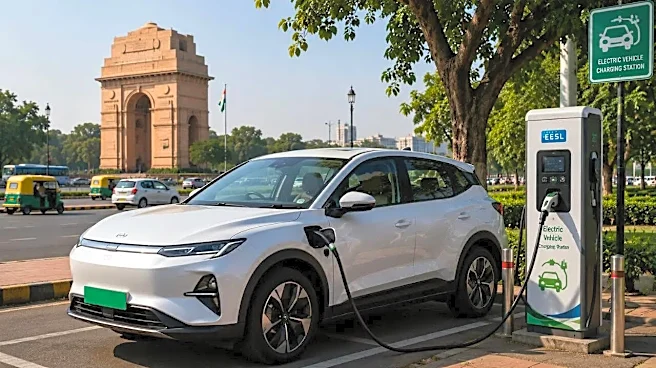
Prime Minister Narendra Modi has urged masses to lessen their dependence on petrol and diesel and start adopting or actively using electric vehicles and public transport. This comes against the backdrop of volatile global oil prices after the 2026 Strait of Hormuz disruption. While EVs have always been a key focus of the Government’s push towards greener mobility and reduced dependence on fossil fuels, PM Modi’s recent ‘Switch to EVs’ call highlights a renewed sense of urgency and once again highlights the gradual transition towards electric mobility. In the proposed Delhi EV Policy 2.0 draft, which is yet to be implemented, the Government has introduced several schemes and incentives aimed at encouraging EV adoption in India. One of the most
significant proposals is that, starting April 1, 2028, Delhi will allow registrations only for new electric two-wheelers, while from January 1, 2027, only electric three-wheelers will be registered in the city. Here’s a quick look at what the future Delhi EV Policy 2.0 could offer electric car buyers.
Here's How Much Can You Save On Electric Cars In Future?
The future is 'Electric', and that's how the policy seems to be designed and developed. Especially four wheeler buyers, the Delhi EV policy draft headline benefit is hard to ignore. As per the draft policy, electric four-wheelers priced up to Rs 30 lakh (ex-showroom) will be exempted from road tax and registration charges until March 31, 2030. For interested buyers, this could lead into direct savings of somewhere between about Rs 1.5 lakh and over Rs 4 lakh, depending on the car's price and category. This will help in making EVs financially more attractive against petrol and diesel-powered counterparts, where high initial acquisition costs still remain a major concern for many car buyers. The policy draft also proposes a 50% concession on road tax and registration fees for strong hybrid vehicles, while EVs priced above Rs 30 lakh will not qualify for any of these waivers. Additionally, all incentives are expected to be routed through Direct Benefit Transfer (DBT) to ensure faster and more transparent disbursal of benefits.
For those planning to replace ageing petrol and diesel vehicles also benefit from the Delhi EV Policy 2.0. Under the proposal, customers purchasing a new electric car priced below Rs 30 lakh (ex-showroom) could become eligible for a scrappage incentive if they retire an older Delhi-registered BS-IV or earlier vehicle. However, to avail the benefit, the old vehicle must be scrapped within six months from the date of issuance of the official scrappage certificate, creating an added financial advantage for buyers planning to shift to EVs.
Also Read: Upcoming Electric Cars In India - Tata Sierra EV, Tiago EV Facelift, Kia Syros EV And More
Upcoming Electric Cars Under Rs 30 Lakh to Watch in India
The policy's Rs 30 lakh ceiling comes at a right time, given an possible incoming wave of affordable EVs. The Tata Sierra EV is expected to be priced from Rs 16 lakh to Rs 25 lakh, while the Toyota Urban Cruiser Ebella is anticipated to be in the range of Rs 20 lakh–Rs 25 lakh.
The Kia Syros EV, expected to go on sale by mid-2026, could fetch somewhere between Rs 15 lakh and Rs 20 lakh, and rival against the Tata Nexon EV and MG Windsor.
/images/ppid_a911dc6a-image-177875362935251515.webp)







/images/ppid_59c68470-image-177875262497174306.webp)

/images/ppid_59c68470-image-177875256414772642.webp)