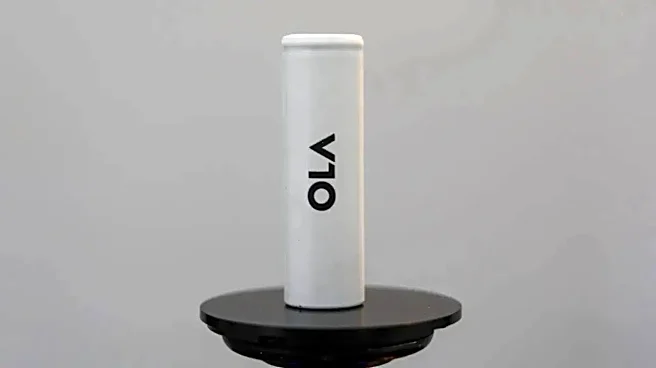




Ola Electric may soon expand its role from a manufacturer to an EV battery supplier in India. The Bengaluru-based company is reportedly in active discussions with several automakers both local and international to supply its lithium-ion cells and battery packs from its Krishnagiri gigafactory in Tamil Nadu. Though there's no official update on this matter as of now, but if Ola manages to materialise these talks into commercial agreements, it will be a major turning point in the EV manufacturer's automotive journey, from a vertically integrated EV brand to a B2B battery powerhouse.
The Bengaluru-based company has the only large-scale and functioning gigafactory in the country, with 6 GWh of installed capacity. With the help of Ola Cell Technologies,
its wholly-owned subsidiary, the brand has commercially deployed the 4680-format Bharat Cell at scale. Only Tesla has achieved similar scale with this cell format, making Ola Electric's the second in line to achieve this milestone.
Ola Electric's move to emerge as a EV battery supplier comes at a time when the EV industry in India is experiencing a strong growth across electric scooters, motorcycles, passenger cars, and even energy storage systems. The localisation of cells and batteries will be great boon for automakers, especially in India, making domestic battery production more faster while reducing import dependence. This will also enable to stablise the prices of electric vehicles in the future.
Existing Portfolio Of Ola Electric In India
Ola Electric sells multiple variants of the S1 electric scooter lineup in India alongside electric motorcycle called the Roadster. Alongside vehicles, Ola has been investing heavily in battery technology, research and development, manufacturing, and energy storage solutions.
As mentioned, the S1 electric scooter manufacturer's gigafactory has an installed capacity of 6 GWh. This capacity is expected to increase to 12 GWh by July 2027 and further rise to 20 GWh by the end of FY28. Ola Electric is said to have invested nearly Rs 5,300 crore across battery development, cell manufacturing, R&D, and factory infrastructure. For the uninitiated, Ola entered the home energy storage segment with its Ola Shakti system in October 2025. Deliveries began in January 2026, and the company now expects annual cell demand from this business alone to potentially touch 5 GWh in the coming years.
Ola Electric Could Soon Power Rival EV Brands Too, Here’s Why It Matters
According to the report from PTI, about one-third of Ola Electric’s planned 20 GWh battery capacity, approximately 6.5 GWh, is being reserved for third-party sales to automotive OEMs. Sources suggest that potential customers are currently evaluating Ola’s manufacturing operations before making long-term commitments.
If Ola starts supplying battery packs and lithium-ion cells to rival EV brands, it could bring a significant improvement for EV supply chain of India. Currently, many automakers continue to rely heavily on imported battery cells and components, particularly from China and other global suppliers. A stronger domestic battery ecosystem could help lower costs, improve supply stability, and increase EV adoption in the country.
Also Read: TVS iQube To Ather Rizta - 5 Reliable Electric Scooters To Buy As Petrol Prices Surge
It will also help Ola Electric expand its role in India's automotive market. The brand is primarily associated with electric scooters, and the position of battery supplier will allow it to establish relevance across multiple vehicle segments, including passenger cars, and commercial EVs.
Created with inputs from PTI



/images/ppid_59c68470-image-177881256761949868.webp)



/images/ppid_59c68470-image-177877003002725364.webp)
/images/ppid_59c68470-image-17788176198369690.webp)
/images/ppid_59c68470-image-17787450354865433.webp)