
/images/ppid_a911dc6a-image-177081453463993301.webp)
/images/ppid_a911dc6a-image-177081453893074122.webp)
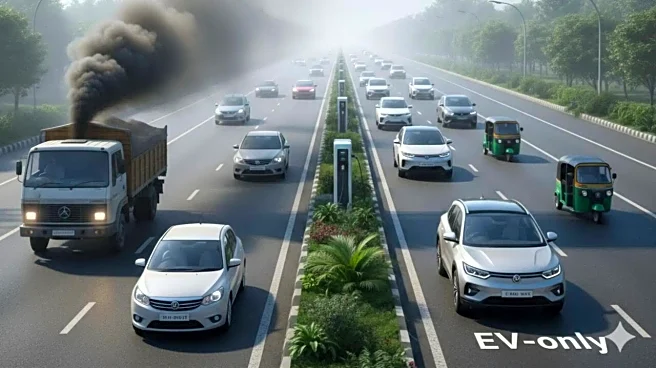
For decades, diesel has been the backbone of India’s transport system. From SUVs and buses to trucks carrying goods across states, diesel engines have powered economic growth. But with climate concerns rising and India committing to achieve net zero emissions by 2070, an important question is being asked - what comes after diesel?
A recent study prepared by NITI Aayog offers some clear direction as instead of calling for an immediate ban on diesel vehicles, the report recommends a phased and practical transition towards zero-emission mobility. However, the focus is not on sudden disruption, but on steady transformation.
No Sudden Diesel Ban
The study makes one thing very clear, which is that the diesel is not going to disappear overnight, as India’s
transport system is deeply connected to diesel-powered vehicles, especially in freight and public transport. A sudden ban could disrupt logistics, jobs and industries that depend on these vehicles.
Instead, the report suggests a staged approach as over time, as electric vehicles (EVs) become more affordable, charging infrastructure improves and cleaner electricity becomes widely available, diesel use can gradually decline.
Electricity Takes the Lead
Under the “net zero” pathway described in the study, electricity becomes the main energy source for transport in the future. Two-wheelers, three-wheelers, passenger cars and city buses are expected to move toward battery-electric technology at a faster pace.
India has already seen strong growth in electric scooters and three-wheelers and with falling battery costs and government incentives, EVs are slowly entering the mainstream.
However, the study also highlights an important point, which is- electrification must be supported by cleaner power generation. If electricity comes from coal-heavy sources, the environmental benefits are reduced. Therefore, expanding renewable energy like solar and wind is equally important.
Also Read: Toyota Urban Cruiser Ebella Review: Practical, Polished and Playing It Safe
What About Trucks and Heavy Vehicles?
Not all vehicles can easily switch to batteries, however heavy trucks that travel long distances may require alternative solutions. The report suggests that sustainable biofuels and in the longer term, hydrogen-based fuels could play a role in these segments. Natural gas networks may also be adapted to handle cleaner gases in the future, allowing for a smoother shift away from fossil fuels.
Reducing Demand, Not Just Changing Fuel
One of the most interesting parts of the study is that it does not focus only on vehicles, but it talks about reducing fuel demand itself. Better public transport, stronger rail freight networks and smarter urban planning can reduce the number of kilometres people and goods need to travel. Shorter commutes and improved city layouts mean lower fuel use, whether diesel or electricity.
What This Means for Diesel
Diesel will not vanish tomorrow, but its role will shrink gradually. As electric mobility expands and cleaner technologies mature, diesel consumption is expected to decline step by step.
For everyday car buyers, this means change will be gradual, not forced. For the industry, it signals investment in electric platforms, charging networks and new energy technologies. India’s road to net zero will not be built on abrupt decisions. According to NITI Aayog’s study, it will be built on planning, innovation and a careful balance between growth and sustainability.
/images/ppid_59c68470-image-177081525337143071.webp)

/images/ppid_59c68470-image-177081508095753303.webp)
/images/ppid_59c68470-image-177081517392040553.webp)
/images/ppid_59c68470-image-177081512358914704.webp)
/images/ppid_59c68470-image-177081521903588681.webp)





/images/ppid_59c68470-image-177081503618238277.webp)