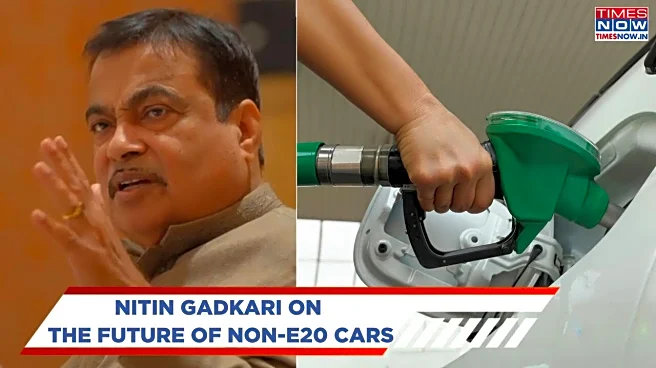

The government of India has clarified its stance on E20 ethanol-blended petrol and older vehicles that are not compliant with this fuel standard. Union Road Transport and Highways Minister Nitin Gadkari
confirmed there will be no requirement to phase out or retrofit non-E20 vehicles despite concerns raised by owners since the nationwide rollout of E20 fuel in April 2025. The clarification came in response to parliamentary questions and references official studies by technical bodies indicating that normal vehicle wear from E20 can be managed through routine servicing, and that stricter measures like mandated retrofits are not planned.
Also Read: 5 Bikes With Best Build Quality Under Rs 3 Lakh
Government Response To E20 Compatibility Concerns
Since April 2025, petrol blended with 20% ethanol (E20) became the mandatory fuel grade across India, prompting questions about compatibility with older vehicles. In Parliament, Gadkari stated recent research by institutions including the Automotive Research Association of India (ARAI), Indian Oil Corporation Ltd (IOCL), and the Society of Indian Automobile Manufacturers (SIAM) shows that older cars and bikes can continue to operate safely without special retrofits. Normal wear and tear linked to the use of E20 petrol can be handled through regular servicing.
No Phase-Out Or Retrofit Requirement
Addressing whether non-E20 compliant vehicles will be phased out or require hardware changes, Gadkari was clear that there are no plans for either measure. He explained that the ongoing use of E20 fuel does not inherently damage vehicles designed for older fuel blends and that both retrofit programmes and mandatory phase-outs are not necessary at this stage. This clarification was provided after lawmakers raised concerns about the need for a government-led retrofit initiative.
Vehicle Compatibility And Labelling
Gadkari also touched on how vehicle manufacturers should communicate ethanol fuel compatibility. He said that makers are responsible for clearly indicating whether a specific model is suitable for E10 or E20 petrol through visible labels on the vehicle. According to the government position, vehicles sold before 1 April 2023 were compliant with E10 standards, while those sold after that date meet E20 material compatibility guidelines.
Technical Findings On E20 Fuel Usage
Government-run tests involving older vehicles running on E20 petrol over extended periods have reportedly shown no major issues related to engine failure or core component damage. Parameters such as driveability, metal compatibility, and plastic compatibility have been found acceptable under industry testing standards, reinforcing the government’s view that additional phase-outs or retrofits are not required.
Also Read: Bajaj Pulsar 220F Dual-Channel ABS Launched In India At Rs 1.28 Lakh
What Owners Should Know
Vehicle owners concerned about E20 compatibility are advised to check manufacturer labels for ethanol blend suitability and maintain regular servicing schedules. The government’s policy clarification seeks to reassure users that existing vehicles can continue to run on E20 petrol without phased withdrawal or enforced retrofitting programmes.