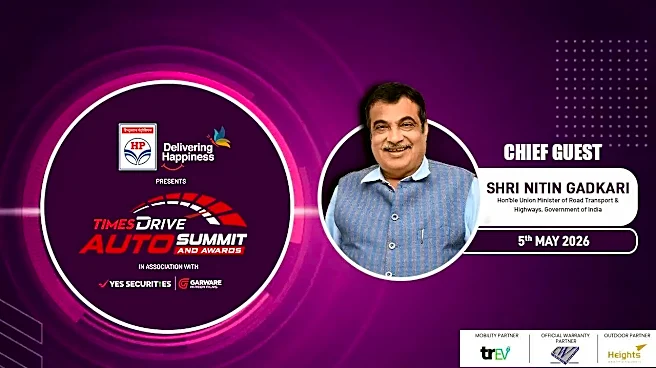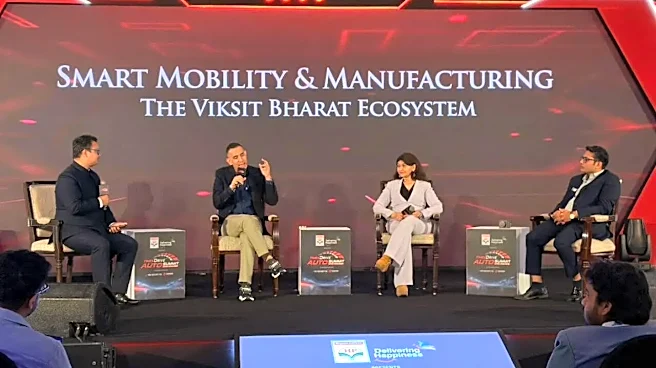




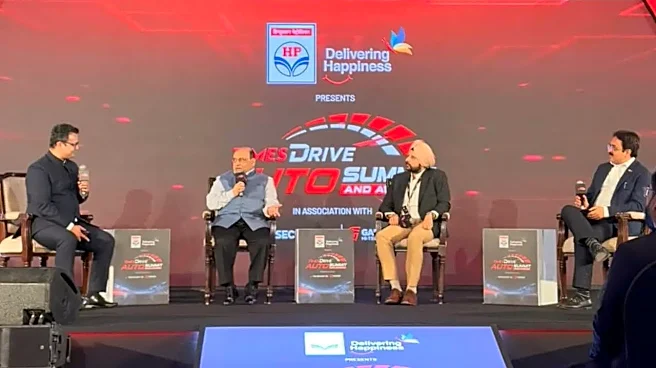
At the HPCL Presents Times Drive Auto Summit & Awards 2026, a panel discussion on Smart Mobility & Manufacturing: The Viksit Bharat Ecosystem brought together industry voices to examine how India can scale its mobility ambitions under the broader theme ‘India’s Mobility Mission 2030: Clean Tech, Smart Manufacturing, Global Vision’. The conversation focused on battery localisation, supply chain control, EV adoption and the need for a coordinated ecosystem. Speakers agreed that while progress is visible, achieving global competitiveness will depend on how quickly India builds scale, reduces import dependence and aligns manufacturing with long-term mobility needs.
Localisation, Battery Ecosystem And Supply Chain Control
A key theme across the discussion was the need for India to reduce dependence on imported
battery cells and related components. Uday Narang, Founder & Chairman, Omega Seiki Mobility, stressed that energy independence is central to long-term competitiveness, pointing out that relying heavily on imports, particularly from China, limits control over costs and supply chains. He highlighted that localisation is not just about assembling products in India but about building capabilities across the value chain, from battery technology to manufacturing processes.
Kavita Verma, CEO, Maxwell Energy Systems, reinforced this by focusing on battery management systems and component-level innovation. She underlined the importance of investing in in-house research and development rather than depending on external sources. According to her, developing design, engineering and manufacturing capabilities within India is essential for reliability and global positioning. Both speakers pointed to supply chain control as a critical factor, noting that without scale and local integration, cost efficiency remains difficult to achieve.
Smart Mobility And Evolving User Needs
From a mobility perspective, Naveen Gupta, Founder, TREV Mobility, shifted the focus towards how users interact with transportation. He emphasised that smart and shared mobility solutions will play a larger role in India’s transition. According to him, the current gap lies in service reliability and user experience, which need to improve for wider adoption.
He also highlighted the role of EV fleets in accelerating this shift, noting that exposure to electric mobility through shared platforms can influence consumer behaviour. Infrastructure development, particularly highway charging networks led by agencies such as NHAI, was acknowledged as a positive step, but not sufficient on its own without consistent service quality.
Scale, Collaboration And The Viksit Bharat Roadmap
On the broader question of whether India is moving towards a Viksit Bharat, the panel agreed that progress is underway but not yet complete. Narang pointed out that collaboration across industries is essential to build scale, adding that fragmented efforts could slow momentum. Rising energy costs were also flagged as a concern, reinforcing the need for coordinated action.
Verma added that an integrated, multi-energy ecosystem is already taking shape, but affordability and dependability remain key challenges. She noted that even with expanding charging infrastructure, high energy costs could impact adoption. The consensus was clear: achieving Viksit Bharat will require simultaneous progress across manufacturing, energy systems, infrastructure, and policy, all moving at a similar pace to create a stable and scalable mobility ecosystem.

/images/ppid_59c68470-image-177797502989184205.webp)


/images/ppid_59c68470-image-177797759254134320.webp)