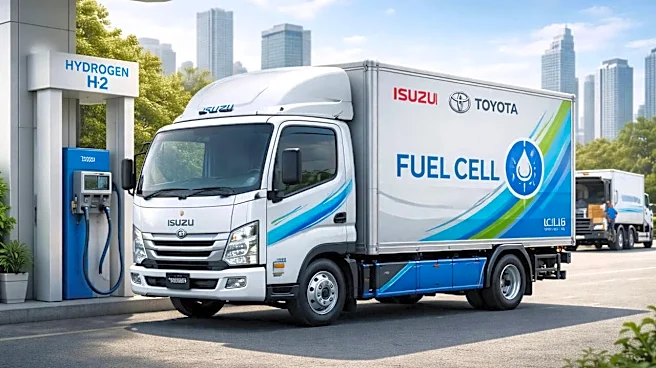



In a major move for clean mobility, Isuzu Motors and Toyota Motor Corporation have announced a partnership to develop Japan’s first mass-produced light-duty fuel cell electric truck. The companies are targeting production by the financial year 2027. The goal is simple to reduce emissions and support the shift towards a hydrogen-based transport system.
What Exactly Is This New Truck?
The upcoming truck will be based on Isuzu’s existing ELF EV platform, which is already used for electric light-duty trucks. However, instead of using only battery power, this new version will use Toyota’s next-generation fuel cell system. In simple terms, this truck will run on hydrogen. The fuel cell system converts hydrogen into electricity, which powers the vehicle.
The biggest advantage here is that the truck produces no harmful emissions while driving.
Why Hydrogen Trucks Matter
Light-duty trucks are used daily for deliveries from supermarkets to small shops. These vehicles often run for long hours and cover large distances. Many also carry refrigerated goods, which adds to energy demand. This is where hydrogen fuel cell vehicles have an advantage. Unlike battery electric vehicles, which take time to charge, hydrogen trucks can be refueled quickly, just like petrol or diesel vehicles. They also offer longer driving range, making them suitable for heavy daily use.
Also Read: Tyre Pressure Can Save Fuel? Here’s How This Simple Check Improves Mileage
Better Performance For Real Work Conditions
Both companies are working together to make sure the truck performs well in real-world conditions. Commercial vehicles are not like personal cars. They need to be reliable, durable, and ready to work all day. Toyota’s new third-generation fuel cell system is expected to improve durability and extend the life of the vehicle. Isuzu, on the other hand, is focusing on making the truck body more efficient and cost-effective.
Challenge Of Cost
One of the biggest problems with fuel cell vehicles today is their high price. To solve this, both companies are working on reducing production costs. Isuzu is improving manufacturing processes and vehicle design, while Toyota is working on making fuel cell systems cheaper and more efficient. The aim is to make these trucks practical for businesses, not just for testing or limited use.
This is not the first time these companies are working on hydrogen vehicles. They have already collaborated on projects like fuel cell buses and pilot truck programs. The experience gained from these projects is now being used to improve technology, increase reliability, and make the system ready for large-scale production.
Building A Hydrogen Future
Both Isuzu and Toyota believe hydrogen will play a key role in future mobility. Governments in Japan are also supporting hydrogen adoption by building infrastructure and encouraging clean transport solutions. Toyota is working across the entire hydrogen chain from production to storage and usage. Isuzu is focusing on bringing hydrogen technology into commercial vehicles. If everything goes as planned, production will begin in 2027. This truck could change how goods are transported in cities and across regions. The future of commercial vehicles is not just electric, it could also be hydrogen. And this partnership is an important step in that direction.