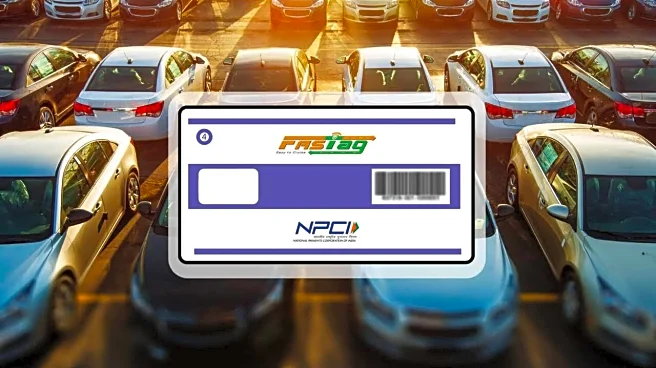

The FASTag KYV removal is a significant update for private vehicle owners, aimed at simplifying toll payments and reducing procedural delays. The National Highways Authority of India (NHAI) has removed
the mandatory Know Your Vehicle (KYV) requirement for private vehicles, making FASTag usage more straightforward at toll plazas. Earlier, incomplete or pending KYV verification often led to FASTag deactivation or lane denial, causing inconvenience for drivers. With this change now in effect, private car owners can expect smoother toll transactions and fewer disruptions. Here’s a clear explanation of what KYV removal means, why it was implemented, and how it impacts everyday highway users.
Also Read: No Tax On Road Accident Victim's Compensation Going Forward - Explained
What Was FASTag KYV
FASTag KYV was a vehicle verification process linked to the registration number, chassis details and owner information. It was introduced to reduce misuse, duplicate FASTags and incorrect vehicle classification at toll booths. However, the process proved problematic for many private vehicle owners. Errors in vehicle data, delays in verification or mismatches during dealership registration often resulted in FASTags being flagged or suspended, even when balances were sufficient. This created bottlenecks at toll plazas and added an extra compliance layer for regular commuters.
What Has Changed Now
Under the revised rules, KYV is no longer mandatory for private vehicles using FASTag. This means private car owners are no longer required to complete or update KYV details to keep their FASTag active. The change applies only to private vehicles. Commercial vehicles still need to comply with KYV norms. NHAI clarified that the decision was taken to reduce friction in toll collection and improve the user experience, especially for high-frequency highway users.
How It Makes Toll Payments Easier
The removal of KYV simplifies FASTag usage in multiple ways. Drivers no longer face sudden FASTag blacklisting due to verification issues. Toll transactions become faster, with fewer instances of manual intervention at plazas. New car buyers can also start using FASTag without worrying about KYV-related delays during vehicle delivery or registration updates. Overall, this reduces waiting time, congestion and confusion at toll gates.
What Drivers Still Need To Do
Although KYV is no longer mandatory, drivers must still ensure their FASTag account has sufficient balance and is correctly linked to the vehicle’s registration number. Misuse, such as using a private FASTag on a commercial vehicle, can still attract penalties. Banks and FASTag issuers may continue basic checks to prevent fraud, but these will not block routine toll payments for private cars.
Also Read: Tata Nexon, Punch, Tiago Drive 47% YoY Sales Growth In January 2026
Bottom Line
The FASTag KYV removal is a user-focused move that streamlines toll payments for private vehicle owners. By eliminating a common source of errors and delays, NHAI aims to improve highway travel efficiency while retaining safeguards for misuse and commercial operations.







/images/ppid_a911dc6a-image-177003057152920897.webp)

/images/ppid_a911dc6a-image-177003061971963028.webp)
/images/ppid_a911dc6a-image-177003053195324726.webp)