





What is the story about?
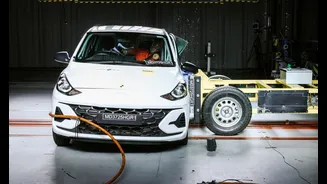
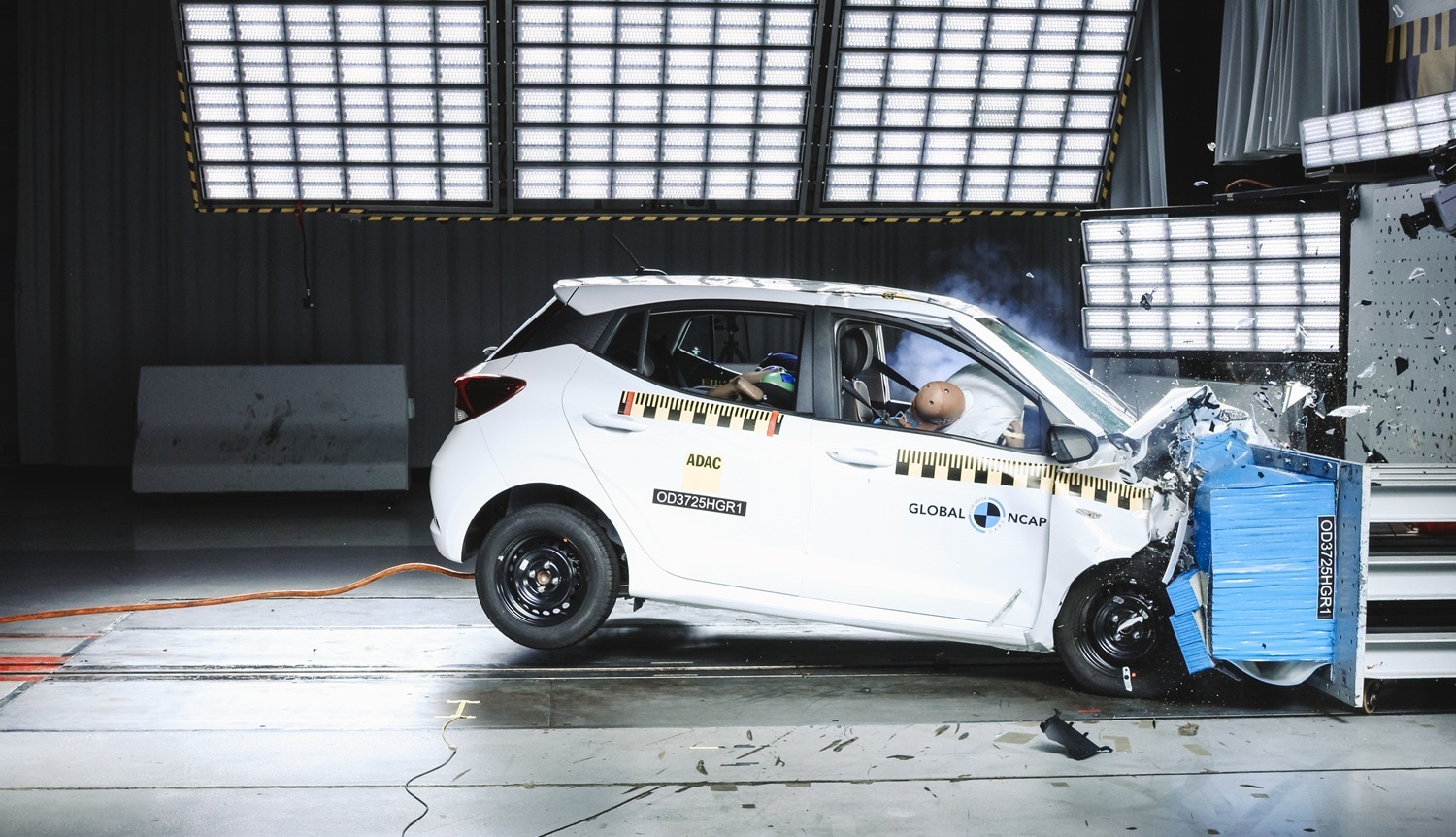
The Hyundai Grand i10, built in India for African markets, has received a zero-star rating for adult occupant protection in Global NCAP’s latest #SaferCarsForAfrica assessments, with the result applying to South Africa. The model scored 0 out of 34 points for adult protection and 28.57 out of 49 points, equal to three stars, for child occupant protection.
Global NCAP reported that adult protection was extremely poor, with a high risk of life-threatening injuries. The frontal impact test recorded weak chest protection for the driver, while the side impact test showed chest injury readings above allowed limits, indicating a high risk of non-recoverable injuries. Because injury thresholds were exceeded, the car received zero points for adult occupant protection.
The agency also found the bodyshell and footwell unstable in the frontal test and unable to withstand further load. The Grand i10 tested for Africa is equipped with driver and passenger airbags only, with no side body or head protection, no Electronic Stability Control (ESC) and a seat belt reminder only for the driver.
The absence of side head protection meant the side pole test could not be conducted. Additional limitations included the lack of three-point seatbelts in all positions, no option to disable the passenger airbag for child seats and no ability to place a rear-facing child seat in the rear centre.
For child occupants, both the three-year-old and 18-month-old dummies showed adequate head protection, and the vehicle passed the child side-impact assessment. However, the lack of safety equipment contributed to capped scores.
Richard Woods, CEO at Global NCAP, said, “It is unacceptable to see the continued double standard on safety in low and middle-income countries. Democratising vehicle safety in Africa is a Global NCAP priority, and consumers deserve safer vehicles regardless of where in the world they live.”
Bobby Ramagwede, CEO at Automobile Association of South Africa, said, “These results are deeply concerning and highlight a continuing pattern in which vehicles sold in Africa do not meet the same safety standards applied in other regions… Safety should never be optional, and certainly not reserved for markets outside Africa.”
The tested car shares its production base with the India-spec Hyundai Grand i10 Nios, but not its safety equipment. The Indian version includes six airbags, three-point seatbelts with reminders for all seats, ABS and additional stability features on higher variants.
When Global NCAP tested the two-airbag Nios in 2020, it received two stars for both adult and child safety. Hyundai exports India-built Grand i10 units to more than 140 countries, with South Africa among the major destinations.
Global NCAP reported that adult protection was extremely poor, with a high risk of life-threatening injuries. The frontal impact test recorded weak chest protection for the driver, while the side impact test showed chest injury readings above allowed limits, indicating a high risk of non-recoverable injuries. Because injury thresholds were exceeded, the car received zero points for adult occupant protection.
The agency also found the bodyshell and footwell unstable in the frontal test and unable to withstand further load. The Grand i10 tested for Africa is equipped with driver and passenger airbags only, with no side body or head protection, no Electronic Stability Control (ESC) and a seat belt reminder only for the driver.
While the model scored three stars for child occupant protection, the test revealed serious shortcomings in adult occupant protection.
The absence of side head protection meant the side pole test could not be conducted. Additional limitations included the lack of three-point seatbelts in all positions, no option to disable the passenger airbag for child seats and no ability to place a rear-facing child seat in the rear centre.
For child occupants, both the three-year-old and 18-month-old dummies showed adequate head protection, and the vehicle passed the child side-impact assessment. However, the lack of safety equipment contributed to capped scores.
Richard Woods, CEO at Global NCAP, said, “It is unacceptable to see the continued double standard on safety in low and middle-income countries. Democratising vehicle safety in Africa is a Global NCAP priority, and consumers deserve safer vehicles regardless of where in the world they live.”
Bobby Ramagwede, CEO at Automobile Association of South Africa, said, “These results are deeply concerning and highlight a continuing pattern in which vehicles sold in Africa do not meet the same safety standards applied in other regions… Safety should never be optional, and certainly not reserved for markets outside Africa.”
The tested car shares its production base with the India-spec Hyundai Grand i10 Nios, but not its safety equipment. The Indian version includes six airbags, three-point seatbelts with reminders for all seats, ABS and additional stability features on higher variants.
When Global NCAP tested the two-airbag Nios in 2020, it received two stars for both adult and child safety. Hyundai exports India-built Grand i10 units to more than 140 countries, with South Africa among the major destinations.