







What is the story about?
The Government of India has amended the Central Motor Vehicles Rules, 1989, to strengthen compliance with user fee payments at toll plazas on National Highways.
The changes have been notified through the Central Motor Vehicles (Second Amendment) Rules, 2026. The amendments aim to improve user fee compliance, enhance the efficiency of Electronic Toll Collection (ETC), and discourage toll evasion.
The amended rules introduce a new definition of “unpaid user fee.” This refers to the toll payable for using a National Highway section where the ETC system has recorded a vehicle’s passage, but the fee has not been received as per the National Highways Act, 1956.
The amendments link the clearance of unpaid toll dues with key vehicle-related services. Authorities will not grant a No Objection Certificate (NOC) for the transfer of vehicle ownership or inter-state transfer if any toll dues remain unpaid.
Renewal or issuance of a Certificate of Fitness will also be denied unless outstanding user fees are cleared. Commercial vehicles applying for a National Permit must have no pending user fees.
Form 28 has been updated to reflect these changes. Applicants must now declare whether any demand for unpaid toll at a plaza is pending against their vehicle and provide relevant details.
The rules also allow electronic issuance of relevant portions of Form 28 through a designated online portal. Form 28 is the application for an NOC, which is required for transferring vehicle ownership to another state or district and confirms that the vehicle has no pending taxes, challans, or legal issues.
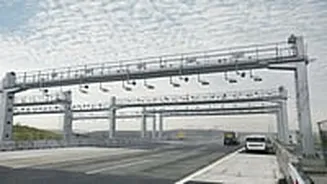
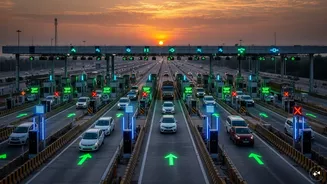
The government said these amendments will support toll collection after the rollout of the Multi-Lane Free Flow (MLFF) system, which will enable barrier-less tolling on National Highways.
The draft of these amendments was published on July 11, 2025, through a Gazette Notification to invite suggestions from stakeholders and the public. The draft notification was made available on July 14, 2025. After reviewing the feedback received, the government finalised and notified the amended rules.
The government said the changes will help the National Highways Authority of India implement transparent, technology-based tolling systems for the development and maintenance of the National Highway network.
The changes have been notified through the Central Motor Vehicles (Second Amendment) Rules, 2026. The amendments aim to improve user fee compliance, enhance the efficiency of Electronic Toll Collection (ETC), and discourage toll evasion.
The amended rules introduce a new definition of “unpaid user fee.” This refers to the toll payable for using a National Highway section where the ETC system has recorded a vehicle’s passage, but the fee has not been received as per the National Highways Act, 1956.
The amendments link the clearance of unpaid toll dues with key vehicle-related services. Authorities will not grant a No Objection Certificate (NOC) for the transfer of vehicle ownership or inter-state transfer if any toll dues remain unpaid.
Renewal or issuance of a Certificate of Fitness will also be denied unless outstanding user fees are cleared. Commercial vehicles applying for a National Permit must have no pending user fees.
Form 28 has been updated to reflect these changes. Applicants must now declare whether any demand for unpaid toll at a plaza is pending against their vehicle and provide relevant details.
The rules also allow electronic issuance of relevant portions of Form 28 through a designated online portal. Form 28 is the application for an NOC, which is required for transferring vehicle ownership to another state or district and confirms that the vehicle has no pending taxes, challans, or legal issues.
The government said these amendments will support toll collection after the rollout of the Multi-Lane Free Flow (MLFF) system, which will enable barrier-less tolling on National Highways.
The draft of these amendments was published on July 11, 2025, through a Gazette Notification to invite suggestions from stakeholders and the public. The draft notification was made available on July 14, 2025. After reviewing the feedback received, the government finalised and notified the amended rules.
The government said the changes will help the National Highways Authority of India implement transparent, technology-based tolling systems for the development and maintenance of the National Highway network.