






What is the story about?
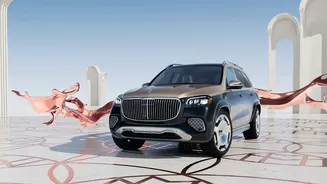
Mercedes-Benz India will begin local production of its ultra-luxury Mercedes-Maybach GLS, a move that will significantly reduce prices for Indian buyers and underscore India’s growing importance in the global luxury car market.
Localisation of the Maybach GLS has enabled Mercedes-Benz to reduce the SUV’s price from around ₹3.17 crore to ₹2.75 crore, translating into a benefit of over ₹40 lakh for customers. India becomes only the second market globally, after the US, to manufacture the Maybach GLS locally.
Calling the decision a natural progression, Santosh Iyer, Managing Director and CEO of Mercedes-Benz India, said strong demand from Indian buyers prompted the move.
“India is now among the top five Mercedes-Maybach markets globally. That clearly shows the affinity customers have for the brand, and localisation helps us directly benefit them on pricing,” Iyer said in an interview.
Mercedes-Benz’s India business has increasingly tilted towards high-end luxury vehicles, with cars priced above ₹1.5 crore now accounting for more than 25% of total sales. The company’s top-end vehicle portfolio grew 11% in 2025, making it one of Mercedes-Benz India’s strongest years in revenue terms.
“Top-end vehicles are growing consistently, and customers in this segment want bespoke, personalised products,” Iyer said. “Local production helps us deliver faster, while CBU imports will continue for customers who want extensive customisation.”
Mercedes-Benz will follow a dual strategy, offering locally produced Maybach GLS models for quicker deliveries, while continuing to sell imported versions for buyers seeking highly customised specifications and enhanced security options.
While electric vehicle penetration remains modest in the broader market, Mercedes-Benz said luxury EV adoption is gaining momentum. EVs now account for 20% of the company’s top-end sales in India.
“If you look at the top-end segment, EV penetration is already at 20% of our sales,” Iyer said, adding that this is significantly higher than the overall luxury market average of 8–9%.
The company acknowledged that public charging infrastructure remains a key concern for EV buyers, particularly for long-distance travel.
“Public charging was the real pain point. Customers needed seamless discovery, payment and reliability,” Iyer said.
To address this, Mercedes-Benz has rolled out MB.Charge in India, bringing more than 9,000 DC charging points into a single ecosystem. The company plans to enable in-car charging payments directly from the vehicle’s head unit in future models.
Mercedes-Benz’s entry into the luxury segment, meanwhile, saw a decline in volumes as the company chose not to participate in aggressive discounting in the market.
“We have decided not to play the price and discount game. We prioritise residual value and long-term brand integrity over chasing volumes,” Iyer said.
The overall luxury car market in India is growing at just 1–2%, according to the company, making disciplined pricing critical. Looking ahead, Mercedes-Benz plans to launch 12 new vehicles in India in 2026, spanning internal combustion engines, electric vehicles and new body styles.
“Products excite markets, and 2026 will be an action-packed year for us,” Iyer said.
Among the key launches will be the new CLA, which will serve as Mercedes-Benz’s entry point into EVs, though not as an entry-level offering.
“CLA will be our entry into EVs, but the focus will remain on value and technology, not volume,” he added.
Localisation of the Maybach GLS has enabled Mercedes-Benz to reduce the SUV’s price from around ₹3.17 crore to ₹2.75 crore, translating into a benefit of over ₹40 lakh for customers. India becomes only the second market globally, after the US, to manufacture the Maybach GLS locally.
Calling the decision a natural progression, Santosh Iyer, Managing Director and CEO of Mercedes-Benz India, said strong demand from Indian buyers prompted the move.
“India is now among the top five Mercedes-Maybach markets globally. That clearly shows the affinity customers have for the brand, and localisation helps us directly benefit them on pricing,” Iyer said in an interview.
Mercedes-Benz’s India business has increasingly tilted towards high-end luxury vehicles, with cars priced above ₹1.5 crore now accounting for more than 25% of total sales. The company’s top-end vehicle portfolio grew 11% in 2025, making it one of Mercedes-Benz India’s strongest years in revenue terms.
“Top-end vehicles are growing consistently, and customers in this segment want bespoke, personalised products,” Iyer said. “Local production helps us deliver faster, while CBU imports will continue for customers who want extensive customisation.”
Mercedes-Benz will follow a dual strategy, offering locally produced Maybach GLS models for quicker deliveries, while continuing to sell imported versions for buyers seeking highly customised specifications and enhanced security options.
While electric vehicle penetration remains modest in the broader market, Mercedes-Benz said luxury EV adoption is gaining momentum. EVs now account for 20% of the company’s top-end sales in India.
“If you look at the top-end segment, EV penetration is already at 20% of our sales,” Iyer said, adding that this is significantly higher than the overall luxury market average of 8–9%.
The company acknowledged that public charging infrastructure remains a key concern for EV buyers, particularly for long-distance travel.
“Public charging was the real pain point. Customers needed seamless discovery, payment and reliability,” Iyer said.
To address this, Mercedes-Benz has rolled out MB.Charge in India, bringing more than 9,000 DC charging points into a single ecosystem. The company plans to enable in-car charging payments directly from the vehicle’s head unit in future models.
Mercedes-Benz’s entry into the luxury segment, meanwhile, saw a decline in volumes as the company chose not to participate in aggressive discounting in the market.
“We have decided not to play the price and discount game. We prioritise residual value and long-term brand integrity over chasing volumes,” Iyer said.
The overall luxury car market in India is growing at just 1–2%, according to the company, making disciplined pricing critical. Looking ahead, Mercedes-Benz plans to launch 12 new vehicles in India in 2026, spanning internal combustion engines, electric vehicles and new body styles.
“Products excite markets, and 2026 will be an action-packed year for us,” Iyer said.
Among the key launches will be the new CLA, which will serve as Mercedes-Benz’s entry point into EVs, though not as an entry-level offering.
“CLA will be our entry into EVs, but the focus will remain on value and technology, not volume,” he added.