
The company claims to have led India’s electric passenger vehicle market since launching its first mainstream EV, the Nexon.ev, in 2020, which became the first EV in the country to cross 100,000 cumulative sales.
According to the company, 84% of TATA.ev customers use their EV as a primary vehicle, while over 26% are first-time car buyers. Owners drive an average of about 20,000 km a year, and around 26,000 vehicles have crossed 100,000 km.
Tata Motors said it accounts for about 66% of all electric passenger vehicle sales in India. Its current EV portfolio includes Tiago.ev, Punch.ev, Nexon.ev, Curvv.ev and Harrier.ev, along with the XPRES-T EV for fleet customers.
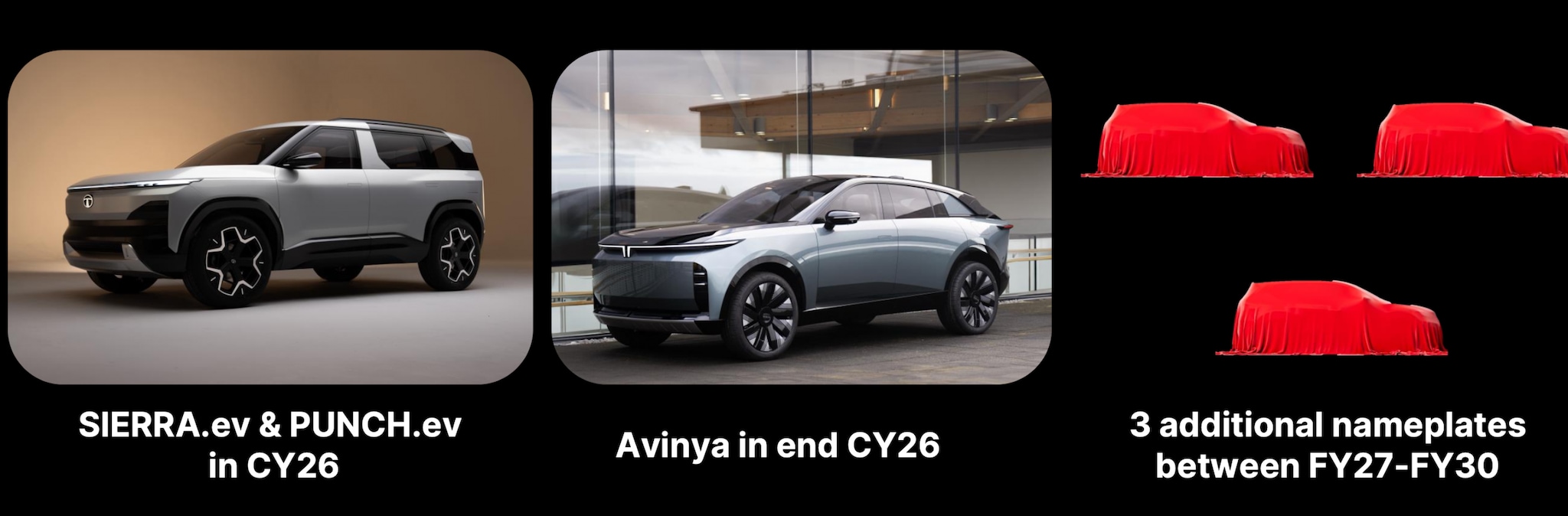
Tata Motors' next phase of EV launches.
Nearly half of the owners have completed at least one long-distance trip of more than 500 km. Tata EVs have collectively covered about 12 billion km, saving an estimated 1.7 million tonnes of CO₂ and around 800 million litres of fuel.
Shailesh Chandra, Managing Director and CEO, Tata Motors Passenger Vehicles Ltd., said, “Crossing 250,000 EV sales reflects how electric mobility is fast becoming part of everyday Indian life... As EV adoption accelerates, our commitment remains clear: to mainstream electric mobility by making it accessible across segments, strengthening the ecosystem, and investing in India-first technology and localisation.”
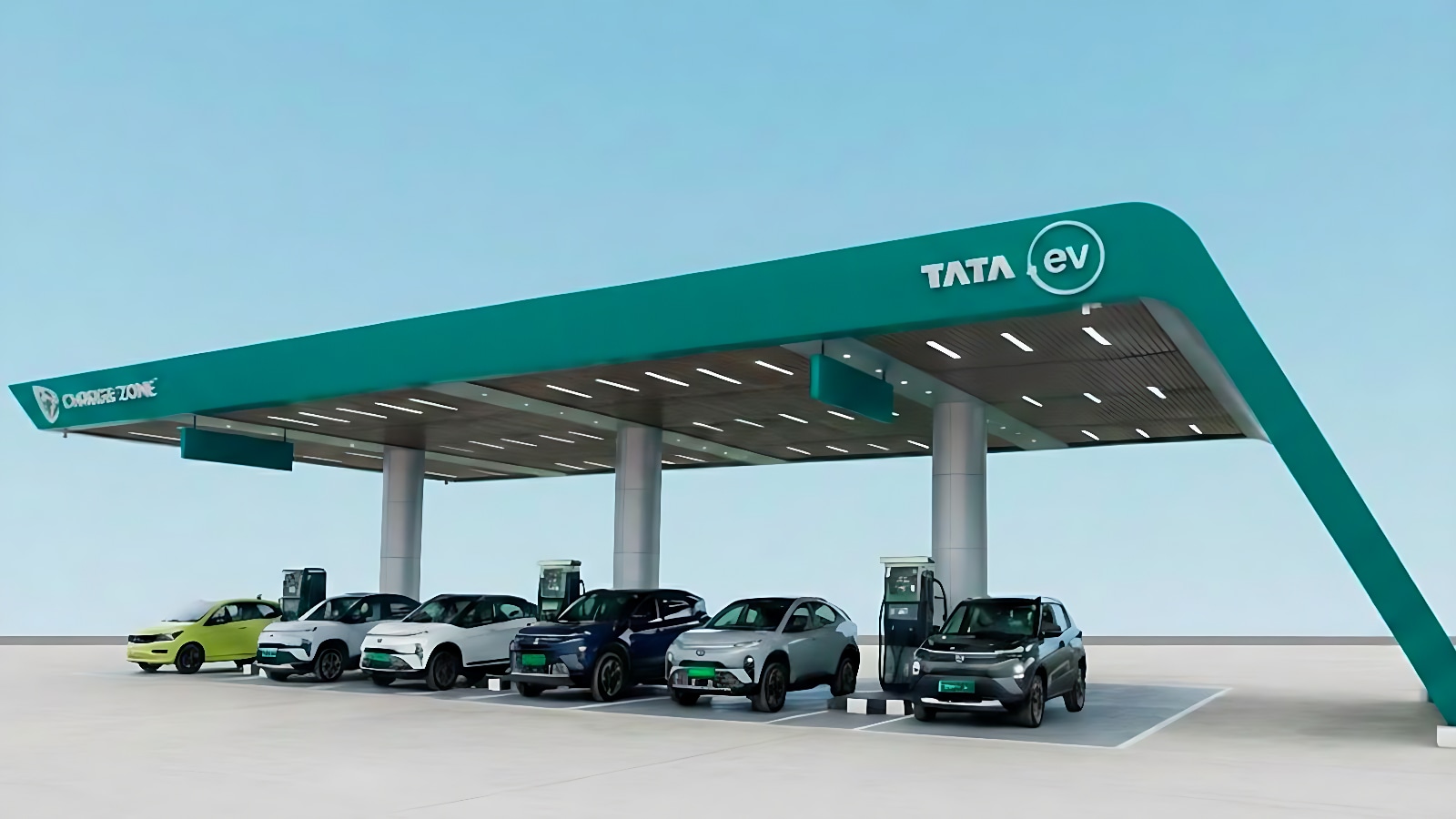
By CY27, Tata Motors plans 400,000 charge points, including over 30,000 public fast chargers, through TATA.ev Open Collaboration framework.
The company said its charging ecosystem includes over 2 lakh charging points through home, community and public charging. Its charging aggregator covers more than 20,000 public chargers, and 100 MegaCharging Hubs with charging speeds of over 120 kW are operational across key corridors.
TATA.ev also said it operates around 1,500 EV-dedicated service bays nationwide, supported by more than 5,000 trained EV technicians. Over 50% of the components in its EVs are locally manufactured, including high-voltage battery packs and battery management systems developed with Tata Group companies.
Looking ahead, Tata Motors announced its next phase of EV growth. Planned launches include the Sierra.ev and a new Punch.ev in CY26, followed by the Avinya range towards the end of CY26. By FY30, the company plans five new EV nameplates, alongside updates across its portfolio.
Tata Motors also targets 400,000 charging points by CY27 and one million charging points by 2030, while expanding battery reuse, refurbishment services and localisation, including sourcing battery cells from Agratas’ upcoming gigafactory in Sanand.