






Label Accuracy Mysteries
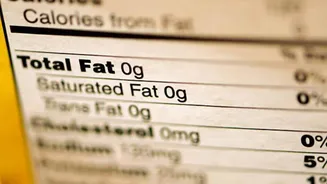
Nutrition labels serve as a crucial guide for consumers, but a recent legal case has highlighted a significant loophole in regulatory standards, revealing
that the numbers on packaging can differ substantially from the actual content. This disparity arises from the flexibility allowed within the Food and Drug Administration's (FDA) guidelines. For instance, a class-action lawsuit concerning protein bars alleged that laboratory tests found a considerable excess of fat and calories compared to what was declared. While the confusion might stem from differing methods of calorie calculation—distinguishing between digestible and non-digestible components—the underlying issue remains: a notable margin of error exists in declared nutritional information. This means that what you read on the label is not always a precise reflection of what you are consuming, leaving room for interpretation and potential discrepancies that can affect dietary tracking.
FDA's Tolerance Zones
The FDA permits a considerable leeway in the accuracy of nutritional information presented on food packaging. Specifically, regulations allow for up to a 20% overage in reported values for components such as fat, calories, added sugars, carbohydrates, fiber, and sugar alcohols. This means a product labeled as having 200 calories could legitimately contain an additional 40 calories before the FDA considers it a violation. Conversely, vital nutrients like protein, fiber, and various vitamins can be up to 20% lower than stated on the label. Essentially, the declared figures provide a general overview rather than a precise measurement of the product's nutritional composition. Nutritionists describe these labels as providing a 'big picture snapshot' or a 'ballpark number,' acknowledging that the actual intake can vary significantly from the printed information.
Manufacturing Realities
The variability in nutritional labels stems from the complex and inherently imprecise methods used to determine this information. Food labeling relies on a combination of laboratory analyses and estimations derived from extensive databases. Both these approaches are subject to inherent fluctuations. Factors such as variations in ingredients from one batch to another, alterations in nutrient composition due to processing techniques, and the inherent error margins of measurement methods all contribute to these discrepancies. The FDA acknowledges these challenges and builds a tolerance into its regulations, allowing manufacturers to comply without needing to constantly re-evaluate and re-label their products for minor variations. This approach recognizes that achieving absolute precision in nutritional measurement for every product on every occasion is practically unfeasible, hence the built-in flexibility.
Impact on Your Diet
For individuals who primarily consume whole, unprocessed foods, a 20% deviation in the few packaged items they eat is unlikely to significantly disrupt their overall dietary balance. However, these seemingly small discrepancies can accumulate and become meaningful when a substantial portion of one's diet consists of packaged foods, snacks, and ready-to-eat meals. In such cases, the cumulative effect on calorie and added sugar intake can be considerable. While most people may not need to worry excessively, these variations become more relevant for individuals meticulously managing their intake, such as those aiming for fat loss or managing conditions like diabetes, where even minor inconsistencies can influence outcomes. It's also worth noting that some products might actually contain fewer calories than advertised, further adding to the variability.
Navigating Uncertainty
Consumers lack a direct method to verify the precise nutritional content of packaged foods, as labels do not explicitly indicate the potential for variability. Generally, highly processed foods or those with numerous ingredients are more prone to label discrepancies than products with simpler compositions. This is partly due to how calories are historically determined. The traditional method involves combusting food and measuring the heat released, then applying standardized conversion factors for macronutrients. Each stage of this process introduces assumptions and minor errors. While this doesn't necessitate abandoning all packaged foods, especially for convenience, it suggests a strategic approach. Prioritizing a diet rich in minimally processed foods is beneficial, but incorporating occasional processed items is acceptable. Ultimately, viewing nutrition labels as estimates rather than exact figures, and focusing on consistent eating patterns and overall diet quality, is a more effective strategy. Considering a 10% to 15% margin of error for packaged foods can lead to a more realistic assessment of intake.