


Ghee's Golden Reputation
Ghee, once sidelined in dietary discussions, has resurfaced as a champion of healthy fats, lauded for its myriad benefits. Celebrities and nutritionists
alike advocate for its inclusion in a balanced diet, recognizing its potential to support digestion, enhance nutrient absorption, and contribute to overall well-being. However, the true advantages of ghee are only accessible when the product is of unadulterated quality. With the market often presenting imitations, discerning between pure and fake ghee has become a crucial skill for health-conscious consumers seeking to maximize this traditional food's positive impact on their bodies and avoid potential pitfalls associated with counterfeit versions.
Visual & Aroma Clues
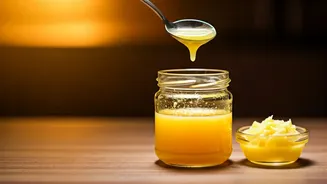
Pure ghee possesses a distinct visual appeal and olfactory signature that sets it apart from its counterfeit counterparts. Typically, genuine ghee exhibits a natural golden-yellow to pale-yellow hue; cow ghee is generally richer in its yellow tones, while ghee derived from buffalo milk might appear lighter or even off-white. Its aroma is subtle yet inviting, carrying a nutty, pleasant fragrance that intensifies upon heating. At cooler temperatures, pure ghee might present a slightly granular or semi-solid consistency. Conversely, fake or adulterated ghee often stands out with an unnaturally bright or stark white appearance, a lack of its characteristic rich aroma, and may even emit an oily or artificial scent. When subjected to heat, it tends to behave more like common refined oil, failing to release the expected warm, nutty ghee essence, providing an early indicator of its compromised nature.
Kitchen Chemistry: Home Tests
You can perform several simple yet effective tests right in your kitchen to gauge the authenticity of your ghee. The 'heat test' involves warming a small quantity in a pan; pure ghee will melt gradually, releasing its signature nutty aroma and possibly leaving a light brown residue, whereas fake ghee may smoke excessively or mimic the behavior of regular oil. For the 'palm test', place a dab of ghee on your palm; pure ghee, owing to its composition, will melt quickly due to body heat and emit its natural aroma. Another revealing test is the 'water test': add a spoonful of ghee to warm water. Pure ghee will float distinctly on the surface, forming a separate layer, while adulterated ghee is likely to mix or disperse unevenly into the water, indicating the presence of other substances. While these methods offer valuable insights, an expert emphasizes that laboratory analysis remains the most definitive way to confirm purity.
Risks of Fake Ghee
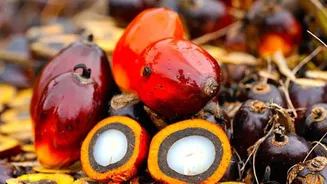
Consuming ghee that has been faked or adulterated can introduce significant health risks. These imitations are often concocted using ingredients like vanaspati (hydrogenated vegetable oil), palm oil, or other refined vegetable oils. A diet regularly including such products escalates the intake of trans fats, which are strongly linked to serious health concerns. These include an increased risk of heart disease, elevated cholesterol levels, the development of fatty liver, insulin resistance, and chronic inflammation throughout the body. Furthermore, consumption of fake ghee can lead to digestive discomforts such as bloating and acidity. Over time, these factors collectively contribute to a negative impact on your overall metabolic health, undermining the very benefits one seeks from traditional ghee.
Pure Ghee's True Benefits
In stark contrast to its adulterated counterpart, pure ghee offers a wealth of health advantages when consumed in appropriate amounts. It plays a vital role in supporting a healthy digestive system and actively nourishes the gut lining, fostering a robust internal environment. Ghee is also instrumental in aiding the absorption of essential fat-soluble vitamins, namely A, D, E, and K, ensuring your body can effectively utilize these crucial nutrients. It contains butyric acid, a short-chain fatty acid renowned for its positive effects on gut health and its ability to bolster the immune system. When incorporated thoughtfully into the diet, pure ghee can contribute to a feeling of satiety, help in stabilizing blood sugar levels, and support overall hormonal balance, making it a valuable component of a wellness-oriented lifestyle.
Adulterants to Watch
To safeguard against consuming fake ghee, it's essential to be aware of the common adulterants that are frequently added to create these deceptive products. Foremost among these are vanaspati, which is essentially hydrogenated vegetable oil, and palm oil, often used for its low cost and texture. Refined vegetable oils are also a common substitute for pure milk fat. To enhance the sensory experience and mimic real ghee, manufacturers may incorporate artificial butter flavoring and synthetic coloring agents. In some instances, low-quality animal fats might be used to bulk up the product. Recognizing these additives can help consumers make more informed purchasing decisions and avoid products that compromise on authenticity and health.