Pioneering Sovereign AI
The global AI arena has long been dominated by major players from the US and China, often overlooking the potential of India's vast talent and population.
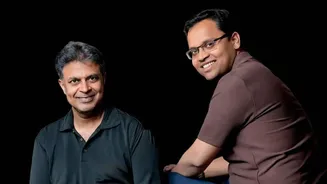
However, a Bengaluru-based startup, Sarvam AI, is actively reshaping this narrative by championing a concept they term 'sovereign AI.' This approach involves building foundational artificial intelligence models from the ground up within India, focusing on the unique linguistic and cultural needs of the nation. This strategic direction has recently propelled them into the spotlight with the release of two significant tools, Sarvam Vision and Bulbul V3, which are generating considerable positive attention and impressing industry observers with their remarkable capabilities.
Sarvam Vision's OCR Prowess
Sarvam Vision, Sarvam AI's optical character recognition (OCR) tool, has emerged as a formidable contender, surpassing well-known AI models such as ChatGPT and Google Gemini in specific performance benchmarks. This specialized tool excels in accurately reading documents written in Indian languages, a task that often proves challenging for general-purpose AI systems. Recent data indicates that Sarvam Vision achieved an impressive accuracy score of 84.3 percent on the olmOCR-Bench. This score notably exceeds that of Gemini 3 Pro and other contemporary OCR models like DeepSeek OCR v2, while ChatGPT recorded a considerably lower performance in the same test. Furthermore, Sarvam Vision demonstrated exceptional results on the OmniDocBench v1.5, a benchmark designed to evaluate AI's ability to interpret real-world documents, securing an overall score of 93.28 percent. Its strengths are particularly pronounced in handling complex document layouts, intricate technical tables, and mathematical formulas, areas where traditional OCR technology frequently falters due to formatting inconsistencies and dense information.
Validation and Global Recognition
The outstanding performance of Sarvam Vision has not only garnered praise from users but has also captured the attention of global tech commentators, effectively transforming earlier skepticism into admiration. Initially, some experts, like tech commentator Deedy Das, questioned the strategic value of developing smaller AI models tailored for Indian languages. However, after witnessing Sarvam AI's advancements, Das publicly acknowledged his misjudgment. He stated that Sarvam's OCR and speech models for Indian languages are exceptionally strong and successfully address a significant gap often overlooked by larger international AI laboratories. He further elaborated that these models are not only robust but also competitively priced, making them a valuable asset for various applications. This shift in perspective from industry insiders, coupled with enthusiastic user testimonials such as "I used this a couple of days ago! Oh man wow," underscores the significant impact Sarvam AI is having on the AI landscape.
Bulbul V3: AI Voice for India
Complementing its OCR advancements, Sarvam AI has also introduced Bulbul V3, an innovative AI voice model designed for text-to-speech applications. This model aims to generate natural, expressive, and production-ready voices specifically for a range of Indian languages, positioning itself as a strong alternative to established global players. Sarvam AI highlights that Bulbul V3 is engineered to minimize errors and deliver stable, content-accurate speech, catering to the specific needs of Indian use cases. Currently, the model supports over 35 distinct voices across 11 Indian languages, with plans to expand its reach to a total of 22 languages. This initiative is particularly significant given the diverse linguistic landscape of India. Bulbul V3 has also received positive feedback, with users like Pratik Desai, founder of KissanAI, adopting it as their primary text-to-speech solution for Indian language projects, finding it superior and more cost-effective than global alternatives like ElevenLabs, especially for Indic language applications.