Lunar Leap Forward
Space exploration enthusiasts have received news about a significant shift in priorities from Elon Musk's SpaceX. The company has reportedly informed its
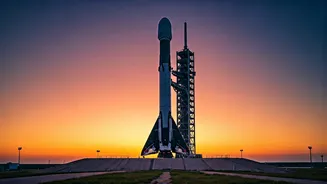
investors that its long-term vision for Mars will be temporarily placed on the back burner. Instead, the immediate focus is squarely on achieving a monumental milestone: landing on the Moon. The updated target for this uncrewed lunar mission is set for March 2027, marking a deliberate step towards expanding humanity's presence beyond Earth. This strategic redirection underscores the company's commitment to pushing the boundaries of space travel and technology, with the Moon serving as a crucial stepping stone for more complex interplanetary journeys in the future. The decision highlights the iterative nature of ambitious space programs, where immediate achievable goals are often prioritized to build momentum and refine capabilities before tackling more challenging objectives.
Corporate Restructuring
This strategic recalibration by SpaceX coincides with a major organizational development. Elon Musk recently consolidated his business empire by merging SpaceX with his artificial intelligence startup, xAI. This significant corporate maneuver has resulted in a combined entity valued at an impressive $1.25 trillion. The integration of these two pioneering ventures is expected to foster greater synergy, potentially accelerating advancements in both space technology and artificial intelligence. This financial and structural consolidation could unlock new avenues for innovation, allowing for the cross-pollination of ideas and resources between SpaceX's hardware-centric space missions and xAI's cutting-edge AI development. Such a move might streamline operations, expedite research and development cycles, and ultimately bolster the company's capacity to achieve its ambitious long-term goals in space exploration and beyond.