Revolutionary Biomarker Detection
A significant leap forward in medical diagnostics has been achieved with the creation of an advanced light sensor that can detect minuscule amounts of cancer
biomarkers within a blood sample. This groundbreaking technology, which utilizes CRISPR gene editing, quantum dots, and nanostructures crafted from DNA, has the potential to revolutionize early disease detection. By identifying subtle molecular signals, often present in very low concentrations in the initial stages of cancer, this sensor offers hope for earlier interventions. The core innovation lies in its ability to precisely identify these faint indicators, which are crucial for understanding the presence, progression, or risk of developing cancer. This method aims to overcome the longstanding challenge of measuring these vital molecules when they are present in such trace amounts, making early diagnosis more accessible and reliable than ever before.
The Science Behind the Sensor
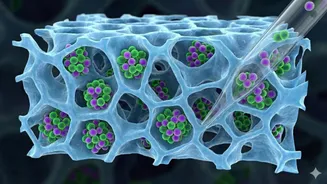
The sophisticated sensor operates by combining several cutting-edge technologies. At its heart is a light-based detection method known as second harmonic generation (SHG). This process involves nanostructures made of DNA that precisely position quantum dots near a two-dimensional semiconductor called molybdenum disulfide (MoS2). These quantum dots amplify the optical field, thereby intensifying the SHG response. The real magic happens with the integration of CRISPR-Cas gene editing. When the Cas12a protein, guided by the system, identifies a specific cancer biomarker, it triggers a chain reaction. It cuts the DNA strands that hold the quantum dots in place, leading to a measurable decrease in the SHG signal. This direct detection approach, which bypasses the need for traditional chemical amplification steps that can be time-consuming and complex, allows for the detection of biomarkers at sub-attomolar levels, meaning even a handful of molecules can be accurately identified. The inherent low background noise of SHG further enhances the system's sensitivity and specificity.
Early Detection and Personalized Care
The implications of this new sensor for early cancer diagnosis and patient management are profound. For instance, it could enable the detection of lung cancer biomarkers before a tumor is even visible on standard imaging scans like CT scans. This early warning system allows for timely treatment initiation, which is often critical for improving patient outcomes and survival rates. Beyond initial diagnosis, the sensor's programmability means it can be adapted to monitor specific biomarkers related to various diseases. This opens up possibilities for personalized medicine, where doctors can track a patient's biomarker levels on a daily or weekly basis. Such continuous monitoring can provide rapid feedback on the effectiveness of treatments, allowing for prompt adjustments if a therapy isn't working as expected, rather than waiting for months for results from imaging tests. This agile approach to treatment evaluation can significantly enhance therapeutic success and reduce the burden of disease.
Future Directions and Potential Applications
The research team is actively working on miniaturizing the optical system, with the ultimate goal of developing a compact, portable device. Such a device would be highly versatile, suitable for use in a variety of settings, including bedside patient monitoring, outpatient clinics, and even remote areas where access to advanced medical facilities is limited. The inherent programmability of the CRISPR-based sensor also suggests a broad spectrum of potential applications beyond cancer detection. It could be adapted to identify infectious agents like viruses and bacteria, detect environmental toxins, or serve as a diagnostic tool for neurodegenerative diseases such as Alzheimer's by targeting specific biomarkers. By leveraging the precision of DNA as programmable building blocks and the sensitivity of optical sensing, this technology represents a significant stride towards more accessible, efficient, and personalized healthcare solutions worldwide.