Spacecraft Sanitation Glitch
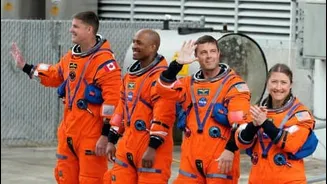
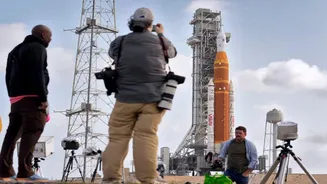
The much-anticipated Artemis II mission, marking humanity's first journey around the Moon in over half a century, faced an unforeseen complication not
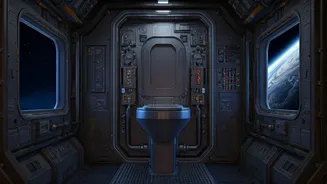
with its advanced propulsion or navigation, but with a crucial, yet mundane, piece of equipment: the spacecraft's toilet. Early in the mission, astronauts experienced a minor issue with the waste management system aboard the Orion spacecraft. This problem was reportedly linked to either the airflow or the internal mechanisms responsible for directing waste in the weightless environment. In microgravity, where gravity doesn't assist in waste disposal as it does on Earth, even subtle changes in airflow can significantly impact how waste is managed and contained. NASA spokesperson Gary Jordan indicated that a fan within the toilet system appeared to be jammed, necessitating ground teams to devise a plan for accessing and clearing the obstruction to restore full functionality. While this issue was minor and did not pose a significant threat to the astronauts' safety, primarily due to the availability of a backup system, it highlighted the delicate balance required for life support in deep space.
Criticality of Space Toilets
At first glance, a malfunctioning toilet might seem trivial, but within the confined and isolated setting of a spacecraft, such a system is paramount for maintaining astronaut health, comfort, and overall well-being. In the absence of gravity, waste does not naturally move away from the body, making a properly functioning sanitation system essential to prevent contamination and uphold hygiene standards. NASA emphasizes that a clean and controlled environment is fundamental to both the physical and psychological health of the crew. For missions like Artemis II, which involve relatively shorter durations, a reliable waste management system is integral to daily operations and crew morale. The importance of these systems escalates dramatically when considering NASA's long-term aspirations for extended missions, such as establishing lunar bases or undertaking journeys to Mars, where failure-proof waste management is an absolute necessity.
Gravity-Defying Design
The toilet system aboard the Orion spacecraft represents an evolution from the designs used during the Apollo missions. Unlike the earlier reliance on simple collection bags, contemporary space toilets incorporate sophisticated airflow mechanisms to actively guide waste into designated containers. This innovation is rooted in extensive research into alternative methods for waste management in space, demonstrating that effective sanitation can be achieved without relying on Earth's gravitational pull. The Orion toilet is equipped with a complex arrangement of fans, hoses, and compartments specifically engineered for use in a weightless environment. While these advanced features have significantly improved efficiency and hygiene compared to older models, they also introduce more components that could potentially malfunction. This increased complexity means that while the system is more effective, it also presents a greater number of potential points of failure.
Lessons from the Glitch
The toilet issue encountered during the Artemis II mission serves as a potent reminder that the advancement of space exploration is a continuous process of learning and adaptation. Each minor technical hiccup provides invaluable data for engineers, guiding them in the development of more robust and reliable systems for future endeavors. As NASA pushes the boundaries of human exploration with plans for extended stays on the Moon and eventual missions to Mars, the integrity of waste management systems over prolonged periods becomes critically important. This seemingly small inconvenience on Artemis II could prove instrumental in preventing more significant problems on future, longer-duration missions. While the malfunctioning toilet might initially evoke a sense of humor, it underscores a fundamental aspect of space exploration: attention to every detail, from life support to sanitation, is crucial for the success and safety of human presence beyond Earth.