The Looming AI Challenge
The swift advancement of artificial intelligence is undeniably reshaping countless industries, prompting professionals across various sectors to contemplate
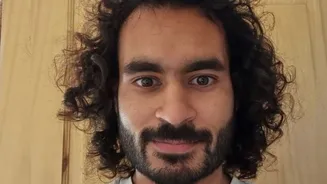
the future implications. Hieu Pham, an engineer employed at OpenAI and previously associated with Elon Musk's xAI, has ignited a significant conversation concerning the profound, potentially existential, challenges posed by AI. Pham, who holds degrees from Stanford University in computer science and a PhD in machine learning from Carnegie Mellon University, articulated his growing apprehension in a recent online post. He stated that he now fully perceives the existential threat AI represents, posing the critical question of what purpose humans will serve once AI becomes exceptionally proficient and disrupts all aspects of our current existence. Pham emphasized that this scenario is a matter of 'when,' not 'if.'
Societal Reflections on AI
Pham's candid observation quickly garnered widespread attention, fueling a robust debate about the multifaceted impacts and potential downsides of artificial intelligence. Many participants in the discussion offered contrasting viewpoints, drawing parallels to historical technological revolutions. One commentator remarked that significant technological shifts, such as the advent of the printing press and the internet, were initially perceived as existential threats, but humanity ultimately adapted. This user suggested that AI will likely automate specific tasks rather than rendering human purpose obsolete. Another participant envisioned a future where human value is decoupled from economic productivity, opening avenues for new, potentially beautiful societal definitions of worth. A third perspective highlighted the potential for AI to reintroduce forgotten aspects of human experience, suggesting that 'hobbies' and a rekindled sense of 'curiosity' might become central to human engagement in a post-AI-dominant world.
Broader AI Safety Concerns
Pham's perspective echoes broader anxieties within the AI community regarding its long-term implications. This sentiment was recently underscored by the resignation of Mrinank Sharma, who previously served as the AI safety lead at Anthropic. Sharma articulated his deep unease with the current trajectory, describing the world as being in a state of peril. He posited that this danger extends beyond AI and bioweapons, encompassing a nexus of interconnected global crises. Sharma concluded that humanity appears to be approaching a critical juncture where a commensurate increase in collective wisdom is imperative to match our burgeoning technological capabilities. Failure to achieve this balance, he warned, could lead to severe and unforeseen consequences for our civilization.