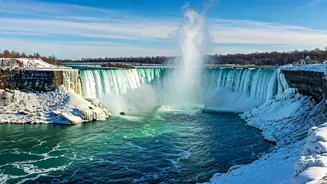
A Frozen Wave Phenomenon
Imagine standing before a lake where the very movement of the water seems to have been halted mid-motion, creating a dramatic frozen seascape. This is precisely
what has captivated observers along the Canadian shores of Lake Erie. When temperatures plummeted to below -20°C, a remarkable transformation occurred, encasing wave after wave in solid ice and sculpting the shoreline into a series of jagged frozen ridges. This visual marvel, where the lake's edge appears as a landscape of suspended motion, is not a mere trick of the light but a direct consequence of a specific set of environmental conditions. It's a powerful demonstration of how extreme weather can sculpt and redefine the natural world, leaving behind scenery that feels almost otherworldly and highlighting the dynamic interaction between temperature, wind, and water in one of North America's iconic Great Lakes.
Lake Erie's Vulnerability
The unique characteristics of Lake Erie play a pivotal role in its dramatic winter freeze. As the shallowest of the Great Lakes, with an average depth of a mere 19 meters, it is significantly more susceptible to frigid temperatures than its deeper counterparts like Lake Superior or Lake Ontario. This shallowness means that the water loses heat at a much faster rate. Consequently, Lake Erie can begin to form ice relatively quickly once prolonged periods of cold weather set in. This contrasts sharply with deeper lakes, which retain thermal energy for longer durations, delaying the onset of widespread ice formation. The lake's limited depth is, therefore, a primary reason why it so readily succumbs to the chilling effects of winter, allowing ice to establish a significant presence sooner rather than later in the cold season.
The Role of Extreme Cold
The striking frozen wave formations seen on Lake Erie are primarily a result of an extreme Arctic air mass that recently swept through southern Canada, driving temperatures far below what is typically experienced for the season. When air temperatures descend below the -20°C mark, the surface layer of the lake cools rapidly to its freezing point. This allows ice to begin its formation not just in areas of still water but also along the coastline, where the constant action of waves introduces more surface area for freezing. The swiftness with which the water reaches its freezing point under these harsh conditions is often referred to as 'flash freezing,' particularly when referring to the spray generated by the waves. The colder the air, the more rapidly these water droplets solidify upon contact, building up layers of ice with each successive wave.
Wind: The Sculpting Force
Beyond the sheer cold, the relentless force of winter winds has been instrumental in shaping the dramatic frozen wave patterns observed along Lake Erie's shore. As waves continually crashed against the land, they propelled spray into the frigid air. This spray, exposed to temperatures well below freezing, would solidify almost instantaneously. Over time, this continuous process of wave action and spray freezing created remarkable structures. Each subsequent wave contributed to building up these icy formations, resulting in stacked ridges and frozen crests that give the appearance of the lake's movement being captured in time. This phenomenon, sometimes described by scientists as the 'flash freezing' of wave spray, is amplified by high wind speeds, ensuring that the water particles have minimal time to revert to a liquid state before solidifying.
Sunlight and Persistence
Adding to the conducive conditions for ice formation are the reduced hours of daylight and the extended length of winter nights. These factors significantly limit the amount of solar radiation the lake can absorb, preventing it from regaining heat even during the daytime. When prolonged cold spells persist for several consecutive days, the absence of significant warming allows the ice formation process to accelerate. This diminished solar input, coupled with consistently low temperatures, ensures that the lake's surface temperature remains below freezing for extended periods, fostering deeper and more widespread ice coverage. The lack of warming opportunities means that any ice that forms is more likely to persist and expand, contributing to the comprehensive winter freeze seen on the lake.
Ice Coverage Statistics
Satellite imagery has revealed the extent of Lake Erie's icy transformation, with massive cracks forming across the frozen surface. On a recent Sunday, the lake achieved an impressive 96 percent ice cover, marking the highest coverage observed in a decade. This extensive freeze offers a stark contrast to less severe winters. For historical context, the lake has only reached 100 percent ice cover once in recent memory, in February 1996. While complete solidification is rare, the current level of ice coverage underscores the intensity of the recent cold snap. This substantial ice formation primarily occurs in sections, particularly near the coastlines and in the western basin, where the shallower depths are more prone to freezing. However, in exceptionally cold winters like this one, the ice can extend to cover the vast majority of the lake's surface.