A Crucial Test Drive
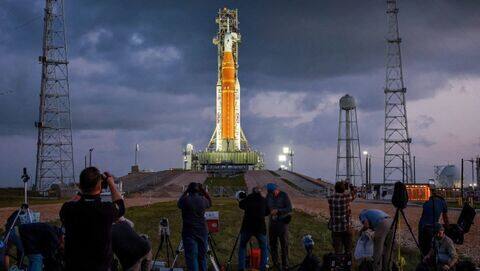
Artemis-II isn't just a mission; it's a vital dress rehearsal for NASA's ambitious lunar ambitions. This flight serves as an ultimate test of the Orion
spacecraft and the powerful Space Launch System rocket in the unforgiving environment of space. The crew will rigorously evaluate all systems and procedures, ensuring they are fully prepared for future missions that aim to land humans back on the Moon. It's about validating the technology and ensuring the safety and efficacy of the entire launch and flight architecture before committing to a lunar landing. This extensive validation process is critical for building confidence and mitigating risks associated with deep space human exploration, laying the groundwork for sustained human presence beyond Earth's immediate vicinity.
Gravity's Gentle Return
A remarkable aspect of the Artemis-II mission is its ingenious return journey, which relies on the gravitational pull of the Moon. Instead of expending precious fuel to decelerate and propel the spacecraft back towards Earth, the mission employs a "free-return trajectory." This clever maneuver leverages the Moon's immense gravitational field to slingshot the Orion capsule back home. Essentially, space physics does the heavy lifting, guiding the astronauts back to Earth's embrace without the need for significant engine burns. This efficient use of celestial mechanics not only conserves fuel but also highlights the elegant interplay between spacecraft engineering and the natural forces of the cosmos, making the return trip a testament to smart mission design.
Navigating Communication Gaps
During its extended journey, the Artemis-II crew will experience periods where direct contact with Earth becomes temporarily impossible. These communication blackouts are an unavoidable consequence of venturing deep into space, particularly when the spacecraft orbits behind the Moon. While NASA's robust Deep Space Network is equipped to maintain contact for the majority of the mission, these brief interruptions are a stark reminder of the vast distances involved. Understanding and managing these communication challenges is a key learning objective, pushing the boundaries of deep space communication protocols and ensuring mission continuity even when direct lines of sight are unavailable.
The Radiation Challenge
Astronauts aboard the International Space Station benefit from the protective embrace of Earth's magnetic field, which shields them from much of the harmful cosmic radiation. However, the Artemis-II crew, by venturing beyond this protective shield, will face significantly higher levels of radiation. This increased exposure presents a critical challenge and an invaluable research opportunity. Studying the effects of this deep space radiation on the human body is paramount for ensuring the long-term health and safety of future astronauts. It's a crucial step in understanding the physiological impacts of prolonged exposure to unfiltered cosmic rays, informing the development of protective measures for extended deep space missions.
A Historic Crew Assembled
The Artemis-II mission is not only about technological advancement but also about breaking barriers and achieving new milestones in human representation in space. Victor Glover is set to make history as the first person of color to venture this far from Earth, a significant moment for diversity in space exploration. Concurrently, Christina Koch will be the first woman to travel beyond low-Earth orbit, a long-awaited achievement that inspires generations. Adding to the historic nature of the crew, Jeremy Hansen will become the first Canadian to journey beyond Earth's orbit. This diverse and accomplished crew embodies the inclusive future of space exploration.
Rise: The Space Mascot
Joining the Artemis-II crew on their extraordinary voyage is Rise, a charming plush toy that serves as a unique indicator of weightlessness. This small, cuddly companion continues a cherished tradition in spaceflight: when Rise begins to float freely, the astronauts know they have officially entered a state of zero gravity. It's a delightful and practical way for the crew to confirm their transition into the microgravity environment. This tradition adds a touch of whimsy and a clear, visual cue to the demanding reality of space travel, reminding us of the human element and the enduring spirit of exploration.
First-Time Jitters
For Jeremy Hansen, this mission represents his inaugural journey into space, a lifelong dream that is now a reality. However, like many astronauts embarking on their first spaceflight, he may experience "space sickness." This phenomenon, common among approximately half of new astronauts, is a physiological response to the unfamiliar conditions of zero gravity. The body's sensory systems, accustomed to Earth's constant pull, must adapt to a new environment, often leading to disorientation and nausea. This firsthand experience of adapting to space will provide valuable insights into the human body's resilience and the strategies for mitigating such effects in future crews.
Breaking the Distance Record
If all mission parameters are met as planned, Artemis-II is poised to achieve a monumental feat: traveling farther from Earth than any human mission has in over five decades. This journey will surpass the distance covered by Apollo 13, reaching a staggering distance of over 400,000 kilometers from our home planet. This extended reach not only pushes the boundaries of human exploration but also marks a significant return to deep space travel after a prolonged hiatus. It’s a powerful statement about humanity’s renewed commitment to venturing further into the cosmos and establishing a sustained presence beyond Earth's immediate vicinity.
Blazing Re-Entry Speed
The return journey of Artemis-II culminates in a spectacular and incredibly fast re-entry into Earth's atmosphere. The Orion spacecraft will be traveling at speeds exceeding 40,000 km/h upon atmospheric interface. This blistering pace is faster than any human-crewed spacecraft has previously achieved during re-entry. Such velocity necessitates advanced heat shield technology and precise trajectory control to ensure the safety of the astronauts. The successful completion of this high-speed re-entry is a critical test of the spacecraft's integrity and a testament to the engineering prowess required for returning from deep space missions.
Paving the Lunar Future
The Artemis-II mission is more than just a journey to the Moon's vicinity; it's a foundational step for future lunar habitation. By successfully completing this mission, NASA paves the way for Artemis-III, which aims to land astronauts near the Moon's south pole. This specific region is of immense interest due to the potential presence of water ice. Such a resource could be transformative, offering sources for drinking water, rocket fuel, and breathable oxygen. The discovery and utilization of lunar water ice are critical elements in establishing a sustainable human presence on the Moon, opening up possibilities for long-term scientific research and even commercial endeavors.