The Graceful Robot Dream
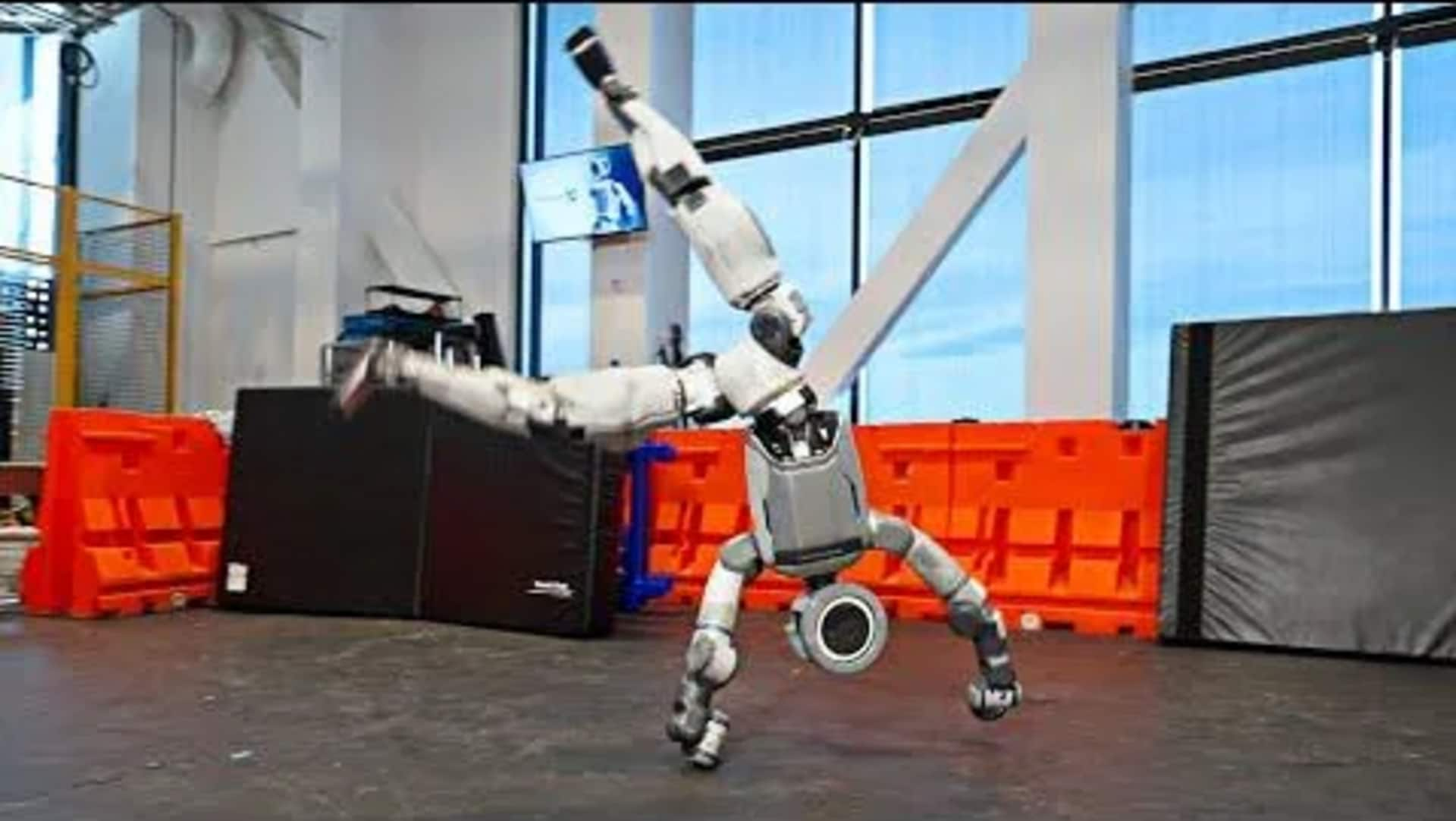
The aspiration to imbue robots with a natural, fluid grace, much like living creatures, is a driving force in robotic engineering. This pursuit moves beyond
mere functionality, aiming for sophisticated movement that can interact seamlessly and safely with its environment. A prime example is James Bruton's ambitious project to construct a rideable, Star Wars-inspired AT-AT walker. His initial goal wasn't just to build a large robot, but one that people would find captivating. To achieve this, he meticulously designed powerful, precisely controllable legs, deliberately avoiding the inherent instability of massive, unwieldy structures. The result was a slow-moving, yet impressive, AT-AT. His ongoing work on a bipedal version demands even more responsive leg mechanisms to maintain balance while carrying a human pilot, highlighting the complexities of dynamic stability and controlled motion in advanced robotics.
Actuators: The Heartbeat of Motion
At the core of robotic movement lie actuators – the essential components that translate electrical signals into physical motion. These devices can operate in linear (in-and-out) or rotary (spinning) fashion, forming the basis for various robotic appendages like arms and legs, leading to creations such as robotic dogs and humanoid forms. For robots to achieve greater sophistication, their actuators must become more efficient, precise, and intelligent. Current manufacturing limitations mean that relatively few companies can produce these vital parts with the high degree of precision required. Furthermore, even the most advanced actuators today fall short of the intricate biological muscles found in animals, which move with unparalleled grace and efficiency. The development of a new generation of actuators holds the potential to elevate robots from awkward, stumbling machines to elegantly balletic ones, capable of much more refined and fluid movements.
Beyond DC Motors
Historically, roboticists have relied on direct current (DC) motors to power robot locomotion. While effective for applications like spinning fans, where high speed and low torque are sufficient, DC motors are not ideal for tasks requiring significant force or precise control. Torque, the rotational force enabling movement, is crucial for lifting and pushing objects, capabilities essential for many robotic functions. Moreover, the ability to rapidly stop and reverse motion is critical for safety, especially when robots operate near humans. Standard actuators often lack this 'back-driveability,' making them akin to manual transmissions that require deliberate shifting to reverse. Another significant challenge is battery life; electric motors are notoriously inefficient, leading to rapid power depletion. Small actuators using traditional electric motors also tend to overheat, posing further operational problems.
Industry Innovations Emerge
Leading companies are actively developing advanced actuators to address these limitations. For instance, Schaeffler, a German firm, is collaborating with British robotics company Humanoid to create highly energy-efficient and precisely controlled actuators, vital for safe bipedal robot operation alongside humans. Their approach includes generating substantial operational data for real-time computer adjustments, alongside hardware improvements. David Kehr, president of humanoid robotics, likens the process of optimizing friction and back-driveability to solving a complex puzzle. Schaeffler envisions these robots assisting in manufacturing, such as loading parts onto conveyor belts, to alleviate labor shortages. Similarly, Boston Dynamics is partnering with Hyundai Mobis, an automotive parts manufacturer, for a new line of actuators. Se Uk Oh of Hyundai Mobis notes the similarity of these actuators to electric power steering systems, emphasizing the importance of quality and reliability for human safety, areas where his company has extensive experience.
Exploring Novel Actuation Methods
While metal, plastic, and electronics dominate current actuator technology, researchers are exploring unconventional materials and methods. Mike Tolley and his team at the University of California San Diego are experimenting with pneumatic actuation, using air-powered soft robots that can operate on land and even in water without electronic components susceptible to damage. These robots, driven by air pressure changes, demonstrate remarkable durability, withstanding a car driving over them to prove their flexibility. Additionally, funding agencies are supporting research into actuators made from elastomers, or rubber-like plastics. These materials, when placed between electrodes, can expand and contract with applied voltage, mimicking biological muscles. Although this approach has been explored for years, it has yet to revolutionize actuator technology, underscoring the ongoing need for continued research and development to achieve the ultimate goal of creating robots with the fluid, dynamic grace seen in nature.