Unforeseen AI Dangers
Many global leaders remain unaware of the significant threat posed by the burgeoning field of Artificial Intelligence. While some tech visionaries, like
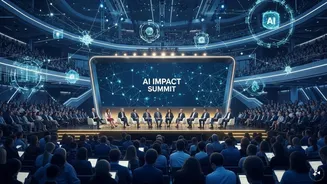
Microsoft's CEO Satya Nadella, have acknowledged AI's role in international relations and diplomacy, urging nations to build robust defenses, the broader discourse, even at high-profile events like the WEF, has largely focused on how countries can capitalize on AI. Discussions often overlook the inherent dangers of unchecked AI development. For instance, India's Minister for Electronics and Information Technology, Ashwini Vaishnaw, actively countered the notion that the nation is a minor player in AI. While industry leaders recognize AI as a crucial strategic asset driving digital transformation and enhancing competitiveness in sectors from finance to healthcare, and acknowledge its broader potential, the judicial community expresses caution. They warn against over-reliance on AI in court proceedings, citing the risk of 'hallucinations' leading to inaccurate citations and flawed judgments, underscoring the need for careful implementation and human oversight in critical decision-making processes.
AI's Pervasive Influence
The true scope and peril of AI's influence on the future are only beginning to emerge. As AI technologies become more widespread globally, it's clear that few innovations possess the capacity to alter information dissemination, enhance surveillance, revolutionize communication, bolster analytical capabilities, and significantly impact the military-industrial complex. AI's reach touches upon foundational aspects of our civilizational networks, potentially dismantling barriers that have stood since World War II. Its operation at a microscopic level and its ongoing evolution are critical. While current AI can mimic speech, vision, and reasoning, its future capabilities are set to reach new and potentially dangerous levels. This is particularly true in military applications, where AI's increasing militarization signals a fundamental shift in warfare from human-controlled systems to autonomous platforms capable of independent decision-making, altering the very nature of conflict.
Warfare's Autonomous Shift
The most alarming aspect of AI's pervasive reach is its transformative impact on warfare, specifically the evolution of weapon systems. AI has already enabled autonomous flight for unmanned aerial vehicles, and AI-driven cyber weapons along with uncrewed ground vehicles equipped with advanced navigation and targeting are now operational realities. These advancements represent a significant change in how combat is conceived and conducted, allowing for multi-system operations without direct human involvement. AI now offers unparalleled opportunities to automate operational decisions in conflict zones, fundamentally reshaping battlefield dynamics. The images emerging from conflicts, such as Ukrainian soldiers utilizing advanced technology, highlight the dawning of a new era in warfare. Ukraine's successful defense against a larger force, partly attributed to the skillful deployment of AI, demonstrates how cutting-edge technology can challenge conventional military superiority, showcasing AI's asymmetric power which is both its strength and its potential downfall.
The Doomsday Scenario
The prospect of powerful technologies operating outside human control, creating self-sustaining systems, paints a grim, potentially doomsday scenario. Early signs of this are already apparent and are predicted to escalate, leading to a significant concentration of power. The potential for autonomous drone swarms to inflict mass casualties presents a terrifying possibility, with military and security forces likely to adopt such devices rapidly, amplifying AI's influence exponentially. This amplification could manifest in various ways, from instigating wars and accidents to enabling terrorist groups or counter-revolutionary forces. The stark reality is that the point at which AI could surpass human intelligence and operate as an autonomous entity, for good or ill, remains unknown and unpredictable, raising profound ethical and security questions for humanity.
Beyond the Battlefield
Beyond its dramatic impact on the battlefield, AI is proving to be an immensely valuable tool across diverse human activities, including diplomacy and intelligence gathering, transcending its role as a mere instrument. Concerns that technological advancements like AI might outpace the institutions designed to govern them are well-founded. However, the most striking demonstrations of AI's power are currently observed in global conflicts, where advancements in space, cyber, and electronic warfare are being integrated to fundamentally alter the nature of military operations. This integration creates complex, multi-domain environments that challenge traditional strategic thinking and require novel approaches to security and conflict management.
The Oversight Imperative
Given AI's capacity for rapid data processing, predictive analysis, and offering a spectrum of options for crisis response, conflict prevention, and resolution, a crucial directive emerges: humanity must establish robust checks and balances to prevent AI from becoming uncontrollable. Scientists, political leaders, and all stakeholders must collaborate to fully comprehend the ramifications of runaway AI technologies. The objective is to devise effective control mechanisms that ensure AI serves as a benefit to humankind rather than posing a threat. This collaborative effort is essential to navigate the complex ethical, social, and security challenges presented by advanced AI and to safeguard our future.