The Central Board of Secondary Education (CBSE) will begin the 2026 board examinations for Classes 10 and 12 from February 17, marking a significant shift in the evaluation process for Class 12 students.
In a major reform, the board will introduce a fully on-screen marking system to check more than one crore answer sheets this year.
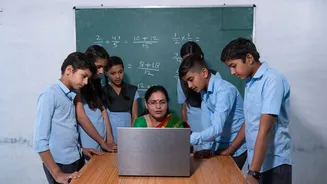
Under the new system, every page of each Class 12 answer sheet will be scanned and uploaded digitally, allowing teachers to evaluate responses directly on a computer. In total, nearly 32 crore pages are expected to be scanned and processed through the digital platform.
CBSE officials said the earlier method involved physically transporting bundles of answer sheets to evaluation centres, which consumed time, incurred logistical costs, and occasionally led to errors in the totaling of marks. The on-screen marking system is expected to address these concerns by making the process faster, more accurate and transparent.
The digital system will also allow teachers to evaluate answer sheets from their own schools instead of travelling to designated centres, ensuring that their regular teaching schedules remain largely unaffected. The board has also highlighted the environmental benefits of the move, noting that the digital workflow will significantly reduce paper use.
The board exams for both Classes 10 and 12 will continue until April 10, 2026, with around 17 lakh students expected to appear this year.
According to CBSE, the new evaluation process will follow a structured sequence. Students will write their answers in physical answer sheets at exam centres as usual, with answer booklets containing 40, 32, or 20 pages depending on the subject.
Soon after the examination concludes, the answer sheets will be scanned at high-security centres set up in school computer labs. Each page will be converted into a digital image and assigned a unique code, while personal details such as the student’s name and roll number will remain hidden to prevent bias during evaluation.
Teachers will log in to the on-screen marking portal using their OASIS ID, where they will be assigned a fixed number of answer sheets for the day. The scanned copies will appear on their screens with separate fields for entering marks for each question. Once entered, the marks will be saved automatically.
The system will also calculate the total score on its own, eliminating manual addition and reducing the chances of errors. Selected answer sheets may be reviewed by senior examiners for moderation, and the digital platform will maintain a detailed record of who evaluated each sheet and how long the process took.
As soon as evaluation is completed, the marks will be directly transferred to the CBSE result database, removing the need for manual data entry or cross-checking. The board believes this will ensure timely declaration of results with fewer disputes and greater confidence in the process.
To implement the system, schools will need functional computer labs equipped with the latest internet browsers, Adobe Reader, a stable internet connection of at least 2 Mbps, and uninterrupted power supply through UPS systems. Teachers with OASIS IDs will undergo training and practice sessions before the evaluation begins. The board will also provide instructional videos and a dedicated call centre for assistance.
The on-screen marking system will be introduced for Class 12 examinations from 2026 onwards. CBSE expects the change to reduce errors, limit unfair practices, and ensure quicker and more reliable results, marking a significant step towards modernising the examination and evaluation process.