
'%3e%3cpath%20fill-rule='evenodd'%20clip-rule='evenodd'%20d='M6%200C10.4183%200%2014%203.58171%2014%207.99999V14.0003C14%2018.4186%2017.5817%2022.0003%2022%2022.0003H122C126.418%2022.0003%20130%2018.4186%20130%2014.0003V8C130%203.58172%20133.582%200%20138%200H6Z'%20fill='%23EDF2E7'/%3e%3c/g%3e%3cdefs%3e%3cfilter%20id='filter0_d_12223_4749'%20x='0'%20y='0'%20width='144'%20height='36'%20filterUnits='userSpaceOnUse'%20color-interpolation-filters='sRGB'%3e%3cfeFlood%20flood-opacity='0'%20result='BackgroundImageFix'/%3e%3cfeColorMatrix%20in='SourceAlpha'%20type='matrix'%20values='0%200%200%200%200%200%200%200%200%200%200%200%200%200%200%200%200%200%20127%200'%20result='hardAlpha'/%3e%3cfeOffset%20dy='8'/%3e%3cfeGaussianBlur%20stdDeviation='3'/%3e%3cfeComposite%20in2='hardAlpha'%20operator='out'/%3e%3cfeColorMatrix%20type='matrix'%20values='0%200%200%200%200.356863%200%200%200%200%200.427451%200%200%200%200%200.270588%200%200%200%200.7%200'/%3e%3cfeBlend%20mode='normal'%20in2='BackgroundImageFix'%20result='effect1_dropShadow_12223_4749'/%3e%3cfeBlend%20mode='normal'%20in='SourceGraphic'%20in2='effect1_dropShadow_12223_4749'%20result='shape'/%3e%3c/filter%3e%3c/defs%3e%3c/svg%3e)
Now, Elon Musk, the world’s richest man, wants to build an AI satellite factory on the Moon.
The development comes as his tech company xAI has witnessed a raft of exits over the past few weeks. The development also comes after Musk announced his tech firm SpaceX would be acquiring xAI.
But what happened? What do we know? Why did Musk change his mind?
Let’s take a closer look.
To the Moon
According to several media reports, Musk is said to have called an all-hands-on-deck staff meeting on Tuesday night. Musk, during the meeting, spoke about the future of xAI and his plans for the Moon.
The New York Times quoted Musk as saying that xAI requires a factory on the Moon. Musk is said to be planning a lunar manufacturing facility which will build AI satellites and send them into space via a giant catapult.
“You have to go to the Moon,” Musk said. He told employees this would allow xAI to achieve more computing power than any of its rivals. “It’s difficult to imagine what an intelligence of that scale would think about,” he added, “but it’s going to be incredibly exciting to see it happen.”
“If you’re moving faster than anyone else in any given technology arena, you will be the leader,” Musk added. “And xAI is moving faster than any other company — no one’s even close.” He claimed that “when this happens, there’s some people who are better suited for the early stages of a company and less suited for the later stages.”
The development comes days after Musk took to X to announce that SpaceX had redirected its efforts towards the Moon.
“For those unaware, SpaceX has already shifted focus to building a self-growing city on the Moon, as we can potentially achieve that in less than 10 years, whereas Mars would take 20+ years,” Musk wrote on Sunday. “The mission of SpaceX remains the same: extend consciousness and life as we know it to the stars.”
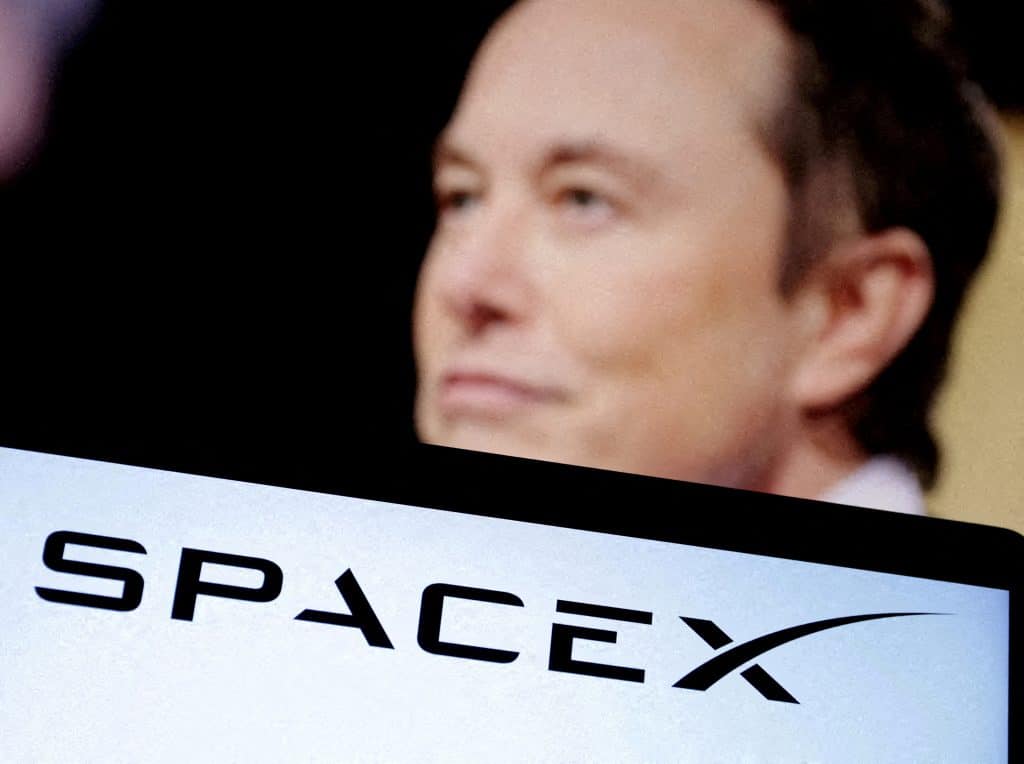
The development also comes after Musk announced his tech firm SpaceX would be acquiring xAI.
“The overriding priority is securing the future of civilisation and the Moon is faster,” Musk added. However, he insisted that he had not forgotten about Mars.
“It is only possible to travel to Mars when the planets align every 26 months (six-month trip time), whereas we can launch to the Moon every 10 days (two-day trip time). This means we can iterate much faster to complete a Moon city than a Mars city,” Musk wrote. “That said, SpaceX will also strive to build a Mars city and begin doing so in about five to seven years.”
Ironically, the development comes a little over a year after Musk dismissed the Moon as “a distraction”.
Musk’s comments echo a Wall Street Journal report on Friday, which said SpaceX has told investors it would prioritise going to the Moon and attempt a trip to Mars at a later time, targeting March 2027 for an uncrewed lunar landing.
Musk has a long record of setting ambitious timelines for projects such as electric vehicles and self-driving technology that have repeatedly failed to materialise on schedule.
What changed Musk’s mind?
It is possible that SpaceX being under contract with the US government to reach the Moon has something to do with it.
According to Business Insider, Nasa in 2021 employed SpaceX to make a reusable version of its Starship vehicle that could take astronauts to the Moon as part of the Artemis programme. The contracts, worth billions of dollars, helped SpaceX pay for its Starship programme. NASA is aiming to have the Starship rocket head for the South Pole of the Moon in 2028.
It also comes as SpaceX is preparing to make its debut as an initial public offering (IPO), which could occur as early as June 2026.
To be fair, this isn’t the first time Musk has spoken about the benefits of going to the Moon.
“The biggest opportunity on the Moon is to make solar cells and radiators, and then you’re manufacturing on the Moon anything that weighs a lot; chips maybe still come from Earth, they weigh very little,” Musk said in December.
“And then you can use a mass driver to put a billion tonnes of AI-powered satellites into orbit per year. You could set a scale to 100 terawatts of AI compute per year from the Moon,” he added.
SpaceX is under contract with the US government to reach the Moon. Reuters
“Starship can enable a permanently crewed science station on the Moon, which would be super cool! Moonbase Alpha!!” Musk wrote in 2024.
“It is high time that humanity went beyond Earth. Should have a Moon base by now and sent astronauts to Mars. The future needs to inspire,” Musk wrote in 2017.
However, questions about the legality of such an enterprise abound. According to TechCrunch, the 1967 Outer Space Treaty makes it illegal for any company or nation to claim the Moon as its own. However, a 2015 law allows companies or nations to keep whatever they can get from the Moon.
Some have expressed scepticism about this law. Mary-Jane Rubenstein, a professor of science and technology studies at Wesleyan University, told TechCrunch last month, “It’s more like saying you can’t own the house, but you can have the floorboards and the beams. Because the stuff that is in the Moon is the Moon.”
Let that sink in.
With inputs from agencies