AD
But what if we said there was a solution to this? In fact, India might soon have air taxis flying in Indian airspace. Authorities are planning a corridor connecting Gurugram, Connaught Place and the Jewar International Airport in Noida.
This comes as the Confederation of India Industries (CII) made this suggestion in a report titled "Navigating the Future of Advanced Air Mobility in India", unveiled by Civil Aviation Minister Rammohan Naidu Kinjarapu. The launch was attended by Directorate General of Civil Aviation (DGCA) chief Faiz Ahmed Kidwai, Airports Authority of India (AAI) Chairman Vipin Kumar, and other senior figures from the civil aviation sector.
Here is all you need to know about air taxis.
Why are air taxis being considered?
The traffic situation in metro cities, especially Delhi-NCR, is extremely bad. While authorities try to figure out a way to deal with the hectic jams in urban areas, the report has suggested that the next step for the country is advanced air mobility solutions like electric vertical take-off and landing, better known as air taxis.
With air travel demand climbing, India is focusing on improving last-mile connectivity through different transport options to tackle growing congestion in cities.
Where will be the vertiports?
A key highlight of the report is the use of rooftops as landing and parking spots for electric air taxis. This could allow existing buildings to generate revenue. With land for ground-based landing pads proving costly, rooftops offer a cheaper and quicker way to roll out such services in cities like Delhi, Mumbai, and Bengaluru, the report noted.
According to the report, existing Directorate General of Civil Aviation (DGCA) regulations do not permit routine commercial rooftop vertical take-offs and landings, with any future rollout hinging on updated regulatory frameworks and safety reviews.
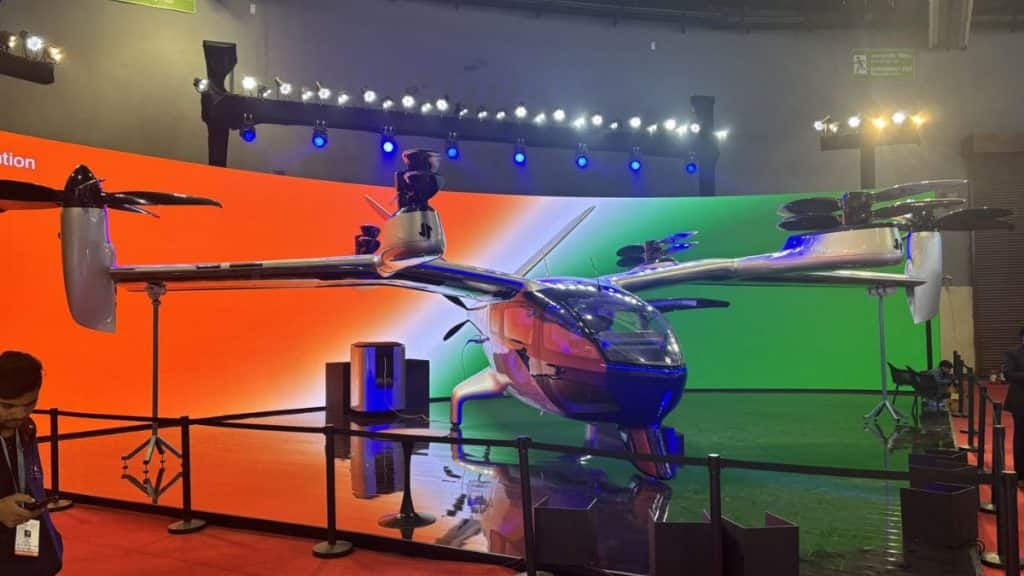
India is now focusing on improving last-mile connectivity. Image Courtesy: @Amarrrrz/X
According to the website ET Infra, Aviation minister Kinjarapu said, "The integration of Advanced Air Mobility reflects our commitment to innovation, sustainability, and world-class urban connectivity." He added that the report provides a "timely and practical blueprint to realise a faster, cleaner, and more connected India."
Amit Dutta, Chairman of the CII Task Force on Advanced Air Mobility, explained that the study helps move the idea from a dream to a reality, reported ET Infra.
"By analysing a hypothetical Delhi-NCR corridor through structured modelling and regulatory scenario testing, this study moves from concept to operational assessment," Dutta said. He noted that it addresses the "regulatory, infrastructure, and airspace challenges associated with early AAM pilots."
The report proposed a sequenced rollout, beginning with drone deliveries, followed by medical logistics and organ transport, and eventually air ambulance services.
Who will provide the funding?
One of the issues that has everyone concerned is who will foot the bill for the development of vertiports. The report suggested that financial institutions could explore dedicated funding instruments for Advanced Air Mobility, such as venture leasing mechanisms and specialised infrastructure funds.
Options could range from sector-specific infrastructure funds and venture leasing models to credit enhancement facilities designed to reduce risk and attract long-term investors.
With inputs from agencies