Defining Alpenglow's Magic
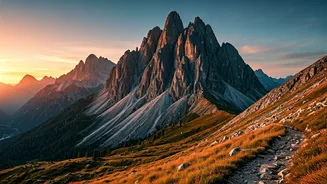
Alpenglow, a captivating light effect, graces mountain peaks, transforming them into a canvas of color. This spectacle is particularly visible during dawn
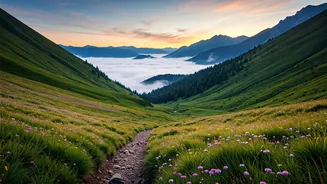
and dusk. This striking visual stems from sunlight interacting with the atmosphere and the mountain's structure. The light, originating from the horizon, gets reflected by atmospheric particles, especially clouds. These interactions filter the sunlight, causing the peak to appear in hues of yellow, orange, and pink. This creates a mesmerizing effect, lasting for a while after sunset and reappearing at dawn. The beauty isn't limited to specific locations; it's a natural phenomenon that enhances mountains worldwide.
Mount Neelkanth's Glow
Mount Neelkanth in Uttarakhand, India, serves as a prime example of Alpenglow. The mountain's snowy peak brilliantly catches the sun's rays, producing a visual treat. The Pauri Garhwal district, where Mount Neelkanth resides, is also of religious significance in Hinduism. The presence of the ancient Neelkanth Mahadev temple in Rishikesh adds to the area's spiritual charm. When the sun touches the mountain, its peak appears in vivid rainbow colors. Yellow, orange, and pink hues are common. The combination of orange and pink specifically showcases the long, warm rays of the electromagnetic waves, enhancing the overall effect.
Sunlight's Indirect Impact
The occurrence of Alpenglow is associated with indirect sunlight. Experts emphasize that the glow results from light reflected off particles in the atmosphere, often clouds. This reflection is why the skyline and clouds close to the horizon are colored at sunrise and sunset. Photographers sometimes debate the indirect sunlight aspect, arguing that any object glows when light directly hits it. This perspective is understandable, as observers often don't see the sun itself. However, the phenomenon remains a testament to nature's capacity for creating stunning visual displays through the interaction of light and environment.