Streamlining Civic Services
The civic administration is revolutionizing citizen engagement and internal processes through technological advancements. An Integrated Law Management
System (ILMS) is being developed to significantly speed up the resolution of ongoing legal cases, a crucial step towards efficient governance. For public interaction, a common dashboard is in the works, allowing citizens to conveniently raise civic complaints, building upon the existing WhatsApp chatbot service. This consolidated platform is designed to ensure prompt service delivery and better accountability. Furthermore, the city is investing in advanced urban planning with the implementation of a 3D GIS map of Mumbai. This sophisticated mapping tool will be instrumental in conceptualizing and executing various urban development projects with greater precision and foresight, ensuring that the city grows in a planned and sustainable manner.
Water Security Initiatives
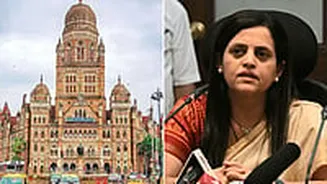
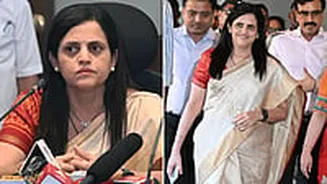
Ensuring a robust and consistent water supply for Mumbai is a top priority, with several key projects being fast-tracked. Civic chief Ashwini Bhide has directed accelerated efforts to secure all necessary permissions for a proposed desalination plant at Manori. This facility is slated to treat an initial 200 MLD of saline water daily, making it potable, with plans to expand its capacity to 400 MLD. This project is a significant promise from the ruling alliance, aimed at substantially increasing Mumbai's daily water availability. Concurrently, the sewage operation department is being urged to expedite the construction of seven state-of-the-art Sewage Treatment Plants (STPs). These advanced facilities will collectively recycle 2,464 MLD of water daily, further contributing to the city's overall water resources and reducing reliance on external sources.
Infrastructure for Better Supply
To enhance the distribution and capacity of Mumbai's water supply, the focus is now on accelerating the construction of critical water conveyance tunnels. Authorities have been directed to prioritize the completion of two vital tunnel projects: one connecting Amar Mahal and Trombay, and another linking Kasheli to Mulund. These infrastructure developments are designed to significantly boost the volume of water that can be supplied to the city. By improving the tunnel network, the BMC aims to reduce potential water loss due to leakage from existing pipelines, ensuring that more of the treated and available water reaches the consumers efficiently. This focus on subterranean infrastructure is key to securing the city's water future and minimizing wastage.