Chilika's Brackish Bounty
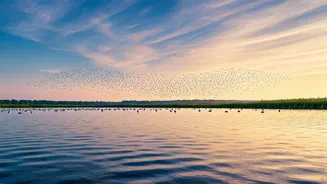
Chilika Lake, a vast expanse of brackish water and Asia's largest of its kind, stands as a premier destination for birdwatching. Each year, this ecological
marvel becomes a temporary home for a stunning array of avian visitors, including flamboyant flamingos, stately pelicans, and elegant storks. The serene atmosphere, coupled with the sight of countless birds gracing its tranquil waters, creates a truly magical and unforgettable tableau for any observer. It serves as a critical stopover point for species traversing vast distances, showcasing the lake's immense ecological significance and its role in supporting global bird populations during their seasonal journeys. The sheer scale and diversity of birdlife here make it a paramount location for both seasoned ornithologists and casual nature admirers.
Bharatpur's Wetland Haven
Nestled within the renowned Bharatpur Bird Sanctuary, this exceptional lake is recognized as a UNESCO World Heritage Site, a testament to its ecological importance and rich biodiversity. It teems with hundreds of distinct bird species, offering an unparalleled opportunity to observe a wide spectrum of avian life. Visitors can expect to encounter graceful herons, majestic cranes, and a variety of ducks, among many others. The winter months are particularly spectacular, transforming the area into a vibrant hub of activity as numerous species gather. Its inclusion in a protected sanctuary ensures a relatively undisturbed habitat, allowing for robust populations and providing an ideal environment for these birds to thrive and breed. The sanctuary's commitment to conservation further enhances the visitor experience, offering a glimpse into a healthy, thriving ecosystem.
Vembanad's Scenic Richness
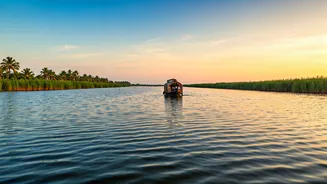
Vembanad Lake, more than just a picturesque landscape, is a thriving sanctuary for a remarkable array of bird species. This serene aquatic environment provides a vital habitat for a multitude of resident and migratory birds. Amongst the common sights are the brilliantly colored kingfishers, efficient cormorants, and various other birds that undertake long journeys to reach these fertile grounds. The tranquil ambiance surrounding the lake makes it an ideal retreat for nature lovers seeking peace and quiet amidst natural beauty. Its expansive waters and adjacent marshlands offer diverse feeding and nesting opportunities, supporting a healthy and varied bird population throughout the year, with migratory species adding to the spectacle during specific seasons.
Pulicat's Flamingo Spectacle
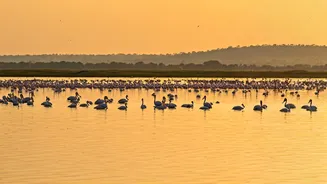
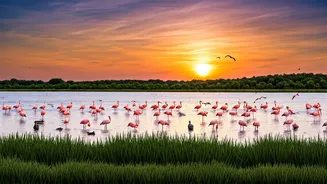
Pulicat Lake is particularly celebrated for its spectacular congregation of flamingos, which transform its shores into a vibrant pink canvas, especially during the winter season. This coastal lagoon is a significant feeding ground for these iconic birds, as well as a welcoming spot for pelicans and a variety of other waterfowls. Its shallow waters and abundant food sources make it an attractive destination for these species. For photographers, Pulicat Lake presents an extraordinary opportunity to capture stunning images of avian life in its natural habitat. The sheer visual impact of thousands of flamingos against the backdrop of the lake is a sight that draws visitors from far and wide, seeking to witness this natural phenomenon firsthand.
Sambhar's Inland Saltwater Gem
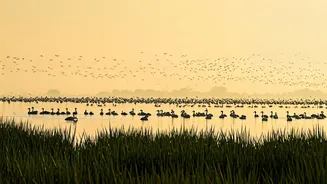
As India's largest inland saltwater lake, Sambhar Lake offers a unique and breathtaking spectacle, particularly when it becomes awash with the vibrant hues of thousands of flamingos during winter. This striking visual phenomenon turns the expansive lake into a sea of pink, creating one of the most memorable sights for bird enthusiasts. The saline environment is perfectly suited for these specialized birds, providing ample sustenance. Beyond the flamingos, the lake also supports a variety of other bird species that are adapted to its unique conditions. The sheer scale of the lake and the concentrated presence of birds during peak season offer an unparalleled experience, showcasing the resilience and adaptability of wildlife in diverse ecological settings.
Loktak's Floating Islands
Loktak Lake is distinguished by its unique 'phumdis,' which are distinctive floating islands formed from accumulated vegetation and soil. These dynamic formations not only contribute to the lake's striking natural beauty but also create diverse microhabitats that attract a wide range of both resident and migratory avian species. The interplay between the water, the floating landmasses, and the surrounding environment provides varied foraging opportunities and safe roosting sites. The ecological significance of these phumdis is immense, supporting a complex food web that in turn sustains a rich bird population. The surreal landscape, combined with the lively bird activity, makes Loktak Lake a truly exceptional natural wonder.
Dal Lake's Urban Oasis
While globally renowned for its iconic scenic vistas and traditional houseboats, Dal Lake also serves as an important sanctuary for numerous bird species. During the winter months, the lake becomes a popular gathering spot for various waterfowl, including flocks of ducks and geese, as well as other migratory birds seeking refuge and sustenance. The calm waters and surrounding environment offer suitable conditions for these birds to rest and feed. Despite its urban setting, Dal Lake retains a surprising level of biodiversity, demonstrating how even in developed areas, natural habitats can support significant wildlife populations. The juxtaposition of human activity and avian life creates a unique and fascinating ecosystem.
Nal Sarovar's Avian Corridor
Recognized as one of India's most expansive bird sanctuaries, Nal Sarovar is a crucial stopover point for thousands of migratory birds journeying from Central Asia and Europe each year. The lake's vast wetlands and abundant food resources provide an essential refuge for these long-distance travelers. Visitors can experience the thrill of birdwatching from a unique vantage point during boat rides, which offer intimate views of the diverse avian inhabitants. The sheer volume of birds present during the migration season is a spectacle to behold, with species from distant lands congregating here. Nal Sarovar underscores the importance of these wetland ecosystems as vital corridors for global bird migration.
Kolleru's Freshwater Richness
Kolleru Lake, a significant freshwater body, plays a pivotal role as a crucial habitat for a multitude of bird species, particularly during the winter season. This ecosystem is a haven for large water birds, with common sightings including majestic pelicans, elegant ibises, and striking painted storks. The lake's abundant freshwater resources and extensive marshy areas provide ideal conditions for these birds to feed, nest, and thrive. Its importance as a breeding ground and a wintering site for numerous species highlights its critical ecological function within the region's biodiversity landscape. The presence of such significant avian populations underscores the health and vitality of the lake's environment.
Umiam's Peaceful Retreat
Nestled amidst rolling green hills, Umiam Lake offers a serene and less-crowded environment that attracts a variety of bird species. This tranquil setting makes it an ideal destination for those seeking peaceful birdwatching experiences and nature photography opportunities. The combination of its picturesque surroundings and the presence of diverse birdlife provides a restorative escape from the hustle and bustle. The lake’s quieter nature allows for a more intimate observation of avian behavior and a deeper connection with the natural world. It serves as a valuable habitat, supporting local bird populations and offering a tranquil sanctuary for a range of species to flourish away from dense human activity.