A New Era of Travel
The bustling metropolis of Delhi-NCR might soon witness a dramatic shift in its transportation landscape, with proposals suggesting the advent of air taxis.
These electric aircraft are envisioned to soar above the notorious traffic congestion, creating aerial corridors that link crucial urban centers such as Gurugram, the heart of Delhi (Connaught Place), and the developing region of Noida, including the upcoming Jewar International Airport. This ambitious initiative, championed by discussions and planning, aims to drastically cut down travel times and alleviate the immense pressure on existing road networks and metro lines. The potential success of this model could pave the way for similar advancements in other major Indian cities, signaling a significant leap forward in urban mobility solutions and offering a glimpse into a future where the sky is no longer a limit but a highway.
Innovative Aircraft & Vertiports
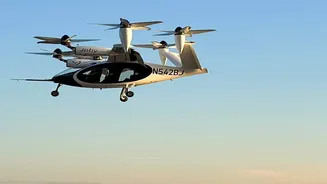
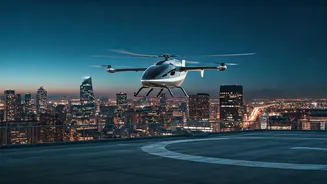
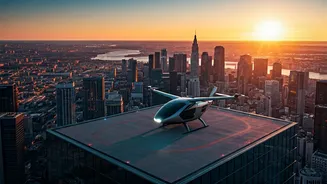
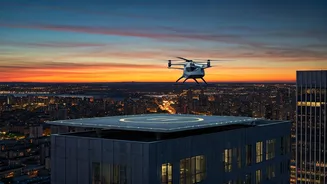
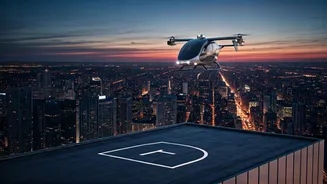
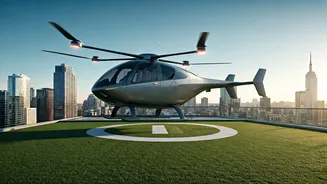
The cornerstone of this visionary air taxi system lies in its utilization of small, cutting-edge electric aircraft designed for vertical takeoff and landing (eVTOL). A key advantage of these eVTOLs is their ability to ascend and descend without the need for expansive runways, making them ideal for urban environments. Instead, these nimble aircraft will operate from specially designated landing spots known as vertiports. The current exploration suggests that the rooftops of high-rise buildings present a practical and readily available solution for these vertiports. Locations such as hospitals, sprawling office complexes, and bustling tech parks are being identified as prime candidates for these facilities, offering accessibility and convenience for future passengers and operations.
Rooftops: The Ideal Hubs
Leveraging existing building rooftops is emerging as a particularly astute strategy for establishing air taxi infrastructure within densely populated urban areas. Acquiring new land in metropolises like Delhi and Gurugram is not only prohibitively expensive but also fraught with complex logistical and regulatory hurdles. Rooftops, conversely, represent an underutilized asset that can be repurposed with relative ease. Commercial establishments and major healthcare facilities, with their substantial vertical footprints, are ideal candidates for hosting these vertiports, thereby integrating air taxi services seamlessly into the urban fabric. This approach not only maximizes existing space but also enhances the accessibility of air travel for those who require swift transport, potentially for urgent needs.
Phased Rollout: From Drones to Passengers
The initial deployment of these advanced aerial vehicles is not anticipated to be for general passenger travel. Instead, the plan outlines a cautious, step-by-step approach, commencing with critical emergency services. These air taxis could play a vital role in expediting the transportation of vital organs for transplants, delivering essential medical supplies to remote or inaccessible areas, and rapidly evacuating patients in critical condition. Furthermore, the early phases are expected to include trials of drone delivery services, allowing authorities to meticulously assess the safety protocols, operational efficiency, and overall viability of the system. This gradual introduction will build confidence and gather crucial data before expanding to broader public use.
Combating Congestion, Greener Travel
A primary impetus behind the development of air taxi services is the escalating problem of road congestion plaguing the Delhi-NCR region. Daily commutes are often marred by lengthy delays, leading to lost productivity and increased stress levels, alongside significant environmental pollution. Air taxis offer a compelling solution by providing a faster and demonstrably cleaner mode of transport. As electric flying vehicles, they promise to substantially reduce carbon emissions compared to conventional fuel-powered vehicles, aligning with global efforts towards sustainability. This initiative is viewed by the government as an intelligent and forward-thinking strategy to enhance urban mobility and improve the quality of life in India's most crowded cities.
Regulatory Framework & Vision
The successful integration of air taxis into India's airspace will be meticulously overseen by the Directorate General of Civil Aviation (DGCA). It is anticipated that a dedicated new body might be established within the DGCA specifically to manage and regulate this emerging air mobility sector. In alignment with this forward-looking vision, the Civil Aviation Minister, Rammohan Naidu Kinjarapu, has already unveiled a report focused on Advanced Air Mobility. This comprehensive report details the strategic pathways and necessary measures for safely incorporating air taxis into the existing Indian aviation infrastructure over time, ensuring that technological advancement is coupled with stringent safety standards and regulatory clarity.
A Calculated Progression
The government's strategy for implementing air taxi services emphasizes a phased introduction rather than an abrupt launch. This approach allows for controlled testing and refinement at each stage. The initial phase will involve the piloting of drone deliveries along predetermined routes to gather performance data and validate operational procedures. Following this, the focus will shift to medical logistics, including the crucial transportation of organs and emergency medical supplies. Subsequently, air ambulance services are planned to commence, leveraging the speed of air travel for critical healthcare needs. Only after these vital services have been successfully established and thoroughly evaluated will the consideration for regular passenger air taxis for everyday commuting begin.
Fueling the Future: Financial Support
Securing adequate financial backing represents a critical challenge for the ambitious air taxi project. The Confederation of Indian Industry (CII) report highlights the necessity for robust support from banking institutions and public financial bodies to propel the development of air mobility. This could manifest through the creation of specialized funds and tailored loan schemes designed for companies actively engaged in air taxi technology and infrastructure development. Additionally, government agencies may play a crucial role by offering grants and subsidies to mitigate the financial risks associated with pioneering this new sector. Such financial incentives are vital to encourage private sector investment and participation, thereby accelerating the realization of this futuristic transportation network.
Expanding Horizons: A National Model
Should the pilot corridor connecting Gurugram, Connaught Place, and Jewar Airport prove successful, it is poised to serve as a pioneering model for other major urban centers across India. Cities like Mumbai, Bengaluru, and Hyderabad, which also grapple with severe traffic congestion and burgeoning populations, could potentially adopt similar air taxi networks in the coming years. While a multitude of regulations and rigorous testing procedures still lie ahead, the project is demonstrably moving forward with considerable momentum. The prospect of air taxis becoming a common mode of transport in India is increasingly tangible, promising to revolutionize urban travel and redefine connectivity in the country's largest cities.