Orbital Computing Vision
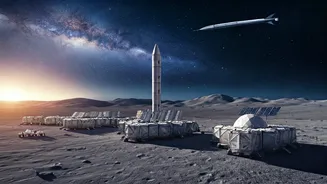
Elon Musk has unveiled a groundbreaking proposal to transform the landscape of artificial intelligence by establishing massive data centers in outer space.
This ambitious undertaking aims to harness the perpetual sunlight available in orbit to power advanced AI applications and chatbots, thereby alleviating the strain on terrestrial power grids and mitigating the risk of blackouts. This initiative is intricately linked to Musk's broader business strategy, involving the merger of SpaceX with his AI ventures and a subsequent initial public offering of the consolidated entity. Musk himself expressed a strong conviction that "Space-based AI is obviously the only way to scale," emphasizing the consistent solar energy availability above the atmosphere, stating, "It's always sunny in space!" The underlying motivation is to provide a robust and scalable infrastructure for the burgeoning field of AI, free from the limitations of Earth's energy infrastructure and its associated costs.
Heat Management Challenges
Despite the apparent advantage of space's cold environment, managing the immense heat generated by data centers presents a formidable challenge. While space offers a vacuum that seems conducive to cooling, this same vacuum can trap heat within enclosed systems, akin to a Thermos bottle. Experts like Josep Jornet, a professor at Northeastern University, warn that uncooled computer chips in space would overheat and fail much more rapidly than their terrestrial counterparts. A potential solution involves deploying expansive radiator panels designed to emit heat as infrared radiation into the void. While such technology has been demonstrated on a smaller scale, for Musk's proposed data centers, this would necessitate the construction of unprecedentedly large and inherently fragile structures. Musk, however, remains optimistic, projecting that within 30 to 36 months, space will become the most economically viable location for AI operations due to its superior scalability and efficiency.
Space Debris Risks
The proliferation of satellites in orbit, especially the million envisioned by Musk, raises significant concerns about space debris. A single satellite malfunction or orbital decay could initiate a catastrophic chain reaction of collisions, potentially disrupting critical services such as emergency communications and weather forecasting. While Musk points to Starlink's relatively low rate of debris-generating events over seven years and approximately 10,000 operational satellites, this is a mere fraction of his future plans. Experts like John Crassidis, a former NASA engineer, caution that the density of objects could reach a tipping point where collision probability becomes unacceptably high. Given that these objects travel at approximately 17,500 miles per hour, any collision would be exceptionally violent, posing a grave threat to existing and future space infrastructure.
Component Longevity and Repair
Beyond debris, the inherent fragility of electronic components in the harsh space environment poses another significant hurdle. Specialized graphics processing units (GPUs) essential for AI workloads are susceptible to degradation and failure due to exposure to high-energy solar particles. Unlike terrestrial data centers where faulty components can be easily replaced, the absence of an on-orbit repair crew means that such repairs are currently impossible. Baiju Bhatt, CEO of Aetherflux, suggests an alternative of overprovisioning satellites with extra chips to compensate for anticipated failures. However, this approach is exceedingly costly, considering that individual GPUs can cost tens of thousands of dollars, and current satellite lifespans are limited to around five years. This necessitates a robust strategy for component reliability and maintenance in a setting where physical intervention is not feasible.
Industry Competition and Musk's Edge
While Musk's vision is ambitious, he is not the sole entity exploring orbital data solutions. Companies like Starcloud have tested AI chips in space, and Google is investigating similar ventures with its Project Suncatcher. Blue Origin has also announced plans for a large satellite constellation. However, Musk possesses a distinct advantage: his launch capabilities. SpaceX's rockets are essential for deploying these payloads, and Musk has historically charged rivals significantly more for launch services than his internal operations. This pricing strategy, as noted by Pierre Lionnet of Eurospace, suggests a deliberate move to leverage his dominance in launch services to secure a competitive edge in this emerging space race, effectively controlling access and cost for potential competitors seeking to establish their own space-based data infrastructure.