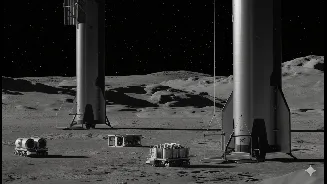
Lunar Priority Shift
SpaceX, under the leadership of Elon Musk, has strategically reoriented its long-term objectives. The primary focus is now on establishing a self-sustaining
metropolis on the lunar surface. This ambitious goal is projected to be achievable within a considerably shorter timeframe of less than a decade, contrasting with earlier projections for Mars colonization. Musk articulated this shift via a public post, emphasizing that this accelerated lunar development aligns with SpaceX's overarching mission to ensure the survival and expansion of human consciousness across the cosmos. The immediate aim is to create a foundational settlement that can grow organically, thereby securing humanity's presence beyond Earth. This strategic pivot prioritizes the Moon as a more accessible stepping stone for interplanetary expansion, underscoring the urgency in securing humanity's future amongst the stars. The company is reportedly targeting an uncrewed lunar landing as early as March 2027, signaling a determined pursuit of this lunar objective.
Mars & Beyond
While the Moon has become the immediate priority, the vision for human presence on Mars remains a key component of SpaceX's long-term strategy. Musk indicated that efforts to establish a Martian city are slated to commence in approximately 5 to 7 years. This phased approach suggests a deliberate progression, leveraging the technological and logistical advancements gained from the lunar endeavors to facilitate the more complex undertaking of Mars colonization. The ultimate aim is to transform humanity into a multi-planetary species, safeguarding civilization against existential threats on Earth. However, the accelerated timeline for the Moon signifies its current strategic advantage in achieving this broader objective more expediently. The rationale behind prioritizing the Moon first is its relative proximity and the potential for faster development of a self-sufficient base, which can then serve as a crucial staging ground for further deep-space exploration, including the eventual establishment of a thriving community on Mars.
Global Space Race
This intensified focus on lunar exploration by SpaceX occurs amidst a significant resurgence in global space competition, particularly between the United States and China. Both nations are actively pursuing ambitious lunar programs, viewing the Moon as a critical gateway for future space dominance and resource utilization. The United States, after a hiatus since the Apollo missions in 1972, is re-engaging with lunar endeavors. Concurrently, China has demonstrated a burgeoning capability and clear strategic intent to establish a significant presence on the Moon. This competitive landscape fuels innovation and accelerates the pace of exploration. SpaceX's proactive approach and accelerated timeline are partly a response to, and a participant in, this dynamic international race, aiming to secure a leading position in humanity's expansion into space and the development of extraterrestrial settlements before other global powers.