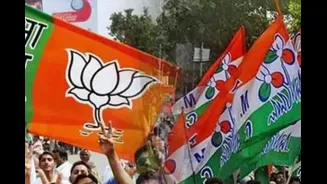
Shifting Political Tides
The political landscape of West Bengal has seen a dramatic shift following the recent by-election results, which delivered a substantial blow to the incumbent
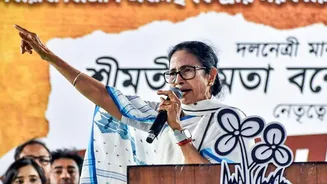
Trinamool Congress (TMC). The party failed to secure any of the three contested seats, with all victories going to the Bharatiya Janata Party (BJP). This outcome represents a significant setback for Chief Minister Mamata Banerjee, who has led the state for over a decade, and signals a growing sense of dissatisfaction among the electorate. The TMC government has faced persistent accusations of corruption, cronyism, and an authoritarian style of governance, which appear to have resonated with voters seeking an alternative. The BJP's success is being interpreted as a strong indication that West Bengal is receptive to a new political direction, with the party pledging to usher in an era of enhanced development and progress. This electoral verdict places considerable responsibility on the BJP to fulfill its promises to the people of West Bengal. Conversely, the TMC is left to reflect on its performance, with critics suggesting that extended periods in power have led to complacency among its leadership. For the TMC to regain public confidence, introspection and significant internal reforms are deemed necessary. The by-election results serve as a crucial warning, indicating that the party must alter its approach to avert further electoral decline and to reconnect with its constituents.
Election Administration Concerns
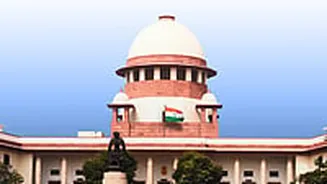
The integrity and smooth conduct of the electoral process in West Bengal have been marred by significant administrative and logistical issues, exemplified by a disturbing incident where seven judicial officers were held captive. This unfortunate event, which occurred during the special intensive revision (SIR) of the electoral roll in central Bengal, underscores critical deficiencies in the administration's preparedness for such sensitive undertakings. It also highlights the pervasive politicization of election campaigns in a state known for its endemic political violence and the intense emotions surrounding controversial decisions like the deletion of millions of voter names. The Supreme Court has strongly condemned the 'complete failure of civil and police administration,' holding state officials accountable and ordering an investigation. However, some responsibility must also be attributed to the Election Commission of India (ECI). The ECI's decision to transfer an unusually large number of officials in West Bengal—480, which is more than 30 times the number transferred in 2021 and 20 times that in other poll-bound regions—and its selection of top administrative and police personnel for these roles, raise questions. If these chosen officials subsequently failed in their duties, the ECI's vetting process warrants scrutiny. The incident in Kaliachak, Malda, where officers were confined for nearly 10 hours within a Block Development Office, revealed a delayed and uncoordinated response from local government officials, despite escalating protests. Urgent appeals to the state administration from the high court registry went unheeded for hours, with officers denied basic necessities. Intervention by the Calcutta High Court chief justice was required to prompt action from the director general of police and home secretary late at night, leading to the officers' release around midnight, after which they faced assault and stone-pelting.
Political Violence and Discontent
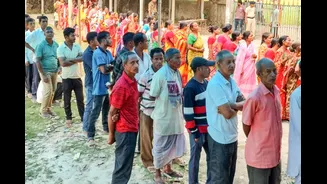
The persistent issue of political violence in West Bengal continues to be a significant impediment to fair electoral practices, a problem exacerbated by political leaders from various parties who have historically leveraged such tactics for short-term electoral gains. This culture of escalating confrontation poses a serious threat in a large and diverse state with numerous sensitive districts. Political muscle often leads to clashes, thereby stifling genuine voter engagement and obstructing free and fair election campaigns. The apprehension of political figures in relation to the violence witnessed in Malda further solidifies the linkage between electoral processes and conflict, a cycle that desperately needs to be broken for the welfare of the state and its citizens. The Supreme Court itself has acknowledged the presence of political actors at protest sites, commenting on the unprecedented level of politicization observed in the state. This situation is characterized as a 'sorry state of affairs.' Furthermore, widespread protests across northern Bengal and Kolkata indicate that public emotions are running extremely high regarding the SIR process. This revision exercise has been plagued by frequent rule modifications, a standoff between the state government and the ECI, and a protracted timeline that risked extending beyond the upcoming two-phase assembly elections. Legitimate concerns have been raised about conducting the revision so close to polling, the introduction of the 'logical discrepancy' category for name deletions, and why West Bengal is the sole state experiencing such simmering tensions, coupled with alleged stonewalling from the state government. Ordinary citizens, whose fundamental right to vote is jeopardized by these circumstances, find themselves caught in this complex and volatile situation. The inherent value of democracy dictates that violence is never an acceptable recourse, and neither is the disenfranchisement of eligible voters.