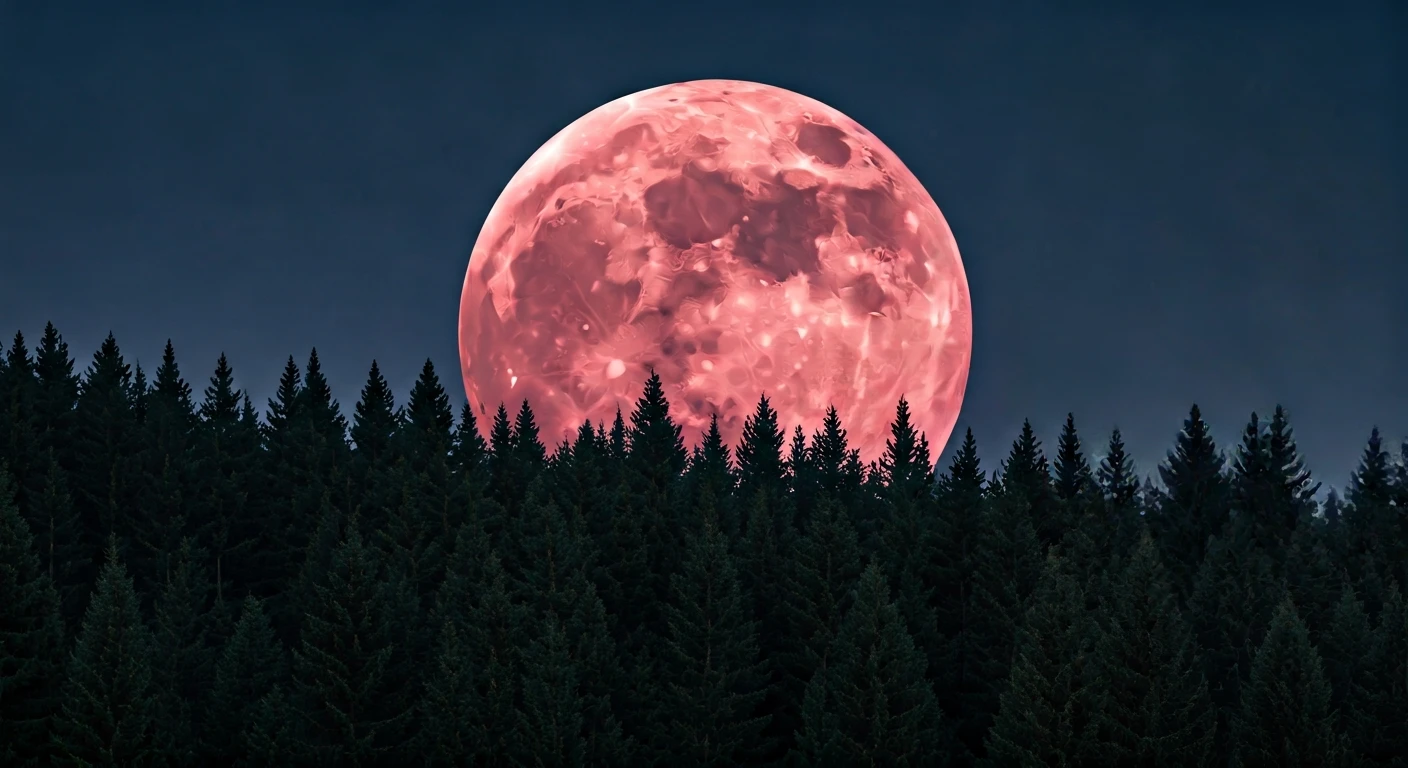
Pink Moon's Arrival
In April 2026, the night sky will be graced by a full moon, occurring on the 1st of the month, coincidentally also April Fools' Day. This celestial event
is traditionally known as the Pink Moon. Contrary to its name, the moon itself will not appear in a pink hue; instead, it will offer a spectacular, luminous glow, casting a beautiful golden radiance across the darkened landscape. Its peak illumination is scheduled for 10:12 PM Eastern Time on April 1st. For those in different U.S. time zones, this translates to 9:12 PM Central Time and 7:12 PM Pacific Time. Indian viewers can anticipate witnessing its peak at 7:42 AM Indian Standard Time on April 2nd. To fully appreciate this lunar spectacle, it's recommended to venture outdoors to a location free from the obscuring effects of city lights and to face the eastern or southeastern horizon as the moon ascends. During its rise, the moon may appear larger than usual due to an optical illusion known as the 'moon illusion.'
Naming and Significance
The designation 'Pink Moon' is not derived from its color but rather from the blooming of a specific spring flower, moss pink, also known as creeping phlox. This vibrant bloom signals the arrival of spring, and it was this natural phenomenon that led Native American tribes and early European colonists to associate the full moon of April with this particular flower. While the moon remains its usual luminous self, it serves as a powerful indicator of the spring season's commencement and represents the first full moon of this time of year. Furthermore, this specific full moon holds calendrical importance, being referred to as the Paschal Moon, a name that plays a crucial role in determining the date of Easter celebrations annually.
Space Mission Connection
An interesting astronomical alignment coincides with the April 2026 Pink Moon: NASA's ambitious Artemis II mission. This endeavor marks a significant milestone as it is slated to be the first crewed voyage to orbit the Moon since the Apollo 17 mission concluded in 1972. The primary objective of Artemis II is to conduct crucial preparations for future lunar exploration, with the ultimate goal of returning astronauts to the Moon's surface by the year 2028. This lunar event, therefore, is occurring alongside a period of renewed human focus on lunar exploration, adding an extra layer of excitement to the Pink Moon's appearance.
Optimal Viewing Guide
Experiencing the full splendor of the April 2026 Pink Moon requires no specialized equipment; its natural brilliance is captivating enough. For the most rewarding viewing, seeking an open area with minimal light pollution is key. Observing the moon as it rises in the eastern sky will enhance its perceived size and brightness, making for a more dramatic spectacle. Bringing along comfortable seating, such as blankets or chairs, can significantly improve your viewing comfort if you intend to spend an extended period observing. While binoculars or a telescope can offer a more magnified perspective, they are entirely optional for enjoying the moon's glow. Crucially, checking the local weather forecast for clear skies is essential for an unobstructed view. Although the moon won't actually be pink, its golden effulgence promises to be a breathtaking sight, offering a moment of tranquility and wonder.