
'%3e%3cpath%20fill-rule='evenodd'%20clip-rule='evenodd'%20d='M6%200C10.4183%200%2014%203.58171%2014%207.99999V14.0003C14%2018.4186%2017.5817%2022.0003%2022%2022.0003H122C126.418%2022.0003%20130%2018.4186%20130%2014.0003V8C130%203.58172%20133.582%200%20138%200H6Z'%20fill='%23EDF2E7'/%3e%3c/g%3e%3cdefs%3e%3cfilter%20id='filter0_d_12223_4749'%20x='0'%20y='0'%20width='144'%20height='36'%20filterUnits='userSpaceOnUse'%20color-interpolation-filters='sRGB'%3e%3cfeFlood%20flood-opacity='0'%20result='BackgroundImageFix'/%3e%3cfeColorMatrix%20in='SourceAlpha'%20type='matrix'%20values='0%200%200%200%200%200%200%200%200%200%200%200%200%200%200%200%200%200%20127%200'%20result='hardAlpha'/%3e%3cfeOffset%20dy='8'/%3e%3cfeGaussianBlur%20stdDeviation='3'/%3e%3cfeComposite%20in2='hardAlpha'%20operator='out'/%3e%3cfeColorMatrix%20type='matrix'%20values='0%200%200%200%200.356863%200%200%200%200%200.427451%200%200%200%200%200.270588%200%200%200%200.7%200'/%3e%3cfeBlend%20mode='normal'%20in2='BackgroundImageFix'%20result='effect1_dropShadow_12223_4749'/%3e%3cfeBlend%20mode='normal'%20in='SourceGraphic'%20in2='effect1_dropShadow_12223_4749'%20result='shape'/%3e%3c/filter%3e%3c/defs%3e%3c/svg%3e)
The AI Disruption Question
The rapid evolution of artificial intelligence is causing widespread professional anxiety across numerous industries. Concerns range from potential job
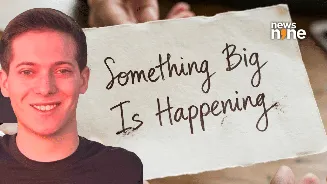
displacement to the impact on human cognitive abilities. Hieu Pham, an engineer at OpenAI with impressive academic credentials from Stanford and Carnegie Mellon, recently articulated a profound sense of 'existential threat' stemming from AI. He posited that when AI becomes exceptionally proficient and fundamentally alters all existing paradigms, the critical question arises: what will remain for humans to undertake? Pham frames this not as a speculative possibility but as an inevitable future eventuality, stating, 'it’s when, not if.' This sentiment has spurred significant dialogue online regarding AI's potential downsides and its far-reaching consequences for the human experience.
Adapting to Technological Shifts
The discussion ignited by Pham's warning has seen varied responses from the online community. Many users drew parallels to historical technological revolutions, such as the advent of the printing press and the internet, which also initially induced feelings of existential unease. These historical precedents suggest a pattern of human adaptation, where AI might primarily replace specific tasks rather than human purpose itself. Other commentators offered more optimistic visions, proposing that our societal value might shift away from economic productivity towards something new and self-defined. This perspective suggests a future where our worth isn't tied to earning potential, but rather to novel avenues for contribution and fulfillment that we collectively create.
Redefining Human Purpose
Beyond the economic implications, the conversation delves into how advanced AI might fundamentally alter the human condition and our sense of purpose. Some believe that with AI handling many of the tasks currently occupying our time, humanity might be able to rediscover and dedicate more energy to pursuits like hobbies and cultivating curiosity. This could lead to a re-evaluation of what it means to be human and what truly provides fulfillment. Meanwhile, concerns about AI's broader societal impact are echoed by other figures in the AI safety field. For instance, Mrinank Sharma, formerly Anthropic's AI safety lead, resigned citing an "existential reckoning" with interconnected global crises, emphasizing the urgent need for human wisdom to grow in tandem with our technological capabilities to avert dire consequences.