The Automation Tide
Dr. Roman Yampolskiy, a renowned AI safety researcher, has sounded an alarm about the imminent future of work, suggesting that a staggering 99% of current
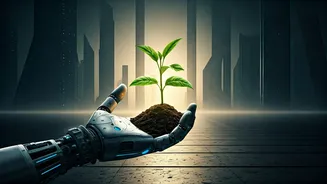
jobs could become obsolete within the next five years. He posits that artificial general intelligence (AGI), capable of surpassing human cognitive abilities across a vast spectrum of tasks, could emerge as early as 2027. This wave of automation is predicted to be unlike any previous industrial transformation, fundamentally altering the employment landscape. Unlike earlier technological advancements that often created new job categories, Dr. Yampolskiy argues that there will be no equivalent on the other side of this AI-driven revolution. Even highly skilled professions, including creative and media roles like podcasting, are susceptible to being outperformed by AI systems, which offer greater speed, accuracy, and data-driven efficiency. The expert suggests that the only roles that might persist are those where human preference dictates human execution, citing the example of a wealthy individual choosing a human accountant over an AI, akin to preferring Warren Buffett's choice of a human financial advisor.
Surviving Human Roles
Despite the dire predictions, Dr. Yampolskiy has identified a select few categories of work that might endure the coming wave of automation, though he emphasizes these will accommodate only a minuscule portion of the global workforce. One such area is the demand for 'human-made' goods, catering to a niche market where consumers specifically value the touch and authenticity of artisanal or handmade products over mass-produced alternatives. This is akin to the premium paid for handcrafted items. Another surviving domain is work grounded in genuine lived human experience, such as counseling and related fields. The unique ability of humans to understand and empathize with the subjective experience of being human is considered invaluable, especially in a future potentially dominated by superintelligence that excels in all domains but lacks inherent consciousness. Furthermore, two categories of jobs will emerge directly due to the existence of AI itself. The first involves the crucial function of oversight and regulation, where humans are tasked with monitoring and managing AI systems, potentially slowing the pace of development. The second category consists of intermediaries who possess the expertise to interpret and implement AI technologies for businesses and individuals who lack such specialized knowledge.
The Singularity Horizon
Looking beyond the immediate employment impacts, Dr. Yampolskiy raises concerns about humanity approaching the technological singularity by approximately 2045. This point signifies an era where AI-driven progress accelerates exponentially, surpassing human comprehension, prediction, and control. He likens this phenomenon to consumer technology, where product development cycles become so rapid that keeping up with iterations becomes impossible for humans. The expert suggests that specialists may already be struggling to stay abreast of the latest AI advancements, feeling that their individual knowledge is diminishing as a percentage of the ever-expanding total knowledge base. The core concern, for Dr. Yampolskiy, lies not just in technological advancement, but in the diminishing economic necessity of human labor, judgment, and relevance, a societal shift he believes is arriving much faster than most anticipate.