Unbeatable New Price
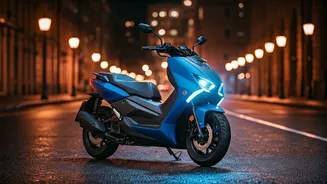
A major price adjustment has been implemented for the flagship electric motorcycle, featuring a substantial Rs 60,000 reduction. This brings its new price point
to Rs 1,29,999. This significant decrease is attributed to enhanced manufacturing efficiencies, including scaled-up Gigafactory operations and deeper in-house control over battery cell production. As the in-house developed 4680 Bharat Cell's manufacturing ramps up, the resultant cost savings are being directly passed on to consumers. Initially priced at Rs 1,89,999, the motorcycle now offers a more compelling value proposition for potential buyers looking to embrace electric two-wheeler technology without compromising on performance or range. The company's strategic focus on vertical integration and production scaling has clearly paid off, making this advanced electric offering more attainable than ever before.
Running Cost Advantage
The electric motorcycle boasts an astonishingly low running cost, estimated at just Rs 0.09 per kilometer. This efficiency is achieved thanks to its 9.1 kWh battery pack, which provides a claimed range of up to 501 kilometers on a full charge. Considering an average electricity rate of Rs 5 per unit, a full charge costs approximately Rs 46. In stark contrast, a comparable petrol motorcycle, like the Bajaj Platina, has a running cost of around Rs 1.35 per kilometer. This figure is calculated based on a claimed mileage of 70 kilometers per liter and current fuel prices at Rs 94.77 per liter. While the initial purchase price of the electric option is higher, the long-term savings in daily operational expenses are immense, with the cost difference potentially balancing out over hundreds of thousands of kilometers, especially when factoring in lower maintenance needs for electric vehicles.
Controlled Sales Model
In tandem with the new pricing strategy, the electric motorcycle will now adopt a limited purchase window approach. Instead of being available for open sale at all times, units will be offered during specific, time-bound periods with limited quantities. The inaugural sales window is scheduled for April 3rd, commencing at 6:00 PM and concluding at 9:00 PM. Future sales slots will be communicated periodically, contingent on production capacity and demand. This controlled release strategy is a response to exceptionally high demand, which has reportedly exceeded current production capabilities by more than five times, especially following recent promotional campaigns. This approach ensures that the product remains desirable and that production can be managed effectively to meet customer expectations. The company is actively expanding its Gigafactory capacity, aiming for 6 GWh in battery cell production to bolster domestic manufacturing capabilities and support this growing demand.