The Nature of Deepfakes
Deepfakes represent a sophisticated form of synthetic media, meticulously crafted by artificial intelligence (AI) algorithms. These digital creations can
manifest as images, videos, or audio recordings designed to present occurrences or individuals that are not rooted in reality. The very term 'deepfake' is a fusion of 'deep learning,' a subset of AI technology, and 'fake,' accurately reflecting their fabricated nature. Essentially, they are AI-generated simulations that can convincingly depict events or individuals as if they were real, blurring the lines between authentic and manufactured content.
Exploring Epistemology
Epistemology stands as a fundamental branch of philosophy dedicated to scrutinizing the very essence of human knowledge. It probes into its origins, its inherent nature, and the boundaries that define its limits. The word itself is derived from the ancient Greek terms 'epistēmē,' meaning 'knowledge,' and 'logos,' signifying 'reason' or 'study.' Consequently, epistemology is often described as the 'theory of knowledge.' This field boasts a rich and extensive history within the Western philosophical tradition, continually seeking to understand how we acquire, justify, and comprehend what we claim to know.
Cosmic Expansion Rate
The universe's ongoing expansion is quantified by a crucial metric known as the Hubble constant. This constant is named in honor of the pioneering astronomer Edwin Hubble, who, alongside Milton Humason, provided compelling evidence that a galaxy's velocity of recession from Earth is directly proportional to its distance. In simpler terms, the further away a galaxy is, the faster it appears to be moving away from us. This relationship is mathematically expressed as: velocity = Hubble constant × distance, a foundational principle in our understanding of cosmology.
Brain Hemisphere Myths
A persistent misconception suggests that the right hemisphere of the human brain is the exclusive domain of creativity, while the left hemisphere is solely responsible for analytical thinking. This notion, though widely circulated, is a stubborn myth that lacks robust scientific backing. While there are specialized functions associated with each hemisphere, the reality of brain activity is far more nuanced and interconnected than this simplistic dichotomy implies. Both hemispheres work collaboratively to facilitate a wide range of cognitive processes.
Observing the Universe
Our comprehension of the universe largely stems from the interpretation of electromagnetic radiation, more commonly known as light. Astronomy's journey began with the observation of visible light and has since expanded to encompass the entirety of the electromagnetic spectrum. By employing instruments that can detect wavelengths ranging from the high-energy gamma rays to the low-energy radio waves, scientists are able to gather an immense amount of data about celestial objects and phenomena, providing profound insights into the cosmos.
Hydration Guidelines
The commonly cited recommendation to drink eight glasses of water daily is not an absolute rule. The optimal amount of water intake for an individual is highly variable and depends on several factors. These include a person's age, their biological sex, and their level of physical activity. For instance, on average, women typically require around 11 cups (approximately 2.7 liters) of water daily, a figure that can increase significantly based on personal circumstances and climate.
Natural Mummification
The remarkable preservation of ancient bodies, like that of Peru's famous 'Ice Maiden' named Juanita, showcases the power of natural mummification. This young girl, believed to have been sacrificed around 500 years ago when she was between 13 and 15, was remarkably preserved by the icy conditions of her burial site. This example highlights how environmental factors, such as prolonged exposure to cold and dry conditions, can naturally lead to the preservation of human remains over centuries.
Fracking's Environmental Impact
The process of fracking, which has significantly boosted the production of natural gas and petroleum, presents a considerable array of environmental challenges. These issues manifest at both the surface level and within underground geological formations. The extraction method can lead to concerns regarding water contamination, seismic activity, and the release of greenhouse gases, necessitating careful regulation and ongoing environmental monitoring.
The World of Nanotechnology
Nanotechnology involves the precise manipulation and fabrication of materials and devices at the atomic or molecular level. This field operates on the 'nanoscale,' typically measured in nanometers, which are billionths of a meter. The term originates from the Greek word 'nanos,' meaning 'dwarf,' referring to the incredibly small scale of these structures. Materials engineered at this size can exhibit unique and powerful properties, opening doors to revolutionary advancements in various industries.
Understanding DNA's Role
Deoxyribonucleic acid, universally known as DNA, plays an absolutely fundamental role in all known life on Earth. This vital molecule carries the genetic instructions for the development, functioning, growth, and reproduction of all living organisms. The principles of DNA are explored in depth through various scientific articles, including those focusing on recombinant DNA technology and chloroplast DNA, providing a comprehensive understanding of its significance.
Celestial Light Spectacles
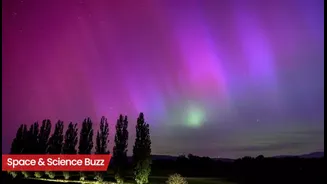
The auroras, known as the aurora borealis in the Northern Hemisphere and the aurora australis in the Southern Hemisphere, are breathtaking natural light displays observed in the night sky. These vibrant phenomena are particularly visible at higher latitudes and are distinct from other celestial sights due to their dynamic and colorful nature. They are caused by charged particles from the sun interacting with Earth's atmosphere.