Dhokla: A Delight
Dhokla, a beloved Gujarati snack, takes center stage with its soft, spongy texture and delightful flavors. It is made from a fermented batter of gram flour
(besan), which is then steamed to perfection. The process typically involves adding a tempering of mustard seeds, green chilies, and curry leaves to enhance the taste. Dhokla can be enjoyed plain, or garnished with fresh coriander and coconut. This dish is not only a treat for the taste buds but also a light and healthy option. Dhokla perfectly represents the balance of flavors and textures found in Gujarati cuisine, making it an excellent start to the culinary journey. Its popularity extends beyond Gujarat, enjoyed across India and by food enthusiasts worldwide.
Thepla: A Staple
Thepla is an integral part of Gujarati cuisine, known for its versatility and ease of preparation. This soft, spiced flatbread is made from wheat flour, fenugreek leaves (methi), and various spices. It's often enjoyed for breakfast, lunch, or even as a quick snack. Thepla can be eaten with yogurt, pickles, or chutney. Its preparation involves kneading the dough, rolling it out, and then cooking it on a hot griddle with a touch of oil or ghee. Thepla is not only delicious but also a great option for travel, as it stays fresh for several days. It showcases the practical and flavorful side of Gujarati cooking, making it a favorite among both locals and visitors.
Undhiyu: A Seasonal Delight
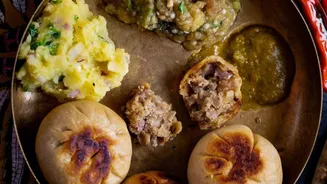
Undhiyu, a mixed vegetable dish, is a seasonal specialty prepared during winter. It features a blend of seasonal vegetables such as eggplant, potatoes, beans, and more. What sets Undhiyu apart is its unique cooking method: the vegetables are traditionally cooked upside down in earthen pots (matlu) underground, infusing them with smoky flavors. The dish is known for its complex blend of spices, including a green masala paste and a hint of sweetness. Undhiyu is often served with puri and shrikhand, making it a festive and satisfying meal. The dish exemplifies Gujarat's culinary ingenuity, reflecting the region's resourceful use of seasonal ingredients.
Khandvi: Delicate Rolls
Khandvi, a visually appealing and delicious snack, are delicate rolls made from gram flour and yogurt. The batter is cooked to a thick consistency and spread thinly. It is then rolled up and cut into bite-sized pieces. The dish is generally garnished with mustard seeds, sesame seeds, and fresh coriander, adding both visual appeal and a burst of flavor. Khandvi requires patience and precision, as the batter needs to be cooked to the right consistency. Its light texture and savory taste make it a delightful appetizer or snack. It's a testament to the Gujarati emphasis on snacks and small bites, perfect for social gatherings or light meals.
Dal Dhokli: Comforting Meal
Dal Dhokli is a wholesome and comforting one-pot meal, featuring a combination of lentils (dal) and wheat flour dumplings (dhokli). The dhokli are small, chewy pieces of dough that are simmered in a flavorful lentil stew, infused with spices and often a touch of jaggery for sweetness. This dish is both filling and nutritious, providing a balanced meal in one pot. The combination of textures from the lentils and the dhokli, together with the blend of spices, creates a truly satisfying experience. Dal Dhokli represents the Gujarati approach to food: simple ingredients, prepared with care, resulting in a hearty and delicious meal, ideal for family gatherings.
Handvo: Savory Cake
Handvo is a savory cake made with a mix of lentils, grains, and vegetables. It's similar to a vegetable cake and is usually baked or pan-fried. The batter typically includes a combination of rice, lentils, and vegetables such as bottle gourd, carrots, and peas. Handvo is spiced with ginger, chilies, and other aromatic spices, giving it a rich and complex flavor profile. It's a versatile dish that can be enjoyed as a snack, side dish, or even a light meal. Handvo is a prime example of Gujarati innovation in combining diverse ingredients, creating a flavorful, textured cake that can be altered to fit different tastes. It's a crowd-pleaser that offers both taste and nutrition.
Gujarati Kadhi: Tangy Soup
Gujarati Kadhi is a tangy and flavorful soup made from yogurt and gram flour. It is seasoned with ginger, green chilies, and a variety of spices, often including mustard seeds and curry leaves. The kadhi is known for its smooth texture and light, refreshing taste. It's usually served with rice and complements many Gujarati dishes. It is a light and cooling dish that balances out the richness of the other foods in a meal. The kadhi showcases the Gujarati love for incorporating dairy and spices to achieve a well-rounded and comforting dish, perfect to be enjoyed any time of the year. This dish highlights the significance of soups and broths in the local food culture.
Sev Tameta Nu Shaak
Sev Tameta Nu Shaak is a popular Gujarati vegetable dish, featuring tomatoes and sev (crispy gram flour noodles). The dish is prepared with a tomato-based gravy, flavored with spices, and topped with the crunchy sev. This combination of textures and flavors is what makes this dish so appealing. The tangy tomatoes, combined with the savory sev, create an incredible balance. It is often served with roti or rice. It exemplifies the Gujarati knack for creating dishes with a delightful interplay of textures and flavors. Its relative ease of preparation makes it a family favorite, showcasing the Gujarati emphasis on tasty, everyday meals that are simple to prepare, yet enjoyable.
Basundi: Sweet Delight
Basundi is a rich and creamy dessert, made by simmering milk until it thickens and reduces. The milk is flavored with cardamom, saffron, and nuts such as almonds and pistachios, giving it a delightful aroma and taste. Basundi is a traditional dessert often served at festivals and special occasions. The slow cooking process enhances the milk's natural sweetness, creating a creamy and indulgent treat. It's a dessert that perfectly represents the sweet side of Gujarati cuisine. Basundi is a testament to the Gujarati skill of preparing rich and satisfying sweets, offering an appropriate conclusion to a satisfying meal. It is a symbol of celebration, usually enjoyed after a hearty Gujarati feast.