
'%3e%3cpath%20fill-rule='evenodd'%20clip-rule='evenodd'%20d='M6%200C10.4183%200%2014%203.58171%2014%207.99999V14.0003C14%2018.4186%2017.5817%2022.0003%2022%2022.0003H122C126.418%2022.0003%20130%2018.4186%20130%2014.0003V8C130%203.58172%20133.582%200%20138%200H6Z'%20fill='%23EDF2E7'/%3e%3c/g%3e%3cdefs%3e%3cfilter%20id='filter0_d_12223_4749'%20x='0'%20y='0'%20width='144'%20height='36'%20filterUnits='userSpaceOnUse'%20color-interpolation-filters='sRGB'%3e%3cfeFlood%20flood-opacity='0'%20result='BackgroundImageFix'/%3e%3cfeColorMatrix%20in='SourceAlpha'%20type='matrix'%20values='0%200%200%200%200%200%200%200%200%200%200%200%200%200%200%200%200%200%20127%200'%20result='hardAlpha'/%3e%3cfeOffset%20dy='8'/%3e%3cfeGaussianBlur%20stdDeviation='3'/%3e%3cfeComposite%20in2='hardAlpha'%20operator='out'/%3e%3cfeColorMatrix%20type='matrix'%20values='0%200%200%200%200.356863%200%200%200%200%200.427451%200%200%200%200%200.270588%200%200%200%200.7%200'/%3e%3cfeBlend%20mode='normal'%20in2='BackgroundImageFix'%20result='effect1_dropShadow_12223_4749'/%3e%3cfeBlend%20mode='normal'%20in='SourceGraphic'%20in2='effect1_dropShadow_12223_4749'%20result='shape'/%3e%3c/filter%3e%3c/defs%3e%3c/svg%3e)
Garlands: A Timeless Symbol
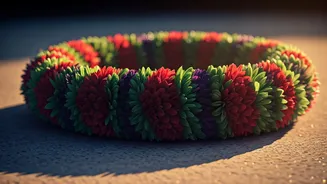
Floral garlands have been a cornerstone of wedding ceremonies for ages, transcending mere decoration to embody deep symbolic meaning. These beautiful arrangements
represent the profound union of two individuals and the merging of their families, signifying love, harmony, and enduring commitment. Each culture imbues its garlands with unique designs and spiritual significance, enhancing the sanctity and visual splendor of wedding rituals. The diversity in colors, materials, and intricate crafting of these floral adornments worldwide highlights their universal importance in celebrating matrimonial bonds and invoking blessings for a prosperous future together.
Indian Mala Tradition
In India, the 'mala' is an indispensable element of wedding ceremonies, holding deep cultural and emotional weight. Typically crafted from fragrant blossoms like jasmine or vibrant marigolds, these garlands are exchanged by the bride and groom in a ritual known as 'mala bandhan'. This act of exchanging garlands is a powerful declaration of mutual acceptance, respect, and the formal pledging of their commitment to one another. The specific flowers chosen for a mala often carry regional or heritage-specific meanings, ensuring that each garland is a unique representation of the couple's background and family traditions, adding a personalized touch to the sacred union.
Thai Phuang Malai
The Thai 'Phuang Malai' is a distinct and revered wedding garland, meticulously fashioned from blossoms such as jasmine and roses interwoven into a beautiful circular shape. Traditionally, these garlands are presented to deities or respected elders as a gesture of profound reverence and good wishes before being worn by the bride on her wedding day. In Thai culture, the Phuang Malai embodies purity and unwavering devotion, making it an integral and spiritually significant component of their marital customs. Its presence signifies blessings for the couple and respect for the lineage from which they come.
Hawaiian Lei Symbolism
In the sun-kissed islands of Hawaii, 'leis' are inextricably linked with expressions of love, affection, and warm welcome. These delightful garlands, artfully constructed from fresh flowers or lush leaves, are lovingly draped around the necks of the bride and groom during their wedding ceremony. The lei tradition in Hawaii signifies new beginnings, the vibrant beauty of nature's abundance, and the deep connection between the couple and their surroundings. While a wide array of materials can be used, leis made from fragrant plumeria or elegant orchids are exceptionally popular for weddings, celebrated for their intoxicating scent and visual appeal.
Mexican Lazo Ritual
The Mexican wedding tradition features the 'lazo', a unique rosary-like garland that is draped around the shoulders of both the bride and groom. This symbolic gesture typically occurs after the couple has exchanged their vows. Often crafted from elegant beads or delicate flowers, the lazo serves as a powerful emblem of their unity and their commitment to share a life together under divine protection. Frequently, the lazo is blessed by the officiant before being placed around the couple, reinforcing the sacred nature of their bond and signifying a union strengthened by faith and spiritual guidance.
Japanese Hanakotoba Meaning
In Japan, 'hanakotoba', the artful language of flowers, plays a significant role in various ceremonies, including weddings. Specific floral selections are made based on their inherent meanings, such as cherry blossoms symbolizing the ephemeral beauty of life or chrysanthemums representing longevity and good fortune. These carefully chosen blooms are incorporated into bridal bouquets, boutonnieres, or elegant headpieces, reflecting the couple's heartfelt wishes for their future while honoring the cherished traditional values associated with each flower's profound symbolism. This practice adds a layer of deep personal meaning and cultural depth to the wedding celebration.